Saturday Feb 07, 2026
Saturday Feb 07, 2026
Saturday, 10 January 2026 00:04 - - {{hitsCtrl.values.hits}}
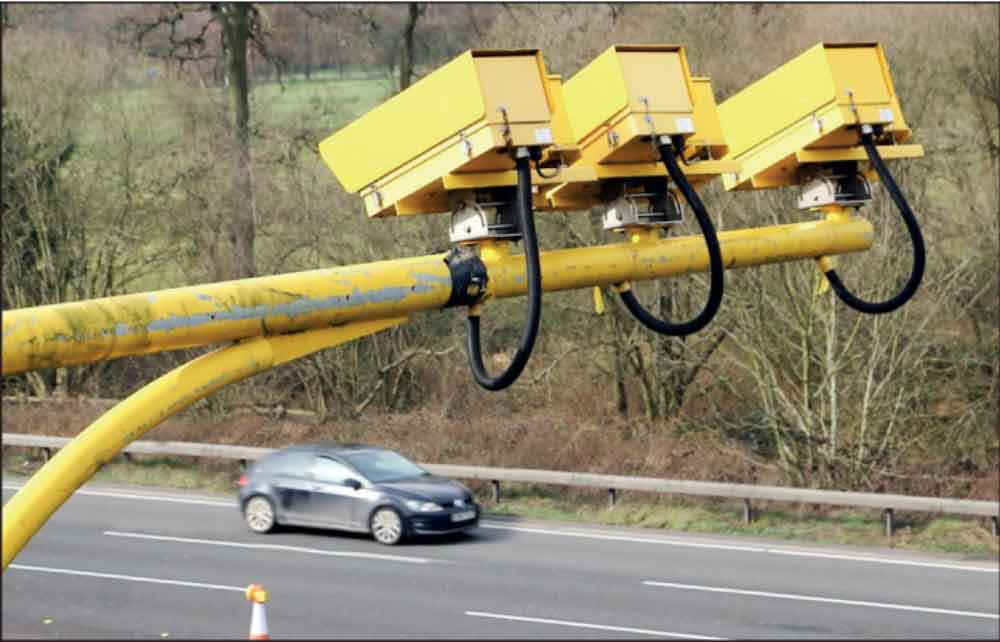
 Sri Lanka is grappling with an unacceptably high number of road traffic accidents, costing the country nearly 4% of GDP and resulting in a tragic loss of life— over 3,000 deaths annually—and over 7,000 serious injuries that often lead to permanent disability. Against this backdrop, it is timely for the Government to conduct feasibility studies on installing road speed cameras to penalise vehicles that exceed speed limits.
To ensure fairness and transparency, all roads equipped with speed cameras must be clearly marked at intervals of at least 0.25 km, indicating the applicable speed limit for each section. Signage need not be elaborate or costly; it can be placed on lamp posts, painted on the road surface, or displayed using other low-cost methods. As these systems are camera-operated, fines should be imposed on the registered vehicle owner—identified by vehicle number—rather than the driver. This approach encourages owners to ensure that anyone driving their vehicle meets appropriate standards of competence and safety.
Speed violations should be communicated by post to the vehicle owner, with a reduced penalty—say Rs. 5,000—if paid within 14 days; thereafter, the fine should double. An independent appeals process is essential, as camera systems are not infallible. In addition, cameras should be programmed with a tolerance margin, such as 10%, to account for technical variation. For example, if the speed limit is 70 km/h, enforcement should begin only when a vehicle exceeds 77 km/h. This tolerance would minimise unnecessary technical disputes and reduce the burden on the courts.
Although installing speed cameras requires initial Government investment, the long-term benefits are substantial. These include revenue generation through fines and, more importantly, a significant reduction in road traffic accidents and associated public expenditure on healthcare, emergency services, and rehabilitation. Ultimately, the policy would deliver net savings rather than losses. The Government should therefore actively pursue this infrastructure upgrade to improve road safety across Sri Lanka.
Studies should also assess the feasibility of manufacturing these systems locally rather than importing them. Local production would offer several advantages, including more straightforward repairs, improved system accuracy, and the ability to upgrade technology domestically. Supporting more than one local entrepreneur—through Government seed funding—would encourage competition, build technical capacity, and move Sri Lanka towards greater technological self-reliance. In the longer term, this could even create opportunities to export such systems.
Below are some of the key advantages this initiative would offer.
1. Fewer crashes, fewer deaths
Excessive speed is a leading contributor to both the frequency and severity of road collisions. Speed cameras deter habitual speeding and encourage consistent, lawful driving. International experience consistently demonstrates sustained reductions in road fatalities and serious injuries following the introduction of fixed, mobile, or average-speed enforcement. Lower speeds result in shorter stopping distances, reduced impact forces, and better survival outcomes—particularly for pedestrians and cyclists. Speed limits can also be adjusted for roadworks, peak traffic hours, festivals, and school zones, where heightened vigilance is essential.
2. Fair and consistent enforcement
Unlike sporadic roadside checks, speed cameras enforce the law impartially, 24 hours a day. They eliminate subjective bias and reduce opportunities for corruption by applying the same rules to all vehicles. Average-speed camera systems are particularly effective because they promote smoother, safer driving over longer distances rather than sudden braking at a single point. Vehicles are not required to stop, as notices are posted to the registered owner. All public and private vehicles should be subject to the same scrutiny, with exemptions limited to emergency vehicles—such as ambulances, police vehicles, and fire engines—when on active duty.
3. Healthier communities
Lower speeds reduce noise pollution and harmful emissions caused by harsh acceleration and braking. Streets become safer and more pleasant, encouraging walking and cycling. These changes deliver broader public-health benefits, reduce congestion, and support more vibrant local economies. Safer streets also enhance children’s independence and improve mobility for older adults.
4. Cost-effective public policy
From a value-for-money perspective, speed cameras perform exceptionally well. Installation and maintenance costs are modest when compared with the enormous economic burden of road collisions, including emergency response, healthcare, insurance claims, lost productivity, and long-term disability. Revenue from fines can be ring-fenced for road-safety initiatives, reinforcing a virtuous cycle of prevention and improvement.
5. Predictability for drivers
Clear signage and transparent enforcement thresholds help drivers understand what is expected of them. Most motorists adapt quickly, benefiting from calmer journeys and fewer sudden hazards. The objective is compliance, not punishment—and as compliance improves, penalties naturally decline.
6. Evidence-led and accountable policy
Speed management should be guided by data and independent evaluation rather than arbitrary decision-making. Camera locations must be selected based on collision history and risk, reviewed regularly, and justified by evidence—not personal discretion. This ensures accountability, public trust, and sustained effectiveness.
(The author is a former academic at University of Peradeniya)




