Saturday Oct 10, 2026
Saturday Oct 10, 2026
Saturday, 10 October 2026 00:00 - - {{hitsCtrl.values.hits}}
By Shanika Sriyananda
South Asian countries have improved access to essential medicines over the past two decades, but growing dependence on imports, weak domestic manufacturing capacity and the rising influence of private capital continue to limit health sovereignty, experts said.
Speaking at the fourth Health and Humanity Summit, they said that the future of humanitarian action in South Asia is increasingly tied to questions of who controls healthcare resources, how humanitarian systems are financed and governed, and whether countries can secure access to essential medicines and technologies.
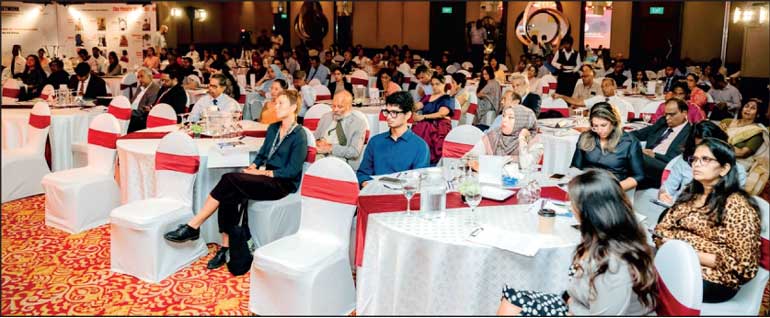
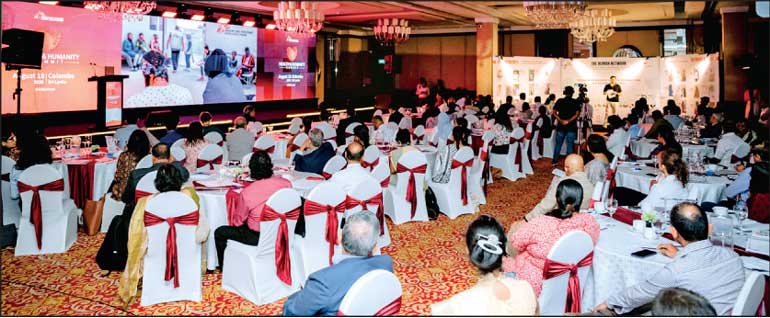
Organised by Doctors Without Borders/Médecins Sans Frontières (MSF) South Asia, the Summit was held recently in Colombo under the theme - Envisioning the Future of Humanitarianism.
It brought together policymakers, public health experts, humanitarian practitioners, academics, civil society leaders and advocates from across South Asia and beyond to examine how humanitarian action can remain equitable and effective amid geopolitical realignments, climate emergencies, widening inequalities and changing global health priorities.
MSF South Asia Executive Director Parthesarathy Rajendran, opened the Summit by calling for a renewed vision of humanitarian action grounded in equity, solidarity, and shared responsibility.
“Humanitarian action stands at a defining moment. Around the world, we are witnessing profound changes in the way crises unfold, how they are financed, and who shapes the responses,” he said, adding that every person has the right to timely, quality healthcare, regardless of politics, geography, or circumstance.
Rajendran called for moving beyond diagnosing the challenges to addressing them collectively in more inclusive, locally led, gender-responsive ways rooted in genuine global solidarity.
Rather than focusing solely on how to respond to existing crises, the summit sought to examine the systems that will shape humanitarian action in the future, including health financing, governance, women's leadership, regional cooperation and access to medicines.
Spotlight Talks
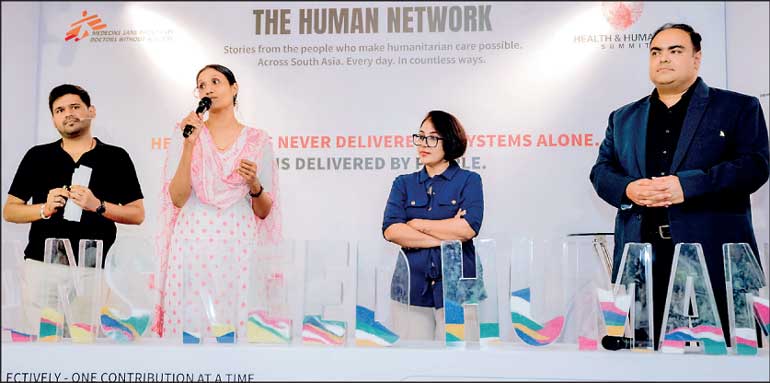
MSF's International Mobile Staff brought those realities into the summit through accounts from some of the world's most difficult humanitarian settings.
Speaking at the ‘Spotlight Talks’, Dr. Roshni Changalath, Imtiaz Wadud and Dr. Karan Kamble shared the difficult truths about conflict and crisis through powerful stories of devastation and resilience.
Dr. Changalath, an obstetrician and gynaecologist who has worked in Afghanistan and Malawi, highlighted the particular barriers faced by women.
“You cannot build a resilient healthcare system while simultaneously removing the women who help sustain it,” she said.
Dr. Changalath also described how conflict, poverty and weak systems can combine to make even basic healthcare inaccessible to women.
Imtiaz Wadud, a humanitarian operations leader with 18 years of experience, including missions in South Sudan, Ethiopia and Bangladesh, recalled communities in remote Bangladesh where patients depended on a weekly MSF mobile clinic because the nearest health centre was a day's walk away.
For Dr. Karan Kamble, an Indian physician with 11 years of MSF experience in settings including Ukraine and South Sudan, humanitarian medicine is not defined only by the ability to cure.
“Sometimes there will be nothing left to cure. But there is always something left to do,” he said.
Dr. Kamble noted that humanitarian action was also about protection, dignity and presence.
“Humanitarian action doesn't begin when an organisation arrives. It begins when one human being looks at another human being and decides you matter,” he said.
Neoliberalism and market fundamentalism
In his keynote address, renowned physician and global health systems expert Prof. T. Sundararaman said that global health must be grounded in solidarity, equity, inclusiveness and care rather than market-driven approaches. He said that health became linked to nation-building, welfare states, self-reliance and the idea of health as a right, but neoliberalism and market fundamentalism had weakened these principles, replacing self-reliance with dependence on global supply chains and increasingly treating public services as inefficient.
“The COVID-19 pandemic exposed the weaknesses of this model, including failures in global supply chains and the limitations of relying on private-sector responses,” he emphasised.
Prof. Sundararaman noted that lessons from humanitarian emergencies should be used to strengthen health systems for everyday needs and prepare them for future crises, particularly as climate change makes repeated emergencies increasingly likely.
He highlighted that Sri Lanka, with a strong public health history, had about 95% of secondary and tertiary care provided by the public sector and that medical and nursing education is largely publicly provided.
But he warned that the challenge was whether Sri Lanka could adapt and innovate within a rapidly changing world and limited fiscal space.
Responding to a question, Prof. Sundararaman cautioned against excessive enthusiasm about AI in healthcare.
AI’s hallucination
“AI can be useful, but its outputs can be wrong or hallucinated, its algorithms are not always transparent, and questions of accountability remain unresolved,” he said.
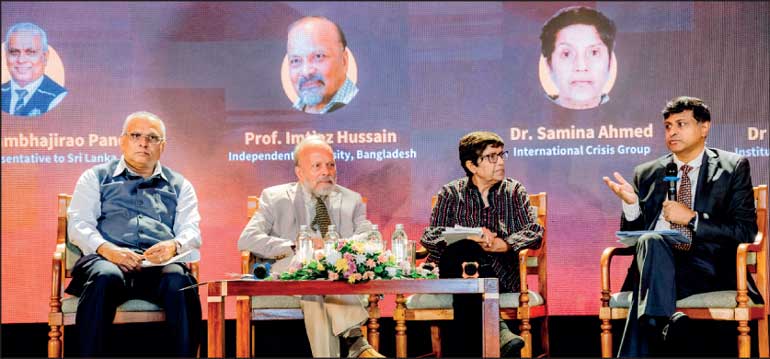
The first panel on Envisioning the Humanitarian and Health Architecture looked into how humanitarian financing and governance are evolving amid changing geopolitical realities. Moderated by the Institute of Health Policy, Sri Lanka Executive Director Dr. Ravi Ranna-Eliya, speakers discussed the growing role of emerging Global South economies, including India, China, the Gulf States and Singapore, in financing healthcare and humanitarian responses.
Speakers argued that the changing economic weight of the Global South should be accompanied by greater influence over international decision-making.
WHO Representative to Sri Lanka Dr. Rajesh Sambhajirao Pandav, Prof. Imtiaz Hussain of Independent University, Bangladesh, and Dr. Samina Ahmed of the International Crisis Group spoke at the panel.
They said that countries that increasingly finance their own healthcare systems should have a stronger voice in determining global health priorities rather than remaining largely recipients of decisions made elsewhere.
Women’s role in humanitarian calls
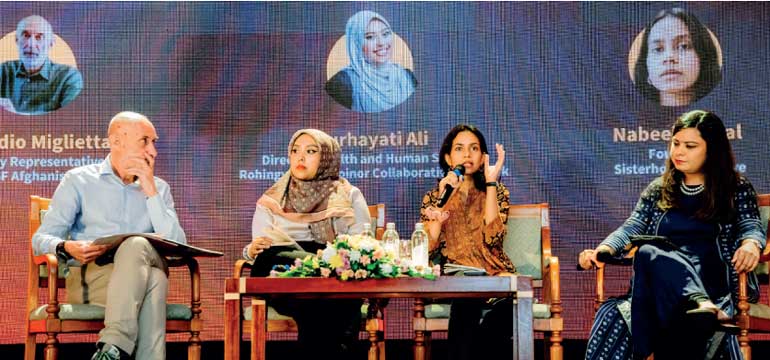
The second panel - Envisioning the Future of Women's Leadership in Global Health and Humanitarianism - focused on the critical role women play in sustaining healthcare and humanitarian systems while examining the structural barriers that continue to limit their leadership. Moderated by Director of Communications at MSF South Asia, Nishita Sharma, the discussion highlighted women's contributions across health systems, the political economy of care work, and the need to recognise, resource, and elevate women as decision-makers in humanitarian action.
MSF Afghanistan Country Representative Claudio Miglietta, Nurhayati Ali of Rohingya Malyafolrior Collaborative Network and Nabeela Iqbal of Sisterhood Initiative highlighted that women’s contributions must be recognised as skilled, political labour rather than mere service or sacrifice.
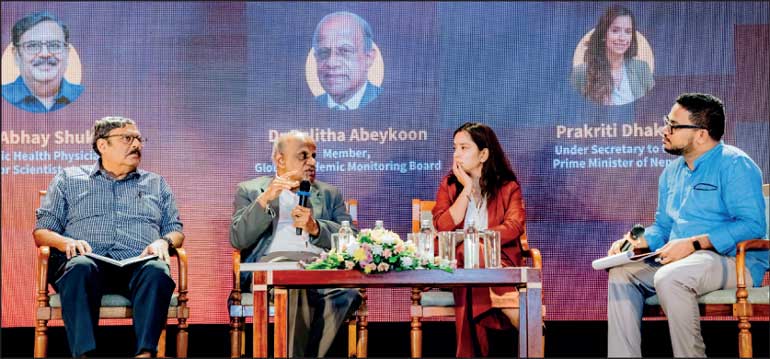
The third panel, moderated by MSF South Asia Director of Communications Nadim Majeed discussed ‘Envisioning the Future of Healthcare Sovereignty and Access’.
They addressed the growing importance of regional cooperation in ensuring equitable access to medicines, diagnostics, vaccines, and health technologies.
The speakers - Dr. Abhay Shukla of SATHI Pune, People's Health Movement, Dr. Palitha Abeykoon, former WHO regional advisor for South and Southeast Asia and a Global Pandemic Monitoring Board member, and Prakriti Dhakal, the Under Secretary to the Prime Minister of Nepal - stressed health sovereignty, intellectual property, technology transfer, regional manufacturing, and the renewed role of South-South cooperation in building resilient health systems capable of responding to future crises.
Over dependence on imported medicines
Dr. Palitha Abeykoon, former WHO regional adviser for South and Southeast Asia, said South Asian countries had made considerable progress in expanding access to healthcare and essential medicines, but remained vulnerable because of dependence on imported medicines and limited domestic manufacturing capacity.
“It is a constant struggle. We don’t have those answers,” Abeykoon said, noting that Sri Lanka had broad access through its public health system, although out-of-pocket expenditure remained close to 50%.
The COVID-19 pandemic had exposed the consequences of unequal control over medical supplies and technologies, he said.
“In general, the pharmaceutical companies are the ones which set the agenda,” Abeykoon said, pointing to the unequal distribution of COVID-19 vaccines between wealthy countries and parts of Africa.
The pandemic subsequently encouraged countries such as India, Thailand and Indonesia to strengthen domestic vaccine and pharmaceutical production. But Dr. Abeykoon cautioned that genuine self-reliance requires not only factories but also strong regulatory systems, technical capacity and sufficiently large markets.
For smaller countries, regional cooperation could provide part of the answer, said Dr. Abeykoon, highlighting the importance of ASEAN cooperation between Thailand, Indonesia and Vietnam and suggesting that South Asian countries explore mechanisms beyond SAARC, including BIMSTEC, to strengthen cooperation in areas such as technology and innovation.
Dr. Shukla said that healthcare in India had moved beyond conventional privatisation towards increasing financialisation, with foreign private equity investment reshaping major hospital chains, and that this had accelerated during the last 15 years.
Corporate hospitals no more Indian
“Today, the top corporate hospital chains in India are no longer owned by Indians and for example, the Manipal Hospital's 74% shares are taken by foreign transnational investors. Only the names of managers are Indian but almost all the biggest hospitals, which have tens of thousands of beds, are no longer Indian,” he claimed.
Dr. Shukla said that those were not charitable institutions but were private equity firms set up with the sole purpose of extracting maximum amounts of profit.
He said, today, the cost of an average corporate hospital bed per day in India is nearly Rs. (Sri Lankan) 250,000 to 300,000 and if a patient was in a hospital for 10, 15, 20 days, his lifetime savings could be wiped out.
“Until COVID, we had market failure. During COVID, we had a market disaster,” Dr. Shukla said, describing the growing commercial pressures within healthcare.
He said a study of 12 major hospital chains estimated that around Rs. 1 trillion had been extracted from India over 13 years through foreign investment transactions, capital appreciation and exits, adding that it would exceed the country's annual national health budget.
He claimed that the audited bills of the private hospitals revealed that those hospitals were overcharging from the patients.
Shukla warned that the model was spreading across South Asia, including Sri Lanka, and called for greater regulation and the rebuilding of public healthcare capacity.
“This corporatisation and financialisation is not limited to India. It has spread to Nepal and Bangladesh and unfortunately, it has also spread to Sri Lanka, in an initial form,” he revealed, emphasising that authorities urgently need to analyse this trend, regulate and to resurrect public systems.
Dr. Shukla claimed that it was linked with another phenomenon called hegemonic commercialisation, which means corporatisation is not limited to the corporate hospitals but commercialising charitable hospitals, small hospitals and individual practitioners where they also start behaving in much more commercialised ways, which impacted society negatively.
Nepal’s domestic medicine output
Under Secretary to the Prime Minister of Nepal Prakriti Dhakal said Nepal currently produces only about 40-45% of its medicine requirements, with most of the balance sourced from India.
“The government is seeking to increase domestic medicine production from 11 products to about 35 within two years,” she said.
Dhakal noted that Nepal is also seeking greater benefit-sharing and technology transfer under emerging international pandemic arrangements, arguing that countries providing pathogens for research should receive more meaningful access to vaccines, diagnostics and other resulting technologies.
The Summit was a platform to discuss cross-cutting themes including humanitarian legitimacy, inclusive decision making, gender and care work, migration and displacement, community-led responses, equitable access to medicines, and new models of regional and international cooperation.
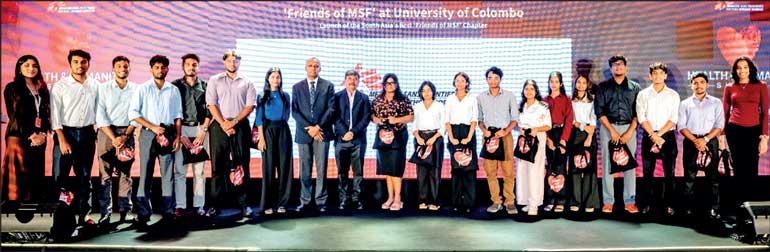
MSF South Asia also launched the local chapter of its renowned ‘Friends of MSF’ initiative, which engages with the youth through student-run university societies. Friends of MSF is a well-established global model to engage with humanitarian action, global health, social justice and emergency response.