Tuesday Sep 15, 2026
Tuesday Sep 15, 2026
Monday, 12 January 2026 00:52 - - {{hitsCtrl.values.hits}}
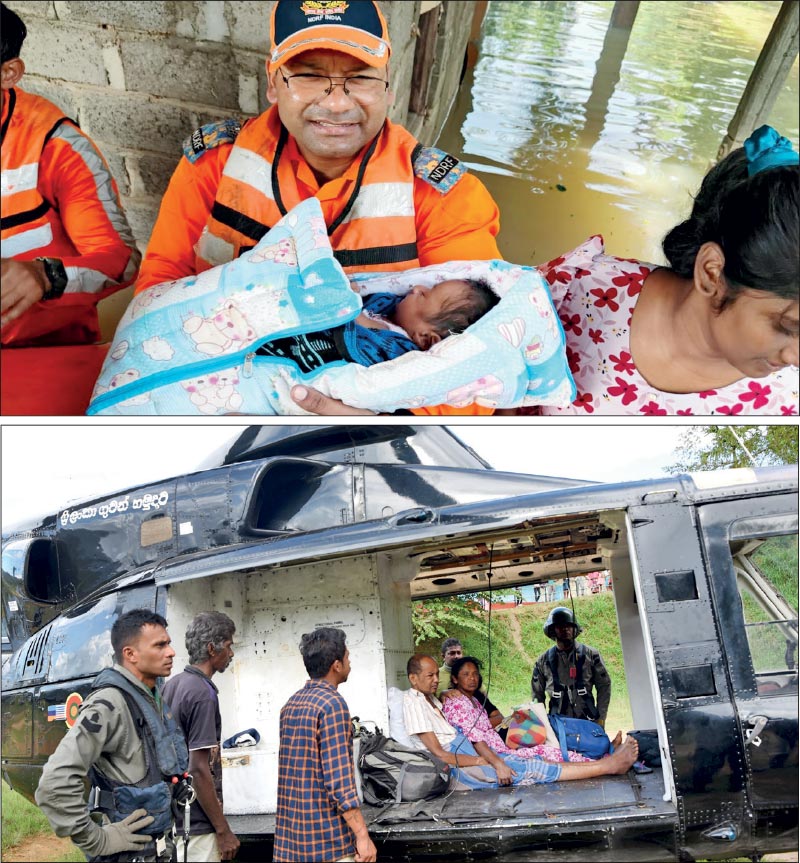
 Sri Lanka’s health challenge is no longer about access to hospitals or medicines alone — it is about how individuals live, eat, move, manage stress, and adhere to treatment every day
 Sri Lanka’s recent floods were a stark reminder that health is not defined only by hospitals and clinics, but by the environments we live in, the systems that support us, and the daily choices we make as individuals. As the country charts its path to recovery, there is a critical need to align public discourse with credible data and global health insights — while emphasising that health outcomes are a shared responsibility, especially for the individual.
International media often publish rankings or health indices that attract attention. Yet when ministers, economists, business leaders and the informed middle class in Sri Lanka seek to understand the state of national health, the most reliable sources remain official statistics and peer-reviewed research, such as those produced by the Ministry of Health, the World Health Organisation, and scholarly bodies that inform policy in Sri Lanka.
Understanding the current health landscape
Sri Lanka has long enjoyed health outcomes that stand above many peers in the lower-middle-income group. According to global health data, our life expectancy at birth has steadily increased and remains higher than regional averages, reflecting decades of investment in primary and preventive care.
Yet beneath these broad figures lie complex challenges that demand honesty. Non-communicable diseases (NCDs) such as cardiovascular disease, diabetes, cancer and chronic respiratory disease have become the leading causes of death and morbidity in Sri Lanka, accounting for approximately 83% of all deaths annually. This mirrors a broader trend across South Asia, where behavioural and lifestyle risk factors increasingly drive the disease burden.
The National STEPS Survey and similar surveillance activities identify familiar risk factors — tobacco use, unhealthy diets, physical inactivity, harmful alcohol use and stress — that underlie the rise in chronic diseases. These are largely modifiable, meaning that individual behaviours significantly shape national health outcomes.
Data from WHO’s Global School-based Student Health Survey also underlines the urgency of early interventions: risk behaviours often begin in adolescence, requiring comprehensive public health responses involving schools, families and communities.
Even as the Ministry of Health’s Annual Health Bulletin continues to highlight improvements in service coverage and communicable disease control, it also puts into sharp relief the scale of challenges posed by NCDs and risk-factor prevalence.
Five regional health themes shaping policy and business
Across South Asia, policymakers and the private sector increasingly discuss five interrelated themes that should frame Sri Lanka’s health agenda:
1. Climate-driven health risks
Floods, droughts and heatwaves are no longer episodic anomalies but recurring stressors. These climate shocks exacerbate infectious diseases, disrupt essential health services, and amplify vulnerabilities among the chronically ill. Building health resilience — the ability for individuals and systems to respond to these shocks — must be a national objective.
2. The epidemic of Non-Communicable Diseases
NCDs are now the principal health burden across the region. Unlike infectious diseases, the drivers of NCDs often lie not in the absence of medicines, but in lifestyle choices — patterns of diet, physical activity and consumption. Public policy can guide environments and incentives, but the ultimate responsibility rests with citizens themselves.
3. Ageing population and chronic care systems
Sri Lanka is ageing rapidly, increasing demand for chronic care services. Modern pharmaceuticals, once the exclusive domain of advanced economies, now play an indispensable role in managing conditions such as hypertension, diabetes and heart disease. These treatments have expanded healthy life years, allowing citizens to contribute productively to society well into old age.
Yet, medicine alone is not a panacea. Effective chronic care relies on adherence to treatment, ongoing lifestyle management, and an engaged patient — not merely passive receipt of prescriptions.
4. Mental health and well-being
The psychological impacts of disasters, economic stress, and social change have put mental health at the forefront of public conversation. Governments and businesses alike recognise that mental well-being is integral to productivity, social cohesion and overall health. Encouragingly, mental health services have expanded, yet stigma and care-seeking delays remain barriers that each of us must actively break down.
5. Innovation, access and trust in science
The past century has witnessed extraordinary advances in medical science: safer vaccines, targeted treatments for cancer and diabetes, and transformative pharmaceuticals have extended both lifespan and quality of life. The COVID-19 pandemic underscored the value of evidence-based public health — and the risks when misinformation undermines trust.
Sri Lanka’s successes in controlling many infectious diseases — including near-elimination of malaria and impressive immunisation coverage — are testament to what evidence-driven programs can achieve. Yet innovation must be paired with public trust and clear communication so individuals embrace — not reject — scientifically validated health advice.
 Health cannot be outsourced entirely to governments, technocrats or international experts. Nor can it be reduced to a simplistic scorecard. It is a collective endeavour — shaped by public policy, private sector innovation, cultural norms, and most fundamentally, by the cumulative impact of millions of individual choices made each day. Health is not merely the absence of disease but the presence of intentional, sustained care — at every level
The role of modern pharmaceuticals
It is worth underscoring that modern pharmaceuticals have been one of the great equalisers in global health. Medicines have transformed once-fatal conditions into manageable chronic diseases. Vaccines have reduced deaths from diseases that once claimed hundreds of thousands of lives. This revolution in therapeutics has not only added years to life, but life to years.
In Sri Lanka, access to essential medicines is enshrined within the public health system, available free at the point of care. This institutional commitment has helped underpin strong health indicators — from maternal and child health to robust management of chronic conditions — compared with regional peers.
But medicines are only effective when used properly. Adherence to prescriptions, regular monitoring, and lifestyle changes amplify the benefits of pharmaceutical interventions. Here again, the individual’s role is central: no health system can deliver better outcomes if patients do not take an active role in their own care.
A call to shared responsibility
Sri Lanka’s health story is one of remarkable achievements and persistent challenges. It is easy to criticise rankings or indexes that cast the nation as “below average” or “unhealthy.” But informed readers and policymakers must anchor public conversation in robust evidence and clear thinking.
Health cannot be outsourced entirely to governments, technocrats or international experts. Nor can it be reduced to a simplistic scorecard. It is a collective endeavour — shaped by public policy, private sector innovation, cultural norms, and most fundamentally, by the cumulative impact of millions of individual choices made each day.
As Sri Lanka rebuilds from the floods and positions itself for the decade ahead, let us champion a narrative that empowers citizens, strengthens systems, and unites science and society. Health is not merely the absence of disease but the presence of intentional, sustained care — at every level.
(The author is Deputy Chairman of Hemas Holdings PLC and the Chairman of the Healthcare Sector of the Group, where he has played a key role in expanding and strengthening the Group’s healthcare portfolio. He is an Attorney-at-Law of the Supreme Court of Sri Lanka and a Barrister of Lincoln’s Inn, holds an LLB from the University of Essex and an MBA from Melbourne Business School, University of Melbourne. Murtaza is also a Council Member of the National Institute of Education and Co-Founder of Learn4Life Lanka)




