Friday Oct 02, 2026
Friday Oct 02, 2026
Wednesday, 11 March 2026 02:12 - - {{hitsCtrl.values.hits}}
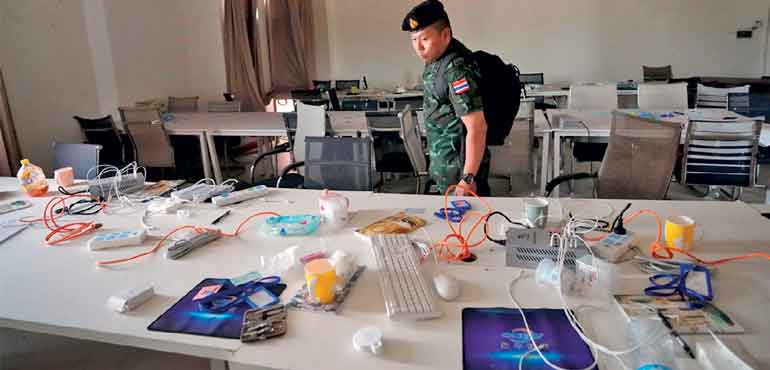
 In the quiet border town of O’Smach, Cambodia, authorities recently uncovered one of the most sophisticated scam operations the region has ever seen. The abandoned compound revealed rooms staged to look like international police stations, counterfeit uniforms, and stacks of forged documents, all meticulously designed to convince victims that they were under investigation. But beyond the physical deception lies a deeper, more insidious story, the emotional and psychological damage inflicted on those who were manipulated, intimidated, and exploited.
Careful grooming over weeks or months
Many victims did not stumble into these scams by accident. A significant number were drawn in through online relationships, often believing they had found love. Romance scams have become a powerful tool in the scammer’s tricks. Through careful grooming over weeks or months, perpetrators cultivate trust and affection, convincing victims that they are in genuine, committed relationships. Once that emotional bond is established, the scammers escalate to threats, fake investigations, or demands for money, exploiting both the victim’s love and their fear of losing it. The O’Smach compound was a hub for orchestrating such operations, using fake police stations, forged documents, and counterfeit uniforms to make the threats appear official and urgent.
Emotional investment
People fall for these scams not just because of trust in the other person, but because of deeper psychological factors. Loneliness, the desire for companionship, and the hope of emotional connection make individuals more vulnerable to manipulation. Scammers are trained and groomed to identify these needs and exploit them, offering attention, affection, and understanding what victims may be missing in their real lives. This emotional investment clouds judgment, making victims more likely to overlook warning signs, comply with requests, and rationalise suspicious behaviour. The combination of emotional attachment and fear of losing the “relationship” creates a powerful psychological trap.
The impact on mental health is profound. Victims report feelings of betrayal, humiliation, anxiety, and depression. The combination of emotional manipulation, financial loss, and the terror induced by fake “authorities” can trigger post-traumatic stress, panic attacks, and long-lasting trust issues.
Many victims did not stumble into these scams by accident. A significant number were drawn in through online relationships, often believing they had found love. Romance scams have become a powerful tool in the scammer’s tricks
People fall for these scams not just because of trust in the other person, but because of deeper psychological factors. Loneliness, the desire for companionship, and the hope of emotional connection make individuals more vulnerable to manipulation
Vulnerability
For those trafficked into working at these compounds, the trauma is compounded. They are forced to participate in deception, impersonate police officers, or maintain scripted interactions with victims under constant control. Many leave these operations with chronic stress, depression, and emotional scars that are extremely difficult to heal. What makes this case particularly alarming is the systematic way scammers exploit both love and authority. Online relationships create vulnerability, while fake legal threats amplify fear, making victims feel trapped and powerless.
Survivors often struggle not only with the financial losses but with social withdrawal, shame, and mistrust toward others, including legitimate institutions. These psychological wounds can last for years, affecting every aspect of their lives.
Chilling reminder
This discovery is part of a broader pattern in Cambodia, where organised fraud hubs have trapped thousands of victims. The abandoned compound may provide evidence of the scale of the crime, but it is the invisible mental health toll, the betrayal, fear, and trauma that tells the most urgent story. Authorities continue to investigate, but the challenge extends beyond law enforcement, how to support victims, provide mental health care, and address the complex ways love, trust, and fear are exploited in these scams. O’Smach stands as a chilling reminder that in the digital age, scams are no longer just about money, they are about emotions, trust, and the human psyche. The victims may have fallen in love online, but what they endured was far from romantic, it was a calculated assault on their hearts and minds.
Emotional investment clouds judgment, making victims more likely to overlook warning signs, comply with requests, and rationalise suspicious behaviour
Victims report feelings of betrayal, humiliation, anxiety, and depression. The combination of emotional manipulation, financial loss, and the terror induced by fake “authorities” can trigger post-traumatic stress, panic attacks, and long-lasting trust issues
(The author holds MSc Clinical and Health Psychology (UK), BSc Psychology (MY), Adv Dip Psychology, CBT, Dip Child and Adolescent Psychology (UK) and could be reached via email at [email protected])