Thursday Apr 02, 2026
Thursday Apr 02, 2026
Wednesday, 10 December 2025 01:01 - - {{hitsCtrl.values.hits}}
 |
 |
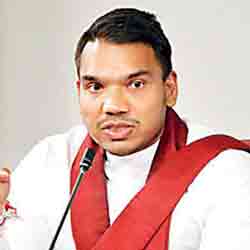 |
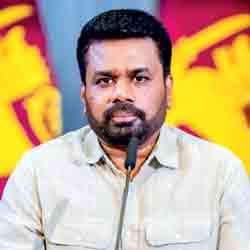
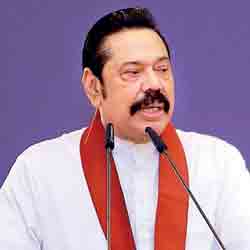
| President Anura Kumara Dissanayake | Former President Mahinda Rajapaksa | MP Namal Rajapaksa |
Disasters, irrespective of God-made or man-made do more than destroy lives, properties and infrastructure; they expose the strength or weakness of a nation’s governance. Two decades apart, Sri Lanka has confronted two major calamities that demanded emergency funding and decisive leadership: the Helping Hambantota episode of 2004, which became a national scandal, and the Rebuilding Sri Lanka Fund of 2025, established in response to the devastating floods and landslides of November 2025. The comparison is not merely historical. It offers essential lessons for how a nation learns, reforms, and moves forward.
If the past serves as a warning, the present offers an opportunity—provided Sri Lanka is willing to apply its lessons with honesty and resolve. Only then can the nation prevent a recurrence of past mis-governance and stop the same or similar elements from raising their ugly heads again.
Helping Hambantota
 Until 26 December 2004, the word tsunami was virtually unknown in Sri Lanka. Overnight, it entered the national vocabulary as the country confronted unprecedented devastation. Global sympathy poured in, bringing millions in humanitarian contributions intended for relief and reconstruction of the Island.
In the years that followed, the words “Tsunami” and “Helping Hambantota” became so closely linked that any reference to a major disaster instantly brought “Helping Hambantota” to mind. This is because that national tragedy—one of the worst in Sri Lanka’s history—was turned into an opportunity for personal and political gain by none other than the then Prime Minister and presidential aspirant, Mr. Mahinda Rajapaksa.
When the tsunami struck on 26 December 2004, President Chandrika Bandaranaike Kumaratunga (CBK) was abroad in England. Upon her immediate return, she initiated measures to rebuild the country and issued clear instructions through Presidential Secretariat Circular No. PA/272 of 29th December 2004. Among other directives, she explicitly prohibited the opening of separate or individual bank accounts for tsunami-related relief. All donations were to be deposited into a single designated account: the President’s Fund for Disaster Relief at People’s Bank – Headquarters Branch (Account No. 204 100 190 136245).
However, on 31 December 2004, Prime Minister Mahinda Rajapaksa opened a separate account titled Punarjeewana Fund at People’s Bank, Union Place Branch (Account No. 014100170136270), seemingly to test the reaction of President CBK. When no objection emerged to this official account, he proceeded further: on or around 11 January 2005, he opened another, this time a private bank account under the name Helping Hambantota at Standard Chartered Bank, Rajagiriya Branch (Account No. 01-1237322-01), with his close loyalists as signatories.
Unlike the controversial Helping Hambantota fund, the Rebuilding Sri Lanka Fund initiative is not a private or ad-hoc account. It is a statutory entity operating under the Presidential Secretariat of Sri Lanka. Importantly, it is not managed by family members or close associates of President AKD, but by a team of highly qualified professionals, including senior Government officials and top-level executives from major conglomerates and blue-chip corporate groups
A deepening power struggle at the helm
Faced with the Prime Minister’s increasingly belligerent conduct, his growing political clout, and the internal factionalism within the party—especially with the 2005 presidential election approaching and Rajapaksha positioned as the party’s candidate—President CBK found herself embarrassed and unable to act decisively against him.
With this backdrop and purportedly with the implicit blessings of President CBK, MP Kabir Hashim complained to the CID on or around 9 July 2005, that Rs. 82 million meant for national disaster relief had been transferred on or around 3 February 2005 from the Prime Minister’s official Punarjeewana Fund to the private “Helping Hambantota” account. Following instructions from Attorney General K.C. Kamalasabayson, the CID—led by DIG Lionel Goonetilleke—launched investigations and filed a “B” report before the Fort Magistrate’s Court (Case No. B/1294/5), asserting prima facie evidence of wrongdoing.
In August 2005, nearly seven months after the funds were misappropriated, the Rs. 82 million was abruptly returned to the National Fund for Disaster Relief at the Central Bank. The repayment only intensified public suspicion, widely compared to a thief returning stolen property once exposed.
Apologised judgment of Chief Justice Sarath N Silva
Mahinda Rajapaksa later filed a Fundamental Rights petition (SC FR 387/2005) against the IGP and CID officers, seeking to stop the probe. In a contentious ruling delivered in March 2006, Chief Justice Sarath N. Silva quashed the CID investigation and ordered compensation to Rajapaksa on the grounds that the allegations were “false and politically motivated.”
The case ended there, but its legacy endures—marking one of the most disputed chapters in Sri Lanka’s disaster-relief governance and deepening public distrust over how national emergency funds were handled. It was widely reported in the later part of 2014 that Sarath N Silva after his retirement had publicly apologized to the general public for quashing the investigation launched against the Prime Minister Mahinda Rajapaksha. (https://www.dailymirror.lk/Breaking-News/ex-cj-makes-public-apology/108-54377?utm_source=chatgpt.com)
Rebuilding Sri Lanka Fund (2025)
The catastrophic floods and landslides of November 2025 left vast regions under water, surpassing even the devastation of the December 2004 tsunami in terms of the extent of land flooded, property damage, and the number of people affected—though not in the number of lives lost. The aftermath and shockwaves caused by this disaster were felt not only across Sri Lanka but around the world, leaving many in disbelief.
The Government’s response was almost instantaneous, setting a new benchmark for efficiency. President AKD—widely regarded as the leader of the common people—sprang into action the moment the alarm was raised, working tirelessly around the clock. His weary eyes and exhausted body bore witness to his round-the-clock commitment.
Unlike past national crises that some turned into opportunities for personal or political gain—as infamously seen in the “Helping Hambantota” episode—this calamity was approached with integrity and unity. The focus was firmly on rebuilding Sri Lanka by bringing all communities together as one family and treating every region as part of a shared home.
Deep trust placed in the present Government by both local and international communities was a decisive factor in the extraordinary and continuous support extended to the country
Transparency of the Fund
The Government established an official statutory fund—administered under the name of the Deputy Secretary to the Treasury—to mobilise both domestic and international support for national recovery and reconstruction.
The Rebuilding Sri Lanka Fund, approved by the Cabinet as the country’s principal post-disaster recovery mechanism, was created in response to the devastation caused by Cyclone Ditwah and the accompanying floods and landslides. Its objective is to attract resources from a wide spectrum of contributors—Government agencies, local donors, overseas Sri Lankans, the international community, and the private sector—to finance reconstruction efforts. The Fund is designed not only for immediate relief, but also for medium- and long-term rebuilding across affected regions.
Unlike the controversial Helping Hambantota fund, this initiative is not a private or ad-hoc account. It is a statutory entity operating under the Presidential Secretariat of Sri Lanka. Importantly, it is not managed by family members or close associates of President AKD, but by a team of highly qualified professionals, including senior Government officials and top-level executives from major conglomerates and blue-chip corporate groups.
The Fund’s Management Committee is chaired by the Labour Minister and Finance and Planning Deputy Minister Dr. Anil Jayantha Fernando, , ensuring both administrative authority and financial oversight.
Trust is the foundation of every success.
The devastation unleashed by Cyclone Ditwah—which wreaked havoc across the country and triggered severe secondary impacts—was significantly eased by the overwhelming support that poured in from every corner of the local and international community. Financial assistance, physical aid, and moral solidarity reached Sri Lanka in an unprecedented wave. The honest, timely, and compassionate actions of the Government—under the able and empathetic leadership of President Anura Kumara Dissanayake—were instrumental in inspiring this massive global and domestic response.
It goes without saying that the deep trust placed in the present Government by both local and international communities was a decisive factor in the extraordinary and continuous support extended to the country. The immediate humanitarian assistance provided by India, Pakistan, and the UAE—particularly in the form of personnel and emergency services—deserves special recognition.
Relief package that stunned the nation
The generous relief package announced - within seven days of this national disaster- by President AKD for those affected and his solemn pledge to restore the country, reflects nothing less than his genuine and sincere concern for the people. There is no doubt that this comprehensive package has left his critics speechless.
One man, whose living standards were below average, told me that he almost wished his takaran-roofed house had been in the affected area and destroyed—so that he too might have qualified for the ten-million-rupee assistance to rebuild a better home on a better land. His remark, though humble, captures the sense of relief and renewed hope felt even in a country devastated by tragedy.
Desperate attempts to discredit the Government
It is disheartening to witness certain disgruntled elements from opportunistic and corrupt political circles attempting to undermine every sincere effort taken by the Government for mere political gain. One such politically motivated narrative accused the Government of failing to take proactive measures to mitigate the impact of Cyclone Ditwah, based on a discussion aired by a private television channel that is notorious for promoting unscientific, mythical, and chauvinistic news.
The tragedy is that sections of the Opposition—especially those directly responsible for bankrupting the nation, misgoverning such as “Helping Hambantota” scandal, and fostering racism and ethnic division—are now trying either to fish in troubled waters or to create troubled waters to fish in. If the alleged early warning of the impending disaster was genuine, as claimed by that media channel and certain Opposition parties, the channel should have repeatedly broadcast it as breaking news, and responsible political actors should have raised the matter in Parliament without delay.
It is disheartening to witness certain disgruntled elements from opportunistic and corrupt political circles attempting to undermine every sincere effort taken by the Government for mere political gain
Conclusion
Sri Lanka’s journey from the dark shadows of Helping Hambantota to the transparent and accountable Rebuilding Sri Lanka Fund reflects more than a change of leadership—it reflects a transformation in national values and public expectations. The people of Sri Lanka, weary of decades of corruption, manipulation, and misgovernance, have demonstrated through their overwhelming support that they respond with unmatched generosity when they can trust their leaders.
The 2025 disaster—though catastrophic—became a moment that united the nation rather than divided it. Under President Anura Kumara Dissanayake’s leadership, Sri Lanka chose integrity over opportunism, collective responsibility over political gain, and national rebuilding over personal enrichment. Thabuthegama, the humble village that shaped the President’s character, has symbolically replaced Hambantota as the nation’s new benchmark for honesty, empathy, and public service.
If Sri Lanka is to move forward, it must continue along this path—strengthening institutions, upholding transparency, and ensuring that no future leader can exploit a national tragedy for personal ambition. Disasters will come and go. But the trust between a nation and its people must remain unshakeable. That trust, once broken in Hambantota, has begun to be restored in Thabuthegama—and it must never be betrayed again.
(The author is a Retired Deputy Commissioner General of the Inland Revenue Department. He could be reached via email at [email protected])



