Tuesday Apr 28, 2026
Tuesday Apr 28, 2026
Thursday, 8 January 2026 00:20 - - {{hitsCtrl.values.hits}}
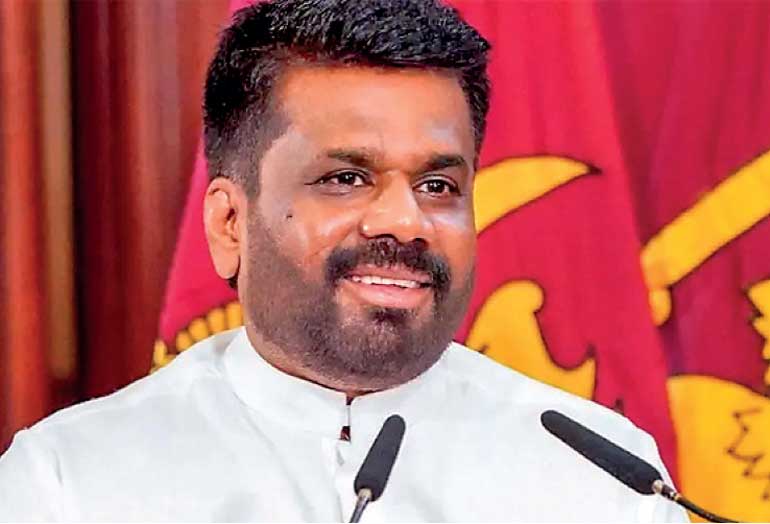
President Anura Kumara Dissanayake

Executive summary
Sri Lanka’s rebuilding effort following the recent disaster comes at a critical moment in its economic recovery. With limited fiscal space and fragile growth momentum, foreign assistance plays a pivotal role in enabling reconstruction without destabilising public finances. Beyond emergency relief, well-structured external support—through grants, concessional financing, technical expertise, and institutional strengthening—can accelerate infrastructure rebuilding, revive MSMEs and livelihoods, and embed “Build Back Better” principles that reduce future disaster risks.
Equally important is leadership credibility. President Anura Kumara Dissanayake’s growing international standing as a reform-oriented and transparent leader strengthens donor confidence, improves financing terms, accelerates disbursements, and helps crowd in private investment and diaspora engagement. When aligned with strong governance, transparency, and domestic reform, foreign assistance becomes leverage rather than dependency.
The central challenge for Sri Lanka is not access to goodwill, but the effective conversion of global trust into resilient, inclusive, and sustainable growth—transforming recovery from a short-term response into a long-term national reset.
Rebuilding beyond relief
Natural disasters expose more than physical vulnerabilities; they reveal the strength of institutions, leadership, and international relationships. For Sri Lanka, the recent disaster has arrived at a delicate moment—just as the economy was gradually stabilising after years of macroeconomic stress. The challenge today is not merely to repair damage, but to rebuild in a way that restores confidence, protects growth, and reduces future vulnerability.
In this context, foreign assistance is not simply humanitarian relief. When structured strategically and aligned with national priorities, it becomes a powerful instrument for economic stabilisation, institutional strengthening, and long-term resilience.
Why foreign assistance matters in the rebuilding phase
Bridging the fiscal gap without destabilising
the economy
 Disasters impose immediate and unplanned expenditure pressures while simultaneously weakening Government revenue. Domestic borrowing or monetary expansion at such moments risks inflation, higher interest rates, and crowding out private investment. Concessional foreign assistance—grants, soft loans, and budget-linked support—allows Sri Lanka to finance recovery without undermining fiscal stability.
In a post-crisis economy with limited fiscal space, this distinction is critical. External concessional funding buys time for recovery while preserving macroeconomic discipline.
Accelerating infrastructure reconstruction
Rebuilding roads, bridges, water systems, schools, and hospitals requires not only capital but also technical expertise, procurement discipline, and execution capacity. Multilateral institutions and bilateral development partners bring global experience in project design, environmental safeguards, and risk management. Their involvement improves quality, reduces delays, and lowers long-term maintenance costs.
Well-executed infrastructure reconstruction restores economic connectivity and revives regional productivity far more quickly than fragmented, under-funded domestic efforts.
Embedding “Build Back Better”
principles
International experience—from Japan’s post-tsunami rebuilding to the Netherlands’ flood-resilience planning—demonstrates that recovery can reduce future risk if done correctly. Foreign assistance enables Sri Lanka to integrate hazard mapping, climate-resilient standards, risk-based zoning, and disaster-ready construction norms into rebuilding programmes.
This transforms reconstruction from repetition of past vulnerabilities into an investment in future security.
Reviving livelihoods and MSMEs
Economic recovery depends as much on people and enterprises as on infrastructure. Foreign-supported credit lines, guarantee schemes, and technical assistance programmes can accelerate the revival of agriculture, fisheries, tourism, and MSMEs—sectors most vulnerable to disaster shocks.
For MSMEs in particular, which often operate with limited reserves and insurance, timely access to concessional finance and technical support can mean the difference between survival and permanent closure. Reviving these enterprises restores employment, stabilises household incomes, and supports GDP recovery.
Strengthening governance and transparency
Modern foreign assistance increasingly emphasises accountability, auditability, and institutional capacity-building. Digital grant management systems, transparent procurement frameworks, and independent monitoring mechanisms improve aid effectiveness while reinforcing public trust.
For Sri Lanka, such systems are not donor-driven formalities; they are tools to strengthen fiscal governance and investor confidence long after the recovery phase ends.
Leadership credibility as an economic asset
In post-disaster recovery, leadership credibility becomes a form of capital. The international community does not assess projects in isolation; it evaluates the governance environment in which those projects operate.
President Anura Kumara Dissanayake’s emerging reputation as a reform-oriented, transparent, and principled leader strengthens Sri Lanka’s standing with development partners, bilateral donors, and investors. This credibility influences not only the volume of assistance but also its quality, speed, and flexibility.
Better financing terms and faster support
Countries led by credible leadership are better positioned to negotiate concessional financing, longer maturities, and higher grant components. Donors are more willing to disburse funds quickly when confidence exists that resources will be used efficiently and transparently.
In rebuilding contexts, speed matters. Delayed financing prolongs economic disruption and increases long-term costs.
Crowding in private investment
Foreign assistance alone cannot rebuild an economy. Private capital is essential. Leadership credibility sends a powerful signal to global investors that policy direction is stable, institutions are strengthening, and risks are being managed responsibly.
This confidence effect allows public and donor-funded reconstruction to crowd in private investment rather than substitute for it.
Mobilising the diaspora and knowledge partnerships
Diaspora engagement depends heavily on trust in national leadership. Credible governance encourages overseas Sri Lankans to contribute not only funds but also skills, networks, and co-investment. Similarly, leadership credibility facilitates deeper partnerships with countries experienced in disaster resilience, enabling knowledge transfer alongside financing.
Fiscal and tax policy implications: A Chartered Accountant’s perspective
From a Chartered Accountant’s standpoint, post-disaster rebuilding is not merely an expenditure challenge; it is fundamentally a tax base protection and fiscal sustainability exercise. The way foreign assistance is structured and deployed will directly shape Sri Lanka’s revenue stability, compliance behaviour, and long-term fiscal health.
First, the quality of rebuilding determines the durability of the tax base. Poorly planned reconstruction leads to repeated asset losses, business disruptions, and income volatility, eroding VAT, income tax, PAYE, and corporate tax collections over time. In contrast, rebuilding aligned with “Build Back Better” principles strengthens productive capital, stabilises enterprise operations, and generates predictable revenue streams—reducing the need for repeated emergency tax measures.
Second, MSME survival is central to revenue recovery. MSMEs form the backbone of employment and indirect tax generation. When disasters trigger permanent MSME closures, fiscal consequences extend beyond job losses to reduced VAT inflows, weaker withholding tax collections, and increased informality. Foreign-assisted concessional credit and guarantee schemes therefore function not as subsidies, but as revenue-preserving instruments.
Third, concessional foreign financing reduces pressure on tax policy. Excessive reliance on domestic borrowing or inflationary financing often leads Governments to compensate through ad-hoc tax increases or premature rate adjustments. Grants and soft loans provide fiscal breathing space, allowing tax reforms to be sequenced rationally rather than imposed reactively.
Fourth, transparency in aid management strengthens tax morale. Robust audit trails, digital grant management systems, and accountable procurement processes enhance public trust. When taxpayers observe disciplined use of both public and foreign funds, voluntary compliance improves and enforcement costs decline. Transparency, therefore, is not merely a donor condition—it is a core revenue administration tool.
Fifth, leadership credibility has a measurable tax impact. Governance risk is ultimately priced into borrowing costs, exchange rate volatility, and inflation—functioning as an implicit tax on businesses and households. President AKD’s international credibility helps reduce this risk premium, lowering the hidden economic taxes borne by the private sector without changing statutory tax rates.
Finally, from a fiscal accounting perspective, disaster recovery expenditure should be treated as capital formation, not consumption. When foreign-assisted reconstruction expands productive capital stock rather than permanent recurrent spending, it supports long-term growth and sustainable revenue mobilisation.
Aid as leverage, not dependence
The strategic objective is not long-term reliance on foreign assistance. The objective is leverage—using external support to stabilise the economy, rebuild smarter, and return to self-sustained growth.
Foreign assistance works best when it is:
Time-bound
Targeted
Transparent
Aligned with domestic reform
President AKD’s global credibility enhances Sri Lanka’s ability to meet these conditions and convert goodwill into lasting economic and institutional gains.
Conclusion: Turning global trust into national resilience
Disasters are unavoidable; prolonged economic decline is not. Sri Lanka stands at a critical juncture where the quality of rebuilding decisions will shape economic performance for years to come.
When combined with disciplined policy execution, strong institutions, and credible leadership, foreign assistance becomes more than emergency relief—it becomes a foundation for resilience, confidence, and inclusive growth.
In this rebuilding phase, global trust in Sri Lanka’s leadership is as valuable as financial capital. Harnessed wisely, it offers the country a rare opportunity to emerge from crisis not merely repaired, but fundamentally strengthened.
(The author is a Chartered Accountant)



