Tuesday Sep 15, 2026
Tuesday Sep 15, 2026
Wednesday, 11 March 2026 03:12 - - {{hitsCtrl.values.hits}}
 |
 |
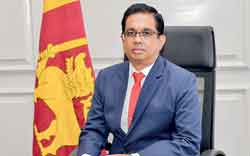 |
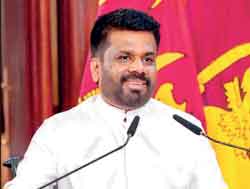
| President Anura Kumara Dissanayake | Prime Minister Dr. Harini Amarasuriya | Secretary to the President Dr. Nandika Sanath Kumanayake |
Sri Lanka is currently in the vice grip of fear-driven ‘administrative inertia’, and this is proving to be a serious obstacle to economic recovery and a tangible barrier to the smooth functioning of the everyday life of citizens. When the fear of a future audit, a commission of inquiry, mudslinging on social media, et cetera, outweighs the perceived benefit of taking a calculated risk in the best interests of the country, the machinery of state grinds to a halt.
‘Squeaky clean’ standard of compliance
 In the context of Sri Lanka’s fragile economic recovery, a public sector attempting to operate under a ‘squeaky clean’ standard of compliance, where every rule is followed to the absolute letter, is the death knell of progress. When administrators prioritise the "T" of a 1950s circular over the urgency of a 2026 recovery goal, the state, though achieving procedural perfection, ends with functional failure. True leadership must allow for leeway in distinguishing between the letter of the law and its intent. When officials are too terrified to exercise discretion, they become bottlenecks rather than facilitators. For Sri Lanka to attract investment and reform state enterprises, employees must enjoy psychological safety in decision-making. They must have comfort in knowing that a transparent, well-reasoned judgment call would not lead to a humiliating inquiry years later. Without this safety net, the default setting remains "inaction," and in a race for national survival, standing still is the most dangerous state of all. The National People’s Power (NPP) must take cognisance of this unhealthy situation and take immediate steps to lower the fear psychosis currently pervading the public sector.
In any bureaucracy, there is a fundamental asymmetry in risk. If a public official makes a bold decision that succeeds, the credit is usually claimed by political leadership. If he/she fails, even due to external market shifts, the leadership distances itself and the official faces potential prosecution, loss of pension, or public shaming, all alone. When an official delays a file, asks for further clarification, or refers it to a different committee, the status quo remains. While the country loses time and money, the official’s personal record remains "clean." In the present Sri Lanka, the pendulum has swung heavily toward the latter. A culture where fear-driven, strict compliance with rules has become the norm in evidencing accountability and in serving as a shield against potential future problems is not a roadmap for progress. Total adherence works for machines, but people need discretion to navigate moral grey areas. While rules create the essential structure, effective functioning requires the wisdom to know when to bend them.
In what has often been touted as the "Miracle of Dunkirk” in World War II, 400,000 Allied troops were trapped on the beaches of France, surrounded by the German army. The British military establishment was preparing for a total surrender. Based on their judgement that the situation called for urgent action, Admiral Bertram Ramsay and Winston Churchill bypassed standard naval protocols. They decided in hours to launch ‘Operation Dynamo,’ calling upon a "mosquito fleet" of civilian fishing boats, yachts, and lifeboats to cross the Channel. What was predicted to save only 45,000 men ended up rescuing 338,000. It was a "tactical retreat" which turned into a psychological victory. When the "official" channels are too slow, look at unconventional ways to expedite!
The 1994 Rwanda Genocide is a classic example of public sector failure. International leaders had clear intelligence that massacres were beginning. The United Nations and major world powers spent weeks debating the definition of the word "genocide" to avoid the legal obligation to intervene. The result was that over 800,000 people died in 100 days while the "decision-makers" were still in meetings. Remarkably like the inaction of the world over Israeli actions in Gaza in 2025.
Bedrock of a fair society
While strict adherence to the rule of law is the bedrock of a fair society in preventing corruption and favouritism, when rules become shackles rather than guardrails, they risk creating paralysis by analysis with unintended consequences. While it is recognised that the equal application of the rule of law was the battle cry of the National People’s Power (NPP) Government in capturing power, it was designed to ensure that the citizens received efficient services and that the country became more productive as a first step in enhancing the quality of citizens’ lives. The challenge lies in fostering a culture that balances procedural integrity with outcome-seeking common-sense discretion.
In complex governance, no rulebook can predict every variable. If state officials are conditioned to fear personal liability for every deviation, irrespective of intent, they will naturally default to inaction, which is the safest path for them as individuals but the slowest for the nation. To turn the wheels of progress, the system must distinguish between malicious bypass and pragmatic flexibility. Complex, long-drawn-out systems, procedures, and processes that stifle discretion and innovation must give way to frameworks that enable speedy decision-making within an environment of psychological safety.
Admittedly, unbridled discretion may give rise to cronyism and self-benefiting bias. However, that risk can be lowered by encouraging transparent decision-making that is directed towards defined outcomes. Speed and efficiency must be spawned through systems that do not punish honest mistakes. True "equal application" should mean that the law protects the proactive official just as much as it prosecutes the corrupt one. Auditing, for instance, must recognise intent and must not be a mere ‘box-ticking’ exercise. By nurturing a culture where outcome-oriented discretionary decision-making is supported by transparent reporting, the ruling National People Power Government can ensure that the rule of law is a catalyst for growth, rather than a chokehold on it.
An accent on speed and flexibility as opposed to strict compliance risks a descent into chaos. In the absence of a framework of consistent and pragmatic monitoring, recording, and reporting, discretion quickly turns into discrimination, where "speed" becomes a convenient excuse for favouritism or the bypassing of critical protocols. This can erode public trust and can invite systemic corruption, as "common sense" becomes subjective. Uncurbed shortcuts create hidden liabilities in the form of legal challenges, structural failures, and/or wasted resources that eventually move the goalposts backward, negating any anticipated benefits.
Bottleneck to progress
Society and the Government must focus on progress over perfection. If a country chooses to punish every mistake as a crime, it will eventually be governed by people who are too afraid to do anything at all. In the race for global development, stagnation is the greatest risk of all. By protecting “good faith” decisions, Sri Lanka can empower a new generation of public sector leaders to act with the speed and decisiveness required for a modern economy
Considering the above, every procedural bypass must be viewed through the lens of benefit versus cost. If the cost of strict adherence, measured in stalled national progress or lost opportunity, outweighs the benefit of rigid compliance, then discretion is justified. However, the benefit of speed may come with the loss of institutional integrity or public safety. In this light make adherence to the rule of law as the default setting. Discretion must be allowed only if there is a bottleneck to progress. It is finally a matter of judgement and balance. Strictly following rules will provide a reliable safety net and will ensure consistent quality in predictable environments. However, human systems are rarely perfect. Over-reliance on "the letter of the law" can lead to bureaucratic paralysis, stifling the creativity and empathy needed to solve unique problems and lubricate progress.
The shadow of poor accountability in the past several years, the antiquity and complexity of regulations, and the economic cost of zero risk are important aspects that must be considered in deciding whether rules are excessive, too few, or just right. The push for accountability is necessary, but the method matters. When anti-corruption drives are perceived as political witch hunts rather than systemic reforms, the public sector responds by retreating into a shell. If a procurement officer sees a predecessor being investigated for a decision made five years ago under different economic conditions, his/her instinct will be to ensure that every “i” is dotted and every “t” is crossed and that every signature is present, even if it takes ‘months of Sundays’ to acquire them. In a fast-moving global economy, an abnormally long delay is the sure way to lose competitiveness.
Policy paralysis and inertia
As we are aware, in life, there is no progressive movement without friction. On the other hand, policy paralysis and inertia create a vacuum. There is an economic cost of actions that have zero risk. For example, foreign investors do not just look at tax breaks. They look, among other things, at the ease of doing business. If a project is stuck in a "fear-loop" of decision-making, capital will simply flow to Vietnam, India, or Bangladesh. The state of disrepair of vital state-owned infrastructure is another case in point of public sector inertia. The effectiveness and capacity of such infrastructure have declined because of the lack of preventive maintenance and stalled upgrades primarily arising from tender processes, which are legal minefields.
All the above give rise to excessive paperwork, which seek multiple ‘legal opinions’ and ‘cover my backside’ approvals as a precaution against being sued or jailed for procedural lapses even when they were born out of a genuine intent to expedite proceedings.
Proliferation of "Defensive Bureaucracy"
The practice of "hauling" officials for past judgment calls, often years after the fact, creates a phenomenon known as retrospective criminalisation i.e., ex post facto law, where past actions, lawful when committed, are considered illegal in the present. This is a practice which is frowned upon by international law. While the public often demands "heads to roll" for failed policies, the long-term risks of aggressive, hindsight-driven prosecution can be more damaging to a nation than the original poor decisions themselves. The primary "cons" and systemic risks associated with this approach are, > The Proliferation of "Defensive Bureaucracy"; When officials fear that a judgment call will be scrutinised by a future commission, they adopt a "defensive bureaucracy" mindset. This is the administrative equivalent of defensive driving; the goal is no longer to reach the destination efficiently, but to avoid an accident at all costs. The result is that officials will refuse to sign any document that is not complete. The strategy is to "spread the blame." Per this approach, innovation dies because innovation, by definition, requires deviating from the "T" of existing policy, > The Loss of the "Best and Brightest"; High-stakes decision-making requires high-caliber talent. If the reward for public service is a modest salary but the risk is a lifetime of legal fees, potential imprisonment for a commercial miscalculation and public shaming, the private sector becomes the only logical choice for top-tier professionals. As such the public sector is left with "seat-warmers", whose primary skill is avoiding responsibility rather than solving complex national problems, > Asymmetric Hindsight Bias; Prosecutors and auditors have the benefit of hindsight, which is twenty-twenty. They judge a decision made in 2020 during a global pandemic or a currency crisis using the stable data available in 2026. This ignores the "fog of war" that exists during a crisis. If every official is held to the standard of perfect knowledge, no one will ever act during an emergency because perfect knowledge is impossible in real-time, > Policy Stagnation and the "Status Quo" Trap; Disturbing the status quo is inherently risky. Whether it is shifting to renewable energy, privatising a failing state enterprise, or restructuring debt, these moves involve "judgment calls."
The danger is that if the legal system treats a commercial failure, i.e., a well-intended plan that did not work, the same as corruption, i.e., a plan designed to steal, the safest path for any official is to do nothing. Doing nothing is rarely prosecuted, yet it is often the most expensive choice for a country, > Weaponisation of Accountability; In many developing democracies, "accountability" is frequently used as a political tool. New administrations often target the "judgment calls" of their predecessors to signal a "cleanup." This creates a cycle of revenge where the civil service becomes a political football. Officials become loyal to political parties for protection rather than to the state for progress.
"Safe Harbour" rules
To fix this, the NPP Government can look at "Safe Harbour" rules, being laws that protect officials from personal liability if they can prove they followed a transparent process, consulted experts, and had no conflict of interest. This shifts the focus from the outcome, which no one can fully control, to the process, which everyone can.
A "good faith" decision should be legally protected if it meets the following four criteria, regardless of whether the eventual economic outcome was a success or a failure, > The Duty of Care and Process; Officials must demonstrate that they followed a transparent process. Did they consult relevant experts? Was the decision recorded in a formal minute with a clear rationale? Were alternative options considered and documented? > The "Clean Hands" Test; This is the most critical. Is there evidence of a kickback, a conflict of interest, i.e., hiring a relative’s firm, or a hidden bank account? Did the officials, their family, and their associates gain anything, personally, from the decision?, >The "Fog of Crisis" Standard; In times of national emergency, such as a pandemic, a sudden fuel shortage, or a currency collapse, the luxury of a six-month "standard procurement" window does not exist. Decisions made under documented "emergency conditions" should be judged against what a reasonable person would do at that specific moment with the information available, not against what an auditor finds five years later in a quiet office, > Proportionate Risk-Taking; Government cannot be totally risk averse. To grow, a state must take calculated risks i.e., investing in a new tech hub or a specific green energy transition. If an official can show that the potential public benefit outweighed the potential risk at the time of the signing, they should be indemnified against personal liability.
To institutionalise these guidelines and stop the "decision making paralysis" three structural changes are required, > Independent Advisory Boards; Instead of a single official signing off on a high-risk project, independent boards comprising retired judges, industry experts, and civil servants can provide a "certificate of good faith." This spreads responsibility and provides a shield against future political victimisation, > Reform of the Auditor General’s Mandate: The Auditor General's role should shift from "value for money" which is subjective and hindsight-heavy to ‘integrity of process.’ If the process was followed and no fraud was detected, the Auditor should not have the power to "surcharge" an official for a commercial loss caused by external factors, > Professional Indemnity Insurance: Like doctors or corporate directors, high-level public officials should have state-funded professional indemnity insurance. This ensures that if they are sued for a "judgment call," their personal life and pension are not destroyed while they defend their professional record.
In conclusion, society and the Government must focus on progress over perfection. If a country chooses to punish every mistake as a crime, it will eventually be governed by people who are too afraid to do anything at all. In the race for global development, stagnation is the greatest risk of all. By protecting "good faith" decisions, Sri Lanka can empower a new generation of public sector leaders to act with the speed and decisiveness required for a modern economy.
(The author is currently a Leadership Coach, Mentor and Consultant and boasts over 50 years of experience in very senior positions in the Corporate World – local and overseas. visit www.ronniepeiris.com)




