Wednesday Aug 26, 2026
Wednesday Aug 26, 2026
Saturday, 21 March 2026 00:00 - - {{hitsCtrl.values.hits}}
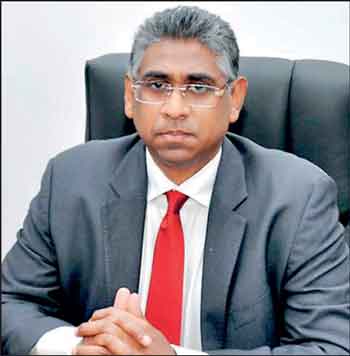 |
| Opposition MP Faiszer Musthapha, PC |
Opposition MP and President’s Counsel Faiszer Musthapha on Thursday urged the Government to act swiftly to attract global capital relocating from conflict-affected regions, warning that Sri Lanka risks missing a rare strategic opening if it remains slow, rigid, and overly constrained by policy orthodoxy.
Speaking during a Parliamentary debate, Musthapha said rising instability in parts of the Middle East was already prompting investors to seek safer destinations — and that Sri Lanka, by virtue of its location and emerging financial infrastructure, was well positioned to benefit.
“There is conflict in parts of the Middle East, and capital is looking for safety,” he said. “This is not a moment for hesitation. It is a moment to act.”
Musthapha noted that nearly 80% of global trade moves by sea, with the Indian Ocean carrying a substantial share of the world’s energy flows. Despite this strategic advantage, he argued, Sri Lanka has yet to fully capitalise on its position.
Pointing to the Colombo Port City — a 269-hectare financial zone offering full foreign ownership and unrestricted capital repatriation — he said the project has so far attracted only 137 authorised businesses.
By contrast, the Dubai International Financial Centre hosts approximately 8,800 companies and employs around 50,000 professionals, while India’s GIFT City has expanded rapidly through streamlined regulatory approvals and long-term tax incentives. Musthapha urged the Government to address the structural constraints behind Sri Lanka’s comparatively weak uptake.
He identified regulatory unpredictability as a key barrier to investment, arguing that Sri Lanka’s approval processes lack both clarity and urgency.
“In other jurisdictions, approvals are time-bound — often within weeks,” he said. “Here, you can submit an application and have no idea when it will be approved. That uncertainty alone drives investors away.”
He also raised concerns about perceived inconsistencies in regulatory decisions, referencing discussions in the Committee on Public Finance, where questions were raised over how certain entities obtained approvals while others did not.
What investors require, he said, is a transparent, rules-based system that guarantees equal treatment and predictable outcomes.
Beyond regulatory reform, Musthapha emphasised the need to strengthen legal infrastructure within the Port City framework. He proposed establishing a dedicated Commercial High Court and accelerating arbitration mechanisms to ensure timely dispute resolution.
“Investment is not only about entry,” he said. “It is about protection — the confidence that, if something goes wrong, the system will respond efficiently.”
Without such safeguards, he warned, even generous incentives would fail to build long-term investor confidence.
Musthapha also cautioned against what he described as the public “branding” of Sri Lankan companies in oversight forums and on social media, arguing that the amplification of unresolved corporate issues could undermine the broader investment climate.
“When investors look at Sri Lanka, they are not distinguishing between individual companies and the country,” he said. “Reputational damage travels quickly.”
While acknowledging the need for accountability, he called for a more measured approach — one that addresses shortcomings through engagement and resolution rather than public escalation.
He noted that several Sri Lankan firms, including those seeking to invest in Port City developments, have expanded internationally and contribute to the country’s reputation abroad.
Musthapha urged the Government to adopt a more flexible approach in dealing with international financial institutions, particularly the International Monetary Fund.
“If we attempt to follow every IMF directive without flexibility, we will not achieve growth,” he said. “At this moment, we must prioritise economic recovery and debt repayment through investment.”
He argued that targeted concessions — aligned with global benchmarks — are essential if Sri Lanka is to remain competitive in attracting capital.
“Without offering meaningful incentives, investors will not come,” he said.
Musthapha also stressed the need for an expedited and transparent approval process within the Colombo Port City framework, arguing that delays and uncertainty continue to deter potential investors.
Appealing directly to the minister in charge, he urged immediate outreach to investors in the Middle East, including in conflict-affected regions, and called for Sri Lanka to offer incentives comparable to those provided by Dubai.
“I don’t know — life is a risk,” he said. “But we must try to entice them. The Port City will only succeed when capital is looking for alternative destinations. We have to take that risk, go there, and make our offer.”
He cautioned against allowing external actors to dictate domestic economic policy, in an apparent reference to the International Monetary Fund.
“When you were in the Opposition, you spoke a lot about following the IMF,” he said. “If we try to follow every IMF directive at this moment, we cannot achieve progress.”
Musthapha argued that attracting investment would require meaningful concessions and a more assertive policy stance.
“Without giving concessions, investors will not come to Sri Lanka,” he said. “We must be able to tell the IMF that we need economic progress — that we cannot do everything they say.”
At a time when Sri Lanka is seeking to meet its debt obligations, he added, such flexibility is essential.
“To repay these debts, we need investment — and for that, we need concessions,” he said.




