Thursday Nov 19, 2026
Thursday Nov 19, 2026
Wednesday, 18 November 2026 00:00 - - {{hitsCtrl.values.hits}}

Illustration of opportunities for producers, entrepreneurs and workers
The Federation of Chambers of Commerce and Industry of Sri Lanka (FCCISL) in a statement welcomed Budget 2027’s focus on public investment and enterprise support.
To turn those proposals into jobs and orders for local businesses, FCCISL calls for realistic project budgets, timely payments and early government intervention when delivery is at risk. District and Divisional Secretaries can help agencies and businesses resolve obstacles close to where projects are delivered.
Public investment that reaches the districts
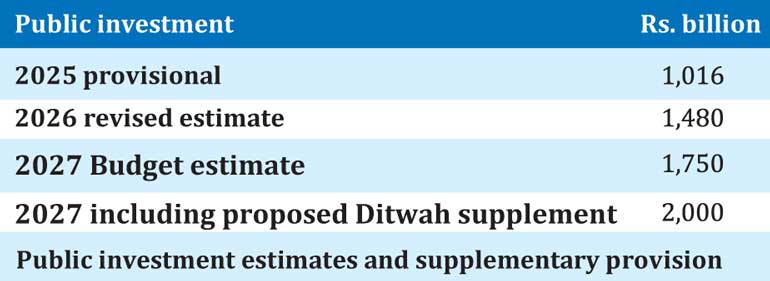
Annex III of the Budget Speech presented on 12 November puts public investment at Rs. 1,750 billion, 18.2% above the revised 2026 estimate. A proposed Rs. 260 billion supplementary estimate for Cyclone Ditwah reconstruction includes Rs. 250 billion for public investment and Rs. 10 billion for recurrent spending. With that supplement, proposed public investment reaches Rs. 2,000 billion, 35.1% above the revised 2026 estimate. The Budget was presented at Second Reading.
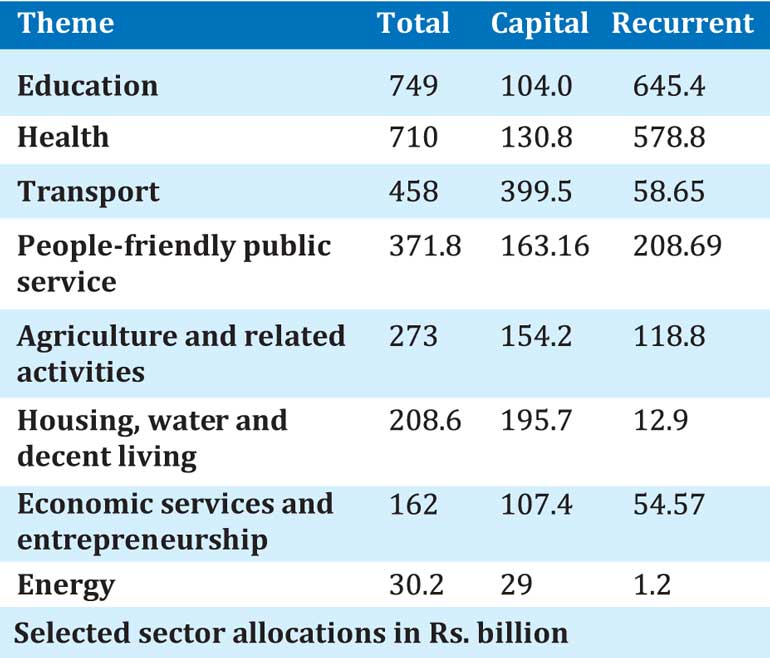
The Citizens Budget shows that transport has the largest capital component among the themes shown below. For district suppliers and contractors, the next steps are the publication of project scopes, funding schedules and tender dates.
District and divisional secretaries can connect projects to local needs
FCCISL proposes that District Secretaries convene line agencies, local authorities and chambers to review project readiness and publish expected tender dates. Divisional Secretaries can flag land, access, water and utility constraints early. Chambers can identify firms with the skills and equipment to bid and help others prepare for prequalification.

Illustration of public investment reaching rural communities
The capital schedule includes Rs. 2.8 billion for the Ingiriya–Ratnapura section of the A008. District chambers can help firms assess demand for construction and logistics services as project scopes become clear.
Better rural infrastructure can lift incomes and production
The Citizens Budget groups agriculture, irrigation, livestock, plantations, fisheries and land under a Rs. 273 billion theme. The Rs. 123 billion agriculture subcategory includes Rs. 44 billion for fertiliser support and Rs. 1.5 billion for crop insurance. Irrigation and livestock account for Rs. 93 billion and Rs. 9.4 billion respectively within the broader theme. Rural businesses can add value through testing, cold storage, aggregation and processing, sized to seasonal supply and confirmed buyer demand. For example, if 100 farms each supply 20 litres of milk a day and 80% is collected and accepted, the processor receives 1,600 litres a day before downtime. Firms can test that assumption against seasonal volumes and chilling capacity.
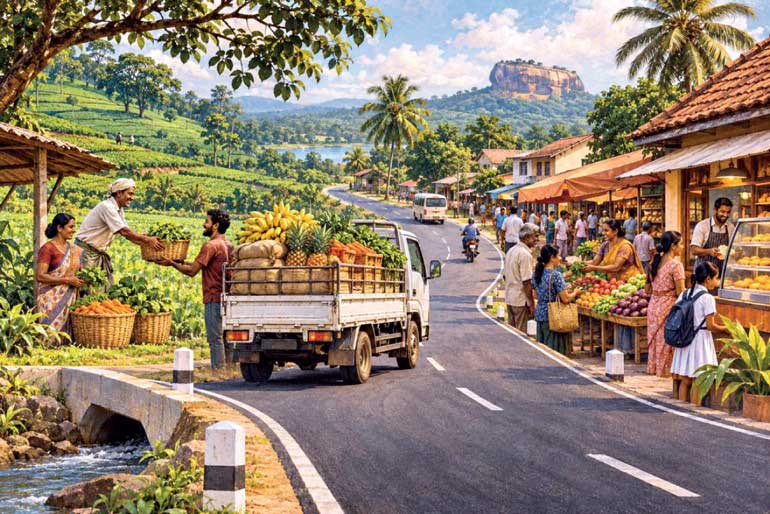
Illustration of improved road access linking producers to markets
Education and skills for district employers
The Budget Speech provides Rs. 1.5 billion in 2027 towards modernising 25 technical colleges across 25 districts and Rs. 800 million towards University of Vocational Technology facilities. District employers can identify shortages in skilled trades, hospitality and digital operations and offer supervised placements.
Tourism and hospitality beyond major centres
The Budget proposes Rs. 300 million from tourism authority funds to review and strengthen the Southern Mist Triangle across Galle, Matara and Ratnapura. Accommodation providers, guides, food suppliers and transport operators can develop joint offerings around visitor demand, reliable utilities and conservation requirements.
Rebuilding capacity after repeated shocks
The Easter Sunday attacks, COVID-19, the economic crisis and changes in policy direction weakened many firms’ working capital, staffing and equipment capacity. Contractors and suppliers still face debt repayments and uneven receipts. Timely certification and payment can help viable firms finance mobilisation and retain skilled workers.
Finance for local businesses and jobs
The Budget Speech proposes Re-MSME Plus lending at 5% and rural enterprise lending at 4% up to Rs. 5 million. The Citizens Budget also lists working-capital loans for growers of 35 eligible crops, including paddy, at 5% up to Rs. 3 million. Participating lenders and agencies should publish eligibility, security requirements and decision timelines. Partial credit guarantees and lender-led restructuring can help viable firms facing collateral or repayment constraints.
A profitable order can still leave a business short of cash when wages, suppliers and instalments fall due before customers pay. Positive operating cash flow gives SMEs and entrepreneurs room to reinvest and hire. Firms should test collection periods and working-capital needs before committing to new orders.
District producers can reach more buyers
The Budget Speech sets out Rs. 1.99 billion for the National Single Window for Trade, with wider exporter onboarding planned for the first half of 2027 and importer and re-export onboarding later in the year. It sets out Rs. 100 million to establish the separate National Single Window for Investment, with consultancy bids under evaluation at the time of the speech. The investment window can help local and foreign investors navigate approvals. District offices can help firms identify the agencies responsible for land, permits, utilities and environmental clearances. The Budget Speech also provides Rs. 750 million for activities including Sri Lanka Expo 2027 and export development priorities, and Rs. 4 billion for industrial estate development, feasibility work and upgrades. Chambers can help suppliers prepare for buyer meetings by checking certification, pricing and fulfilment capacity.
Reforms to lower production and service costs
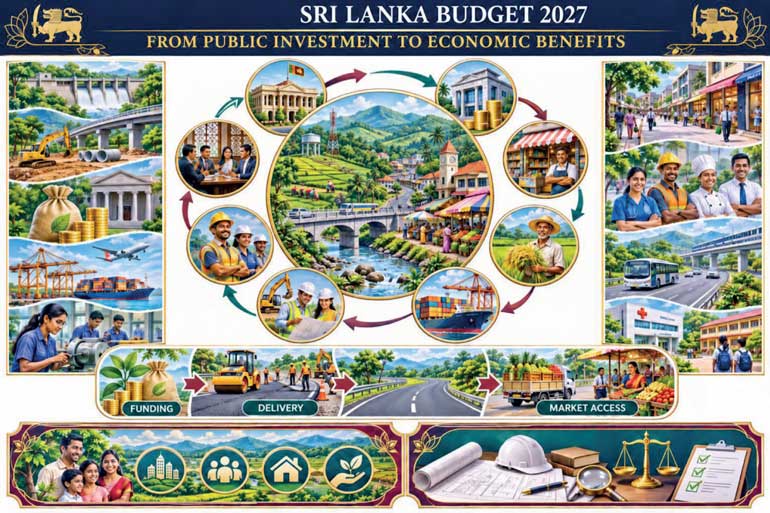
How public investment can lead to economic benefits
FCCISL appreciates the steps the Government has taken since assuming office to improve public systems and advance policy, regulatory and administrative reforms. The Federation welcomes Budget 2027 funding for digitisation and the institutions, policies and regulations that support it, as well as efforts to broaden the tax base and strengthen revenue administration. Legislative changes include the Inland Revenue (Amendment) Act, No. 2 of 2025, which revised personal income tax provisions, and the Sri Lanka Electricity (Amendment) Act, No. 14 of 2025, which amended the legal framework for electricity sector policy.
The reform agenda offers scope to lower energy and utility costs, review duties and levies, and streamline regulatory, procurement, approval and payment procedures. Redesigning and digitising those processes can cut duplicate submissions and speed up approvals and payments. Automation and appropriate use of AI can handle routine tasks, with officials accountable for decisions. Shorter approval times, reliable utilities and timely payments can free working capital, reduce idle time and lower unit costs. That gives firms more room to invest in skills and technology, improve productivity and compete for domestic and export orders.
FCCISL and its chamber and industry association networks stand ready to support implementation by identifying the procedures that add the most time and cost and sharing practical feedback with the responsible agencies.
Policy certainty for investors and citizens
Predictable tax and regulatory rules, transparent decisions and dependable safeguards can build investor confidence. Firms should factor customs duties, utility costs and approval lead times into project and export plans.
Investment in digitisation
The Citizens Budget identifies Rs. 19.53 billion under digitisation of government services, including Rs. 9.48 billion for digital government transformation, Rs. 970 million for digitising divisional secretariats and Rs. 610 million for government-service cybersecurity. Assisted access and published response times can help rural businesses use those services.
Seven FCCISL proposals can support regional delivery
FCCISL’s proposals cover GovData SL, public service transformation, national business recovery, B-READY regulatory reform, a Galle district pilot, Sri Lanka–New Zealand cooperation and a public–private consortium model. These priorities offer scope for cooperation on secure data sharing, enterprise recovery, dairy development and transparent project partnerships.
Evolving challenges and disruptions
Skills shortages, utility outages, climate hazards, global conflict and cyber incidents can disrupt deliveries. Before bidding, firms should assess whether they have the cash, staff, equipment and materials to meet realistic schedules.
FCCISL calls for rapid and sustained Government intervention to help distressed businesses resume operations. A standing mechanism could receive early notices, convene public clients, lenders and chambers, set decision deadlines and refer unresolved matters. Joint reviews and mediation can prevent disagreements from escalating.
Businesses should be able to seek early intervention even where binding agreements apply. Any extension, variation or other relief should follow applicable contracts, procurement rules and statutory approvals.
Budget facilitation and faster decisions
Public clients can prevent payment and contract disputes by clarifying responsibilities, certifying work promptly and referring unresolved matters through established channels.
FCCISL urges agencies to prepare workable estimates using current prices, realistic schedules and expected payment commitments. Risk-based contingencies and clear approval procedures can help projects absorb unforeseen cost and supply shocks. FCCISL proposes an additional contingency of 10% of the base project cost estimate for evolving risks, alongside the customary allowance for physical scope changes and variations. This provision would help agencies respond to unforeseen price volatility, climate disruption and supply interruptions, with use subject to applicable approvals.
FCCISL appreciates two years of budget dialogue, including the opportunity for district chamber leaders to present proposals at the Presidential Secretariat. The Federation welcomes the consideration given to its proposals and the inclusion of regional priorities in government programmes.
FCCISL President Dr. Rohitha Silva and the State Affairs Committee, chaired by Ruwan De Silva, reaffirm their readiness to work with Government through district and sectoral chambers, associations and institutions. FCCISL calls for public institutions to make business revival, entrepreneurship development and enterprise growth explicit priorities in their service mandate. Clear requirements, predictable response times and coordinated support at district and divisional levels can help entrepreneurs start and expand businesses, sustain profitability and create jobs.



