Friday Oct 09, 2026
Friday Oct 09, 2026
Wednesday, 6 May 2026 01:32 - - {{hitsCtrl.values.hits}}
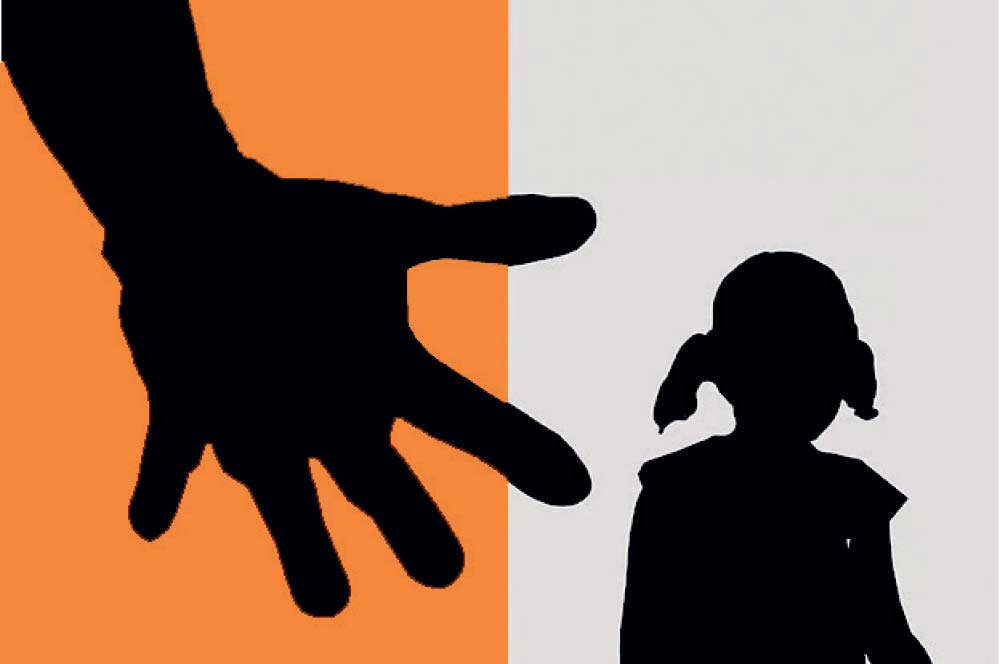
 Sri Lankan psychotherapist Dr. Chandana Namal Rathnayake was a former monk. He was ordained at the age of ten and remained in robes for over 20 years. He is also a survivor of clerical child-abuse. According to him, there are 12,649 monasteries in Sri Lanka with around 60,000 children living in them; about half of these novice monks might be victims of clerical child-abuse
By Tisaranee Gunasekara
- Jose Saramago (Blindness)
On 3 May 2012, London’s Isleworth Crown Court found Pahalagama Somarathana thera, chief incumbent of Thames Buddhist Vihara and Chief Sanghanayaka of the UK, guilty of four counts of sexual assault. At the time of the assault, the victim was nine years old. The final assault was committed in the shrine room of the temple.
The monk’s appeal was rejected in 2013. His 6-year jail sentence was commuted to three-and-a-half for good behaviour. He was banned from working with children for life and his name was added to the sexual offenders list.
The first Vinaya rule imposed by the Buddha deals with monks who engage in sexual relations with a female of any species. That absolute prohibition is the first of four Pārājikas: Rules entailing expulsion from the Sangha (Defeat). According to Professor Asanga Tilakeratne, this means “Like a person, whose head is cut off, is unable to live with that mutilated body, a bhikku having associated with sex becomes a non-samara and non-saying son” (Vinaya III Page 28 - https://buddhism.org/pages/The-Early-Vinaya-Stand-on-Monastic-Sexual-Behaviour).
How did Pahalagama Somarathana’s nikaya react to his conviction? Was he de-robed? Was even a statement issued condemning his gross violation of the Buddha’s teachings? No.
What did the administrations of Mahinda Rajapaksa, Maithripala Sirisena, Gotabaya Rajapaksa, Ranil Wickremesinghe, and Anura Kumara Dissanayake do about this convicted child sexual-abuser? Did any of those varied administrations take steps to ban him from working with children? No.
According to a news item in the state-owned Daily News of 24 May 2025, this convicted child abuser is still a monk, still the Chief Sanghanayaka of the UK, still the Chief Incumbent of Thames Vihara and of Yatawatte Vidyaravindra Pirivena in Gampaha.
In October 2023, Naotunne Vijitha thera, the Chief Sanghanayaka of Australia, was found guilty of eight charges of sexual penetration of a child under 16. Once he is out of prison, he too will be able to return to Sri Lanka to a robed-life of ease, plenty, honour, and impunity.
In his 2012 verdict, Judge Mathews said to Pahalagama Somarathana, “You have shown a total absence of remorse… You even pointed the finger of blame at your fellow monks… This was a betrayal of your religion, a betrayal of the Buddhist community in this country…” Though a non-Buddhist, the judge understood that the monk’s abuse of a child was in total violation of the Buddha’s teaching. Unfortunately, that basic understanding is beyond the mental capacities of our political class and the Buddhist establishment. In Sri Lanka, the supposed refuge of the Buddha’s teaching in its most pristine form, a convicted child sexual-abuser can continue to wear the robe and be venerated as a monk.
There is a clear line of descent between this permissiveness towards clerical crimes and the two most recent scandals involving monks. First was the arrest of 22 monks for bringing over 110kg of drugs to Sri Lanka from Thailand. Obviously, the brains behind this operation counted on the saffron robe acting as a protective cover for these drug-mules. A reasonable assumption given our practice of ignoring the wearer and worshipping the robe.
The second case is the implication of Atamasthanadhipathi Pallegama Hemaratana thera in a case of child sexual abuse (Atamasthana includes seven most sacred sites of Buddhism: Sri Maha Bodhi, Ruwanweliseya, Thuparama, Lovamahapaya, Abhayagiri, Jetavanaramaya, Mirisewetiya, and Lankaramaya).
Any accused is innocent until and unless proven guilty by a court of law. That basic right is applicable to the monk as well. But that doesn’t mean he is above the law. Unfortunately, due to the curious conduct of the police, the suspicion cannot but arise about an attempt to brush this crime under the carpet of time and forgetfulness. The police are yet to name the monk as a suspect (let alone arrest him on suspicion, despite a reported request by the National Child Protection Authority to do so) or to impose a travel ban on him. Whether this reticence is due to lack of credible evidence or pressure from on-high remains to be seen. When the case was called on 4 May, the Anuradhapura magistrate ordered the police to conclude the current investigation and to restart the investigation by filing a motion, possibly indicating dissatisfaction with the police conduct so far. How the police respond to this order would demonstrate the NPP/JVP Government’s real attitude to the rule of law and justice.
A Buddhist-born who disparages a young child who had known only poverty, neglect, and abuse her entire short life, who has no kindness or compassion for such a child is not a follower of the Buddha of the Tripitaka
Clerical child-abuse: the elephant in the room
Spotlight, an American movie, takes its name from the investigative journalist unit of The Boston Globe. The Oscar-winning film dramatises the newspaper’s investigation into clerical child abuse by Catholic priests in Boston and their cover up by the church hierarchy.
The crime and the cover up. Had the cover up not happened, the crime might not have continued with abundance and so many children could have been saved.
Clerical child abuse is the perennial elephant in the room, globally, a malady common to all organised religions. Sterling work by the media, abuse-survivors, child-right activists, and concerned citizens has torn the veil of silence and invisibility around this crime in some parts of the world. Not in Sri Lanka though. The subject remains more or less taboo, as writer Shakthika Sathkumara found out after he wrote a short story alluding to abuse of novice monks in monasteries.
Sri Lankan psychotherapist Dr. Chandana Namal Rathnayake was a former monk. He was ordained at the age of ten and remained in robes for over 20 years. He is also a survivor of clerical child-abuse. According to him, there are 12,649 monasteries in Sri Lanka with around 60,000 children living in them; about half of these novice monks might be victims of clerical child-abuse (https://shilohproject.blog/reflection-on-heartwood-symposium-on-sexual-violence-in-buddhism-centering-survivors-voices/).
In a You Tube interview, Dr. Rathnayake identifies as key reasons for the prevalence of clerical child abuse ‘the institutional echo-system of permissiveness’ within religious structures and the vulnerability of parents who send their children to monasteries out of poverty. The parents’ inability to question how their children are treated enables the treatment of these children as ‘less than human’, ‘disposable assets’, he argues (https://www.youtube.com/watch?v=m0EfKMeJlCo&t=5s).
These characteristics are present in the current case implicating Pallegama Hemaratana thera. The victim is from a very poor family; her parents sold flowers and bee-honey outside Ruwanweliseya. She was allegedly sold to the monk by her parents in lieu of a debt. In other words, this 14-years-and-4-months-old child belongs to the bottom-most layers of society. These are the people whose votes all politicians court and whose interests no government represents. The NPP came to power promising to bring the light of justice to these people caught in the mire of poverty, a promise that has been observed in the breach, up to now.
As with all rape/sexual-abuse cases, the victim-blaming has already started. The child-victim is being called a woman and the middle-aged monk is being portrayed as the victim of this child’s ‘promiscuity’. A Buddhist-born who disparages a young child who had known only poverty, neglect, and abuse her entire short life, who has no kindness or compassion for such a child is not a follower of the Buddha of the Tripitaka.
There is a reason for civilised countries to impose age-limits on drinking, driving, voting, sexual relations, and marriage. Even if a child behaves like an adult, that child is not an adult. A child does not have the mental tools, the knowledge of consequences and the maturity to make informed decisions about matters which could have a lasting effect on his/her life. And the child-victim we see after the abuse is not the child who was there before the abuse. Child sexual abuse leaves lasting – often lifelong – psychological scars, according to experts. This is even more so in the case of clerical sexual abuse. According to a paper by three Israeli academics on the religious implications of being abused by a rabbi, the psychological consequences of clerical child-abuse include “…PTSD; drug and alcohol use; sexual compulsion or inappropriate sexual behaviour; and the development of delinquent patterns… Additionally, when a venerated person who is considered to represent the good and the divine in the world is sexually abusive, victims often lose faith in their ability to distinguish between good and evil…” (https://www.sciencedirect.com/science/article/abs/pii/S0145213422004355).
It is too much to expect the chief prelates to resolve the current crisis by emulating the Buddha. They are and will act as guardians of powerful vested interests, even though a transparently fair investigation and a speedy trial is the best way to exonerate Hemaratana thera, if he is innocent. Since the chief prelates are too myopic to act in the Sasana’s best interest, much will depend on whether the Government has the foresight and the courage to act in its own and the country’s best interest. Surely the NPP cannot do worse than Mahinda Rajapaksa in this regard. When the then chief incumbent of Mihintale, Namalweva Ratanasara thera was accused of child abuse in August 2011, the police duly arrested him. In March 2012, Walawahangunawave Dhammarathana thera was appointed as temporary chief incumbent of Mihintale. If the police consigns the alleged case against Hemaratana thera to oblivion by sending it to the Bermuda Triangle that is the AG’s Department for further action, the Government will find itself in the position of the Naked Emperor, bereft of its only remaining garment, the promise to end impunity and ensure the equal application of law to the powerful and the powerless.
It is too much to expect the chief prelates to resolve the current crisis by emulating the Buddha. They are and will act as guardians of powerful vested interests, even though a transparently fair investigation and a speedy trial is the best way to exonerate Hemaratana thera, if he is innocent. Since the chief prelates are too myopic to act in the Sasana’s best interest, much will depend on whether the Government has the foresight and the courage to act in its own and the country’s best interest
A turning point?
Ajan Brahmawanso’s answer to the question about his reaction if a Buddhist holy book is flushed down the toilet is justly famous: call the plumber. But the full answer indicates a key reason for the moral-spiritual-legal-institutional crisis Lankan Sangha had created for themselves. “You can flush as many holy books down my toilet as you want, and you can blast as many Buddhist statues, you can burn down the temples, and machine gun the monks and the nuns, but I’ll never allow you to flush the Buddhist principles down the toilet. I won’t allow you to destroy forgiveness and compassion and harmony, and peace and truth. That is how I made the distinction between the container and the content” (https://www.youtube.com/watch?v=6Db6HVbKnCc&t=9s).
Container and the content: we turned the worshipping of the container into Buddhism while discarding most of the content. For example, in 2023, when The Daily Mirror asked the secretary to the Ministry of the Buddha Sasana about the sexual abuse of novice monks, his reply was all container, no content: “We are conducting investigations on these incidents, but I would like to you to focus on the state Wesak celebrations…” (Sri Lanka Brief – 4.5.2023). Thus we worship a convicted child-abuser because he wears a robe while ignoring the Buddha’s absolute prohibition of sexual relations for monks.
For many Lankans, the recent Peace March by a group of East Asian Buddhist monks from the US would have been the first time they beheld a bhikku who abided by the Buddha’s teaching: “He who controls his hand, controls his foot, controls his speech and is well-controlled in all respects, delights in meditation, is composed, solitary, and content – him they call a Bhikku” (Bhikku Vagga – Dhammapada). That Peace March was a vignette of what Buddhism could have been in Sri Lanka. The over the top response of ordinary people to the monks, and even their rescue dog Aloka, perhaps indicate our dimly understood and consciously unacknowledged collective desire for that different – and faithful to the teaching of the Buddha – Buddhism.
Dr. Rathnayake argues that clerical child abuse is becoming a ‘spiritual disaster’ of national proportions. “What we are seeing in Sri Lanka is an implosion of Buddhist monastic institutions… The institution compared to the values on which it was founded has deviated so much to unrecognisable levels…” ((https://www.youtube.com/watch?v=m0EfKMeJlCo&t=5s).
Bereft of all hopes of justice, some victims will take the law into their hands. Wilful blindness is no longer an option. The Government’s response to the latest child-abuse allegations against a powerful monk will do much to determine whether the country descends to those violent depths or not
Historically, the purification of Sangha in times of Sasanic-degeneration was the work of Lankan kings. Whether elected governments can play that role is uncertain. The NPP/JVP’s Government definitely lacks the moral courage to stand up to powerful vested interests, be they secular or religious. What any elected government can do – and must do - is to ensure that the law is allowed to take its course in cases of clerical crimes. Not doing so could create the kind of situation alluded to in the American riddle about an 800-pound gorilla. Q. Where does an 800-pound gorilla sit? A. Anywhere it wants to.
In 2021, the chief incumbent of a temple in Uduwila, who had allegedly abused a novice, was murdered by the novice’s family including his mother. In 2023, the chief incumbent of a temple in Hettipola was beaten to death by a father for raping his 8-year-old daughter. Impunity eventually breeds anarchy. Bereft of all hopes of justice, some victims will take the law into their hands. Wilful blindness is no longer an option. The Government’s response to the latest child-abuse allegations against a powerful monk will do much to determine whether the country descends to those violent depths or not.
If the police consigns the alleged case against Hemaratana thera to oblivion by sending it to the Bermuda Triangle that is the AG’s Department for further action, the Government will find itself in the position of the Naked Emperor, bereft of its only remaining garment, the promise to end impunity and ensure the equal application of law to the powerful and the powerless




