Monday Sep 14, 2026
Monday Sep 14, 2026
Friday, 16 January 2026 00:00 - - {{hitsCtrl.values.hits}}
 By Oshin Ramesha
The reopening of Sri Lanka’s vehicle import market after the economic crisis marks a significant shift in post-stabilisation policy. However, recent market behaviour indicates that the sector is now entering a phase of correction rather than expansion, presenting both risks and opportunities for industry stakeholders.
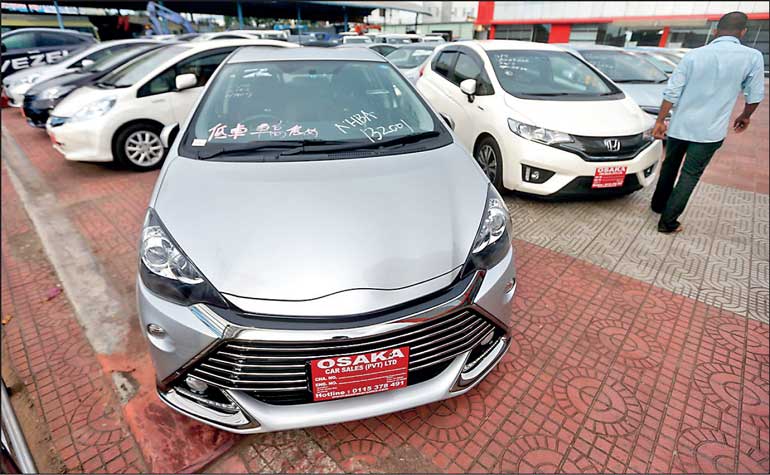
Following years of restricted imports, the sudden re-entry of vehicles into the market has resulted in excess supply, price volatility, and intensified competition among dealers. While headline prices have declined, effective demand remains constrained due to high household debt, elevated living costs, and lingering uncertainty regarding disposable income growth. Consequently, consumer purchasing decisions are increasingly deferred, with expectations of further price adjustments.
The composition of demand has also changed. Buyers are now more cost-conscious and analytically driven, focusing on total cost of ownership rather than brand prestige. Fuel efficiency, maintenance costs, financing flexibility, and resale value have become decisive factors. In this context, electric and hybrid vehicles are gaining attention, not merely as lifestyle choices, but as rational economic alternatives amid long-term fuel price uncertainty.
For vehicle business owners, traditional pricing-led competition is proving unsustainable. The current environment calls for structural adaptation — including transparent pricing models, inventory discipline, stronger alignment with financial institutions, and improved after-sales service. Dealers who prioritise trust, operational efficiency, and customer lifetime value are more likely to withstand the ongoing market adjustment.
From a broader economic perspective, a stable and well-regulated vehicle market can support employment, financial sector activity, and consumer confidence. However, this requires disciplined industry behaviour and policy consistency rather than speculative trading practices.
My suggestion is that the vehicle sector should reposition itself from short-term volume chasing to long-term value creation. Such a shift would align the industry more closely with Sri Lanka’s wider economic recovery objectives and contribute to sustainable market normalisation.
(The author is an independent analyst)




