Thursday Oct 22, 2026
Thursday Oct 22, 2026
Tuesday, 7 July 2026 05:14 - - {{hitsCtrl.values.hits}}
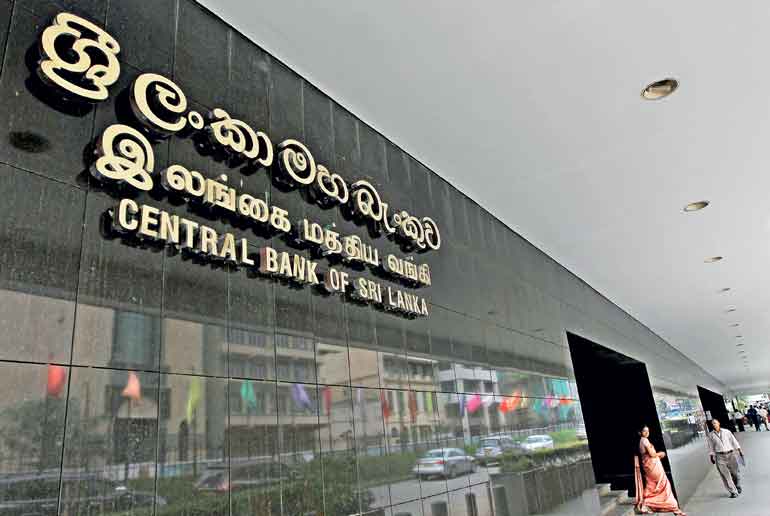
 Choosing the optimal inflation target is a classic problem in monetary economics, lacking robust research findings to determine the most desirable number. Central banks in many advanced countries have chosen a common inflation target close to 2%. Following this trend, several analysts are of the view that an inflation target around 2% is most suitable for Sri Lanka, instead of the present target of 5% with a margin of 2% on either side.
The myth ‘Lowering the Central Bank’s inflation target from 5% to 2% is desirable for economic stability’ was demystified in last week’s column on the premise that the present flexible inflation targeting at 5% provides leeway to the Central Bank of Sri Lanka (CBSL) to dampen economic downturns and to factor in supply-side inflationary pressures. The case against a lower inflation target is elaborated further in this column, considering other factors.
Zero lower bound interest rates
A primary reason for choosing a higher inflation target is to overcome the Zero Lower Bound (ZLB) problem in monetary policy arising from the fact that nominal interest rates cannot be negative. The real interest rate, which is the actual cost of borrowing adjusted for inflation, equals the nominal interest rate minus the inflation rate. As per the Fisher Effect, the nominal interest rate is determined by adding the expected inflation rate to the equilibrium real interest rate. Thus, a lower inflation target shrinks the average baseline nominal interest rate. In order to stimulate GDP growth during an economic downturn, the central bank has only a little room to cut interest rates before hitting zero. A low inflation target triggers a Keynesian-type liquidity trap where monetary policy becomes ineffective.
Deflationary spiral
An extremely low inflation target creates an “inflation target floor” by pushing interest rates to the ZLB and inflation into negative territory. It results in a rise in the real interest rate, causing deflationary biases and economic stagnation. High real interest rates make financing prohibitively expensive and thereby suppress borrowing, investment, and consumer spending.
In an environment of declining prices, consumers postpone their purchases of durable goods, anticipating further price drops in the future. The decline in aggregate demand forces businesses to reduce prices further, setting off a vicious cycle of low production, job losses, and wage stagnation. In this context, a moderate inflation targeting at 5% is beneficial for economic growth.
Structural factors affecting productivity growth
Low inflation targeting is often cited as a prerequisite to productivity growth by the proponents. They argue that low inflation reduces the volatility of interest rates and exchange rates, and market uncertainties. Such conditions prevent misallocation of resources and encourage companies to engage in long-term investments, focusing on efficiency and innovation rather than short-term speculative trading. Thus, low inflation helps to improve productivity growth, according to the critics.
However, inflation in a developing country like Sri Lanka is subject to internal and external shocks such as domestic food supply disruptions due to weather conditions and globally determined oil price fluctuations. Inflation due to such factors is beyond the control of the CBSL, and therefore, a low inflation target does not necessarily ensure the price stability required to improve productivity.
CBSL requires a certain degree of flexibility in conducting monetary policy to provide the necessary monetary stimulus to prevent economic downturns. Lowering the inflation target to 2%, as recommended by the critics, will restrict such policy space, resulting in a deceleration of GDP growth. Hence, there is no justification for lowering the inflation target, as suggested
There are many factors other than price stability that adversely affect productivity in developing countries against the backdrop of fast-growing knowledge-based economies. They include political instability, inconsistent economic policies, labour unrest, human capital shortages, infrastructure bottlenecks, low research and development (R&D), and technology and innovation handicaps.
In the case of Sri Lanka, the old-style manufacturing ventures dependent on cheap labour and backward technology retard GDP growth. The country’s R&D expenditure is as low as 0.1% of GDP, compared with 1.0% in Malaysia, 1.2% in Thailand, and 2.2% in Singapore. While low inflation is a necessary condition for GDP growth, that itself is insufficient to accelerate growth. Science, Technology, and Innovation (STI) needs to be prioritised in policy agendas to shift the economy towards a technology and innovation-driven growth path from the present outmoded factor-driven growth.
Tolerable inflation is high for developing economies
Given the resource constraints, developing countries are compelled to tolerate higher inflation due to production cost escalations arising from excess demand for labour and raw materials during initial phases of development. Accordingly, the inflation threshold of 7% to 11% is typically considered a tolerable inflation zone to support GDP growth in emerging and developing countries. In contrast, the advanced countries aim for lower inflation thresholds of 1% to 3%, as technology and innovation enable them to produce goods and services more efficiently at low cost.
For developing countries, the beneficial inflation zone falls within the threshold of 1% to 7% for fostering investment and growth. The detrimental inflation zone, which encounters inflation exceeding 11%, is harmful to GDP growth.
Trade-off between inflation and growth
The trade-off between inflation and GDP growth is a macroeconomic dilemma where policies designed for low inflation often dampen growth, and vice versa. In the short run, there is a positive correlation between inflation and growth. For instance, an interest rate cut by the central bank could stimulate growth. Eventually, such growth momentum fades away with rising inflation due to a surge in aggregate demand. Hence, there is no significant trade-off between inflation and GDP growth in the long run.
Dismal growth prospects
While Sri Lanka’s economy has shown significant stability signs following the economic reforms adopted in 2023, its growth potential is severely constrained by export setbacks, surging import outlays, slow productivity growth, delayed structural reforms, and macroeconomic volatility. According to official sources, the GDP is projected to grow by only 3.0% in 2026, 3.2% in 2027, and 3.1% in 2028.
The IMF, in its latest Country Report for Sri Lanka, stresses that broader reforms are needed to unlock Sri Lanka’s growth potential. The areas to be prioritised include liberalising trade, improving the investment climate, enhancing SOE efficiency, reducing labour market rigidities, mitigating climate vulnerabilities, and improving the targeting and coverage of social safety nets.
In this context, the CBSL requires a certain degree of flexibility in conducting monetary policy to provide the necessary monetary stimulus to prevent economic downturns. Lowering the inflation target to 2%, as recommended by the critics, will restrict such policy space, resulting in a deceleration of GDP growth. Hence, there is no justification for lowering the inflation target, as suggested by them.
(The author, Emeritus Professor in Economics at the Open University of Sri Lanka, is the President of the Sri Lanka Economic Association and the Honorary Deputy Chairman of the Gamani Corea Foundation)




