Thursday Oct 15, 2026
Thursday Oct 15, 2026
Wednesday, 10 December 2025 00:58 - - {{hitsCtrl.values.hits}}
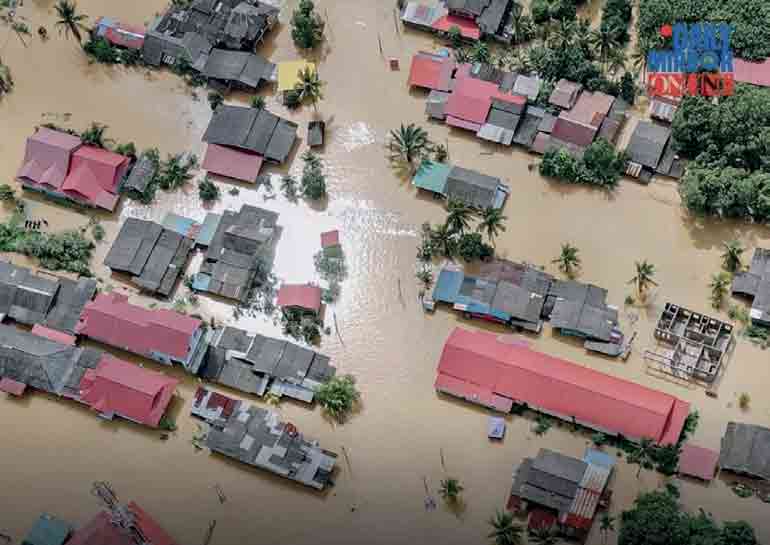
 Cyclone Ditwah, which swept across Sri Lanka at the end of November, caused massive damage to the country, the extent of which need not be mentioned here, as all are aware of it by now. Heated arguments went on among many parties with regard to how this destruction could have been mitigated and who should take responsibility. Although there may have been shortcomings in several aspects of how we responded to Ditwah, this article highlights a critical area that urgently requires attention if we are to protect ourselves from similar hazards in the future.
As is common in many situations, it has once again showcased a concerning weakness in the country’s disaster-management cycle, the gap between issuing early warnings and the expected public response. The Meteorological Department, the Irrigation Department, the National Building Research Organisation, and other authorities issued continuous warnings to evacuate well in advance of imminent threats of flooding, landslides, and water hazards. However, the level of preparedness and community reaction fell short, leading to far greater personal property damage, including loss of a few hundred lives.
Cycle of natural disasters
Sri Lanka is not unfamiliar with natural disasters. One of the most devastating disasters in our history could be considered the 2004 Tsunami event, which resulted in over 35,000 deaths and over $1 billion in property damage in the coastal belt. After the event, the concepts of disaster management were introduced to the country, which we have been adhering to since then. Again in 2016, the country faced massive river flooding, especially in western and southern regions, and until recently experienced repeated floods and landslides due to rains caused by atmospheric disturbances, though less in scale. Each of these events paved the way for relevant authorities to discuss and take appropriate measures on institutional readiness, infrastructure resilience, and public awareness. Yet Cyclone Ditwah has demonstrated that despite improvements in forecasting and communication, well supported by technological advancements, the translation of warnings into action remains critically weak.
The success of early-warning systems depends on how quickly and effectively the public and relevant institutions respond. In the case of Ditwa, the Department of Meteorology issued warnings several days beforehand, supported by regional cyclone forecasting of neighboring countries. Other organisations previously mentioned circulated advisories with regard to expected flood risk and possible landslide threats on television, radio, and social media, with continuous updates. All the flood warnings were more than accurate, as low-lying areas were affected by floods with anticipated heights and times. Landslide risks, too, were well-informed for many areas on a larger spatial scale, presumably due to the practical difficulties of identifying such areas on a minor scale, given that micro-topography in hill country is susceptible to localised failures. Hence, the technical side of the early-warning system worked as it should have. However, it is pathetic that the response from the public did not align with the risk communicated in most areas.
In many affected areas, people may have underestimated the severity of the hazard based on their past experiences. In a country where weather hazards are common, some may have treated the warnings as routine messages they hear day by day. As all the warnings do not end up in severe outcomes, some may have disregarded them as futile. In the meantime, there can be yet another segment of the population that did not have adequate knowledge and guidance on what specific actions to take after receiving a warning. This could especially happen if the responsible authorities lack necessary preparedness plans. Whatever the case may be, lapses in response to early warnings magnified the cyclone’s impact.
Preventive actions
Enforcing preventive actions by authorities has certain limitations. In some areas, even the police struggled to move people from vulnerable areas owing to community resistance. This could be partly due to a lack of temporary accommodation prepared in advance. In some cases, communities were reluctant to relocate due to concerns over safety, privacy, and the status quo. However, it should be noted that people living in low-lying areas of the Kelani River and Attanagalu Oya had ample time to evacuate with their valuable belongings.
Hazard warnings are technical outputs of various models. For them to be effective, the public must understand them, trust them, and take appropriate action as instructed. This requires continuous community engagement, education, and preparedness training. Sri Lanka must therefore take more actions on community-level disaster preparedness programs. A culture of preparedness is the need of the day, and schools, religious institutions, and community-based organisations can play an important role in making it a reality. Risk communication must be further simplified so that people can easily understand what they should do at different alert levels.
Cyclone Ditwah has left, giving us a strong message. Even an accurate weather forecast and associated hazard warnings cannot save lives or property unless the public responds appropriately. As it is beyond doubt that climate change intensifies the frequency and severity of extreme weather events, people in Sri Lanka have to consider preparedness as a routine part of life and respond to warnings promptly to mitigate damage from future disasters.
(The writer is a chartered
Civil Engineer)




