Thursday Nov 19, 2026
Thursday Nov 19, 2026
Thursday, 19 November 2026 05:20 - - {{hitsCtrl.values.hits}}
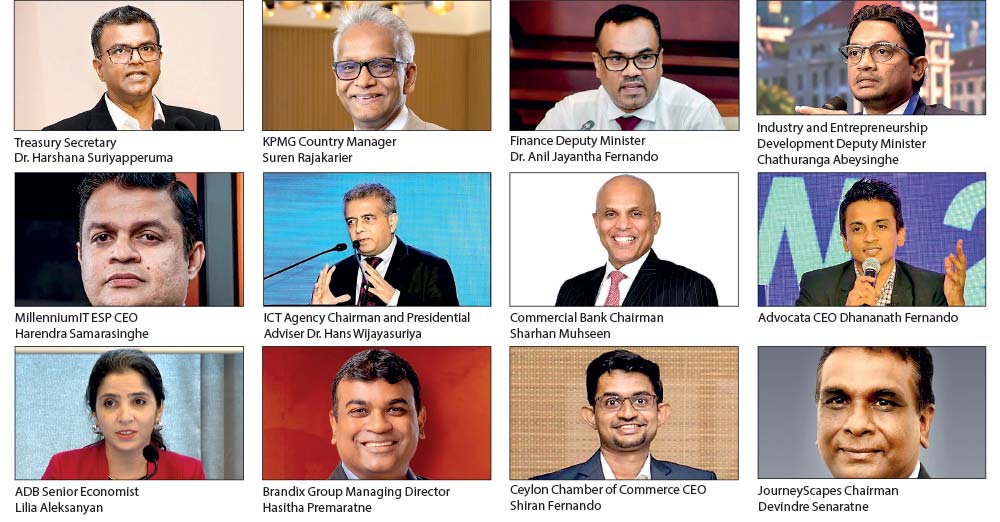
Treasury Secretary, Dr. Harshana Suriyapperuma said Budget 2027 has delivered continuity and consistency, with no major deviations from Government discussions with the business community and citizens. Addressing the gathering at the post-Budget forum hosted by KPMG, Dr. Suriyapperuma stated the Government is ready to listen and work with the private sector, adding Free Trade Agreements will play a significant role in the journey ahead as our market is too small.
Opening the forum, KPMG Country Manager Suren Rajakarier noted the IMF program offers Sri Lanka a good policy buffer amidst the global exigencies. In a recorded statement, Deputy Minister of Finance Dr. Anil Jayantha Fernando, stressed the need to create a conducive environment for investment and safeguard macro stability. He said the Government is striving to achieve a sustainable 7% annual growth, and enable rural communities to be better engaged in larger economic activity. The Deputy Minister pointed to the need for a central platform to attract investment to the country, adding the Government hopes to put in place the legal framework to achieve that end through parliament early next year. This will include structural changes to the public service.
His comments were echoed by the Treasury Secretary, who said the Government is very serious on refining the legal system to ensure all four corners of the nation are tapped into development and economic expansion.
“Energy is a big-ticket item, and there is a lot of focus on Mannar basin. We have negotiated prices down with some projects and the benefits will be felt by all businesses and citizens of the country. Those best suited for the job will get the job. Digitisation
is a key element of our journey ahead and we are being very aggressive with it to eradicate corruption. We have made things happen that have been stuck for so long. The Government has also recognised the need to boost our human capacity, which is why the education system is being overhauled to support that. We are aligning the system to service requirements coming from the market, but it is a long-term exercise,” Dr. Suriyapperuma said.
During the panel stage, MillenniumIT ESP CEO Harendra Samarasinghe noted that despite ambitions to reach $ 5 billion in ICT exports by 2030, Sri Lanka doesn’t have enough graduates coming out of the system to meet that target. Samarasinghe said Sri Lanka must attract more Global Capability Centres, but the process of attracting and nurturing talent to suit that end needs a serious rethink. On the other hand, he saw the current global challenges as a “perfect storm”, where everything is in shock and almost every sector and company must reimagine themselves to stay current.
ICT Agency Chairman and Presidential Adviser Dr. Hans Wijayasuriya, enthused the budget has set out a multipronged approach to the digital economy, including the provision of high-speed broadband to all parts of the country as a priority. This will be completed by 2029. Dr. Wijayasuriya, too, pointed to the potential of data centres, but said Sri Lanka is energy constrained, and expressed hope this sphere be pursued more aggressively come 2028 following planned enhancements to power generation.
“The Digital Economy Authority is a principal tool that will drive, regulate and manage the digital transformation. The confluence of several regulatory bodies including the TRCSL and other agencies will further strengthen the digital economy, where the council will be the apex body. It will include the President, so that we can provide quick responses to any query. We must establish the necessary regulations and set in place the cybersecurity so we stay ahead of the curve,” Dr. Wijayasuriya said.
Commercial Bank Chairman Sharhan Muhseen noted there was still a degree of caution amongst the private sector on obtaining large facilities, but the banks expect to see significant activity in the logistics sector in the immediate term. The expansion of the pawning sector to beyond 10% is also a cause for concern, he stated, and though borrowings for consumption is helpful for demand – a shift towards investment would be a welcome trend.
The CEO of Advocata Dhananath Fernando had suggestions on fast tracking reforms and growth. “The single entity for investment promotion is important. One major issue is that you need to pay top salaries to attract the best people to run these State institutions. This is a difficult one for Government as the public sector is already quite large, and one option is to move the excess lower ends out so you can improve capacity to attract top talent. But that is not going to happen three years to an election.”
Fernando also noted the restructure of some State-owned entities, the draft Customs ordinance have taken too long, including trade liberalisation
perhaps due to pressure coming from domestic industries. He also urged the Government to expedite the privatisation of SriLankan Airlines.
Responding to his concerns during the panel discussion, Treasury Secretary Dr. Suriyapperuma noted the amendments to the Customs Ordinance are the final stage and it could come into effect early next year, and said attracting talent is a key factor for Government, and a renewed KPI-driven approach is being mooted in this regard.
The Asian Development Bank Senior Economist Lilia Aleksanyan welcomed the Government staying the course on policy, and said it must protect growth through fiscal consolidation. “Build credibility not just with announcements, but also with institutions”, she said, adding that welfare, relief and additional support given to people must be time bound. Aleksanyan also touched on fast-tracking public sector reforms stating implementation capacity is very important more than the monies allocated.
Addressing the second half of the forum, Industry and Enterprenuership Development Deputy Minister Chathuranga Abeysinghe, averred the Public-Private Partnership bill will be a game change for the country, and called on the private sector for active participation once enacted. He identified logistics, tourism, energy and IT as the primary sectors that will attract investment into Sri Lanka at this juncture, and said in terms of fiscal orientation the Government is very private sector focused. At the same time, fiscal discipline is critical for central and local Government, and there will be no leakage and digitisation will help that. Abeysinghe said, the Government has made no new appointments to the public service that are unnecessary.
“There are many changes in the regulatory aspect, and more are coming. There is a pilot underway where you could register a business in just two days. Access to market is a barrier we are struggling with, especially for SMEs, but we are looking to support them by going digital. Our programs are aligned to help them scale all the way to even reach global markets. But we should get rid of the word protection. Our consumers must have the best. We need to have a set of standards for what is coming into the country,” Abeysinghe said.
Brandix Group Managing Director Hasitha Premaratne identified the need to protect and enhance Sri Lanka’s market access globally. He stressed on protecting GSP+ to the European Union, and then the importance the US as an export destination and the need to pay greater heed and be agile on tariff and other requirements. Premaratne welcomed the renewed focused on India, despite the challenges of reaching the sub-continent.
From an industrial perspective, he said: “There is need for two-tier expansion. Short to medium-term gains can be got where we can increase capacity. The capital allowance in the budget for companies that invest $ 3 million will benefit the export sector as that will make us more competitive. We have to get our cost per unit down. There is enough volume and business as long as we get our cost right. I hope automation investments are included in this bracket, as we need to get our exports up fast. If we lose out to competition from other countries it is difficult to bring them back.”
Premaratne also praised efforts to enhance ease of doing business, and pointed to the single window of transaction as a key initiative. He explained how the industry was skeptical of return payments when SVAT was abolished, but proceedings had been reasonably good and expressed hope it continues so. Technology must come into make Sri Lanka more productive and cost competitive, he said.
The Ceylon Chamber of Commerce CEO Shiran Fernando touched on the need to enact labour reforms which have been under discussion for a prolonged period of time, and welcomed the focus on energy, land allocation and investment promotion. Fernando, also touched on need to strengthen external resilience and said the right people must come for critical roles. JourneyScapes Chairman Devindra Senaratne stated tourism is Sri Lanka is not low hanging fruit as made out by some without a structured marketing plan amidst global uncertainty. He said Sri Lanka is earning less revenue despite arrival numbers, and there needs to be greater thought and action on this sector.




