Monday Oct 12, 2026
Monday Oct 12, 2026
Saturday, 13 June 2026 05:43 - - {{hitsCtrl.values.hits}}
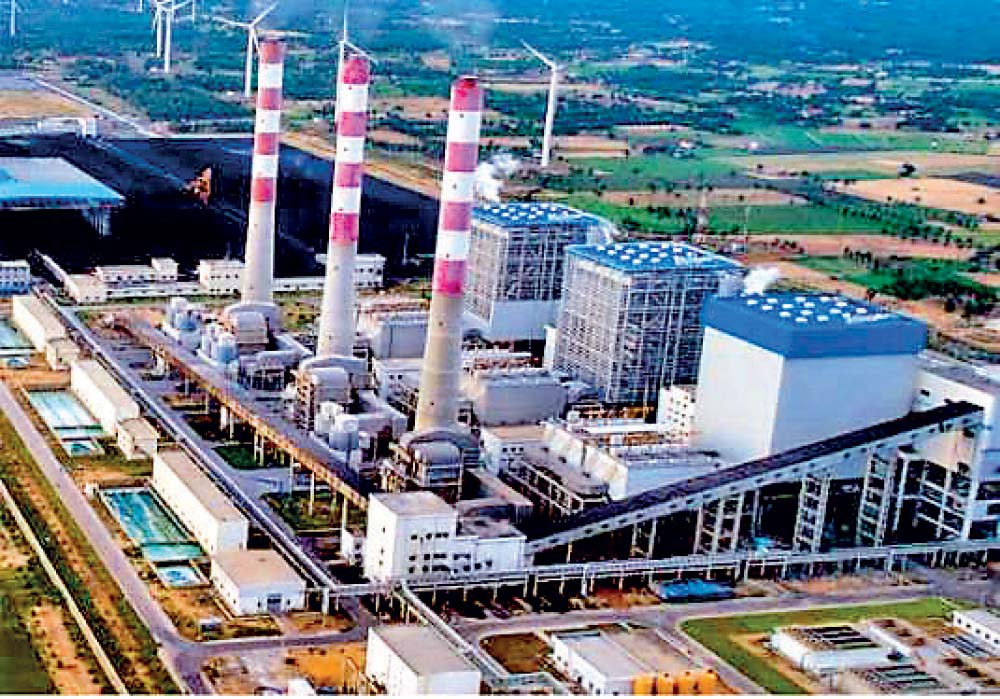
 Although Nobel Resources International was the lowest bidder, one of the unsuccessful bidders is alleged to have sent a letter on 29 June 2015 to the Standing Cabinet Appointed Procurement Committee (SCAPC), of which Ministry Secretary Dr. B.M.S. Batagoda was a member. The contents of this letter remain unknown. After receiving the letter, the SCAPC, on the same day, directed the TEC to re-evaluate the bids, which allegedly marked the beginning of a major scam that cost the country dearly
By Nirmala Kannangara
Following the appointment of a Presidential Commission of Inquiry to investigate irregularities in coal procurement from its inception, startling revelations have come to light regarding how coal purchase frauds allegedly took place during the 2015-2019 Yahapalana Government.
President Anura Kumara Dissanayake appointed a three-member Presidential Commission comprising sitting members of the judiciary. Supreme Court Judge Justice Gihan Kulatunga serves as Chairman of the Commission, while Court of Appeal Judge Justice Adithya Patabendige and High Court Judge Sanjeewa Somaratne are the other two members. Former Ministry Secretary P.V. Bandulasena has been appointed Secretary to the Commission.
The Commission’s mandate includes examining whether proper procurement guidelines were followed in awarding contracts, whether quality tests were carried out to determine if substandard coal had been imported, whether the imported coal met the expected efficiency levels for electricity generation, and whether any unethical practices were followed in awarding contracts, causing significant losses to the State.
Once the Commission begins examining these alleged frauds that took place between 2015 and 2019, the Cabinet of Ministers of the Yahapalana Government, former Power and Renewable Energy Ministry Secretary Dr. B.M.S. Batagoda, former Power and Energy Minister Ranjith Siyambalapitiya, and the former Chairman of Lanka Coal Company (LCC) will have to provide evidence as to how they failed to implement a Supreme Court ruling delivered on 24 June 2016. By this directive, the Supreme Court ordered the LCC to terminate a contract entered into with Swiss Singapore Overseas Enterprises (SSOE) Ltd. for the supply of coal to the Norochcholai Coal Power Plant. The Supreme Court’s directives to call for fresh bids through a competitive bidding process were allegedly ignored completely by the officials concerned.
In order to purchase coal for the Norochcholai Power Plant for a period of two years, tenders were called in April 2015 from prospective bidders. Six bidders submitted bids, and the lowest bidder was Nobel Resources International Ltd., according to the Technical Evaluation Committee (TEC) report.
According to TEC Report No. 15A dated 17 June 2015, the six bidders and their bid prices were: Nobel Resources International Ltd. – $90.219 per MT, SUEK AG – $90.645 per MT, Trafigura Ltd. – $101.968 per MT, Adani Global Ltd. – $103.108 per MT, Swiss Singapore Overseas Enterprises Ltd. – $103.782 per MT, and Liberty Commodities Ltd. – $113.604 per MT.
Although Nobel Resources International was the lowest bidder, one of the unsuccessful bidders is alleged to have sent a letter on 29 June 2015 to the Standing Cabinet Appointed Procurement Committee (SCAPC), of which Ministry Secretary Dr. B.M.S. Batagoda was a member. The contents of this letter remain unknown. After receiving the letter, the SCAPC, on the same day, directed the TEC to re-evaluate the bids, which allegedly marked the beginning of a major scam that cost the country dearly.
To facilitate the re-evaluation, the stipulated tender condition regarding the size of coal pieces to be supplied was allegedly changed on the instructions of the SCAPC. All bidders were requested to submit revised prices based on the new coal size specification.
The country had already lost Rs. 3.8 billion by awarding the tender to SSOE to supply coal to the Norochcholai Power Plant, and the Cabinet decision to allow the same company to continue supplying coal until the end of April 2017, disregarding the Supreme Court and PAB rulings, caused further losses
The TEC subsequently re-evaluated the bids, submitted a new report to the SCAPC, and recommended to the Cabinet of Ministers that the tender be awarded to the new lowest bidder, SSOE.
The revised bid prices were: SSOE – $82.47 per MT, Nobel Resources – $83.09 per MT, SUEK AG – $83.49 per MT, Trafigura – $87.50 per MT, Adani Global – $88.75 per MT, and Liberty Commodities – $91.90 per MT.
As a result of what it viewed as an injustice, Nobel Resources filed a fundamental rights application in the Supreme Court (Case No. SC FR 394/2015) against 75 parties, including the Minister of Renewable Energy, the Ministry Secretary, the LCC, and the Cabinet of Ministers, challenging the decision not to award it the coal tender.
Counsel appearing for Nobel Resources drew the Court’s attention to the fact that the bidding documents and evaluation criteria referred to clauses in the Government Procurement Guidelines. The guidelines state that “the disclosed criteria shall not be modified nor shall additional criteria be introduced during evaluation.”
These provisions in the bidding documents and procurement guidelines were intended to safeguard bidders and ensure transparency, fairness, and equal treatment in bid evaluations, all of which were required to be strictly observed by the SCAPC. They establish that neither the State nor the SCAPC may act contrary to the bid conditions and procurement guidelines.
Meanwhile, the second, third, and fourth lowest bidders appealed to the Procurement Appeal Board (PAB). The three-member PAB, chaired by Justice Hector Yapa with P.A. Pemathilake and C. Maliyadda as members, stated in its report that it did not endorse the recommendations made by the TEC and SCAPC to award the contract to SSOE and instead recommended calling fresh international tenders.
It is also alleged that the SCAPC entertained correspondence from SSOE in contravention of Clause 5.5 of the LCC bidding document.
Clause 5.5 states that no bidder shall contact the LCC or any other person or organisation involved in the tender process on any matter relating to its bid from the opening of bids until the award of the contract. Any attempt by a bidder to influence the bid evaluation, comparison, or award process may result in rejection of the bid.
Although the bidding documents specifically stated that amendments could only be made prior to the deadline for submissions and not during bid evaluation, the SCAPC entertained the SSOE letter after the bids had been opened.
Following the unsuccessful bidder’s request to alter the criteria, the SCAPC allegedly directed the TEC to re-evaluate the bids while disregarding Steps 1.3 and 1.4 of the evaluation procedure, thereby favouring SSOE. Any such amendment, if required, should have been made only by the LCC. Nevertheless, on the directives of the SCAPC, the TEC re-evaluated the bids, amended the conditions, selected SSOE as the lowest bidder, and submitted its report back to the SCAPC on 3 July 2015.
The difference between the SSOE contract price and the spot tender price was $ 9.26. The loss incurred by awarding the tender to SSOE amounted to Rs. 1.4 billion at a time when the LCC could have procured coal at a much lower price through spot tenders. What was the reason for proceeding with an agreement that both the Supreme Court and the PAB wanted cancelled?
Landmark judgment
In a landmark judgment delivered on 24 June 2016, a three-judge bench comprising Chief Justice K. Sripavan and Justices P. Dep and Upali Abeyratne directed the LCC to terminate the contract with SSOE due to procedural flaws, noting that the tender involved public funds.
The Supreme Court further stated:
“I have no alternative but to declare the decision of the SCAPC to award the tender to the 22nd respondent (Swiss Singapore Overseas Enterprise) cannot stand valid in the eyes of the law.
“Having given my anxious consideration to the contentions raised on behalf of the parties, I consider the decision made by the SCAPC was outside its jurisdiction and therefore null and void for all purposes.
“The Cabinet memorandum misled the Cabinet of Ministers when, in fact, the SCAPC at its meeting held on 29 June 2015 directed the TEC to re-evaluate the tenders without taking into consideration Steps 1.3 and 1.4 of the evaluation process. The direction by the SCAPC to the TEC to drop Steps 1.3 and 1.4 cannot by any means be equated to an interpretation of the conditions stated in the bid bond. Thus, the Cabinet decision taken on the memorandum was obtained by misleading the Cabinet of Ministers. The decision taken by the Cabinet of Ministers on 22 September 2015 cannot be considered valid, as it related to entering into a contract for one year with the bidder recommended by the SCAPC.
“Considering the procedural flaws referred to above, the fact that the award of the tender involved public funds, and the solemn duty of the Court to protect the Rule of Law embodied in the Constitution in order to ensure public confidence, I consider it appropriate to make the following directions:
(a) The third respondent (Lanka Coal Company) may terminate the contract entered into with the 22nd respondent (Swiss Singapore Overseas Enterprises) for the supply of coal to the Lakvijaya (Norochcholai) Coal Power Plant after giving reasonable notice to the said
respondent.
(b) Call for fresh bids in terms of the law for the supply of coal for the said power plant through a competitive bidding procedure.”
According to sources, despite the Supreme Court and PAB directives, the Cabinet of Ministers subsequently decided in November 2016 to continue purchasing coal from SSOE until 30 April 2017.
Sources further alleged that the Cabinet decision taken on 1 November resulted in an approximate loss of Rs. 3.5 billion to the country.
“The country had already lost Rs. 3.8 billion by awarding the tender to SSOE to supply coal to the Norochcholai Power Plant, and the Cabinet decision to allow the same company to continue supplying coal until the end of April 2017, disregarding the Supreme Court and PAB rulings, caused further losses.
“The difference between the SSOE contract price and the spot tender price was $ 9.26. The loss incurred by awarding the tender to SSOE amounted to Rs. 1.4 billion at a time when the LCC could have procured coal at a much lower price through spot tenders. What was the reason for proceeding with an agreement that both the Supreme Court and the PAB wanted cancelled?” the sources queried.
Meanwhile, after Ranjith Siyambalapitiya assumed office as Power and Renewable Energy Minister following the August 2015 General Election, a new Cabinet memorandum was submitted on 16 September 2015 seeking Cabinet approval to award the tender to SSOE.
Commenting on the allegations regarding coal procurement, former Power and Energy Minister Ranjith Siyambalapitiya said he could not comment because of the ongoing Presidential Commission inquiry conducted by the three-member judicial panel.
“I am not supposed to speak to the media now. If this Commission summons me regarding the allegations relating to the coal purchase, I will provide every detail to them. The only thing I can say now is that the Government at the time purchased coal in a transparent manner. We were never involved in any corrupt activity,” Siyambalapitiya said.




