Tuesday Oct 20, 2026
Tuesday Oct 20, 2026
Tuesday, 1 September 2026 04:05 - - {{hitsCtrl.values.hits}}
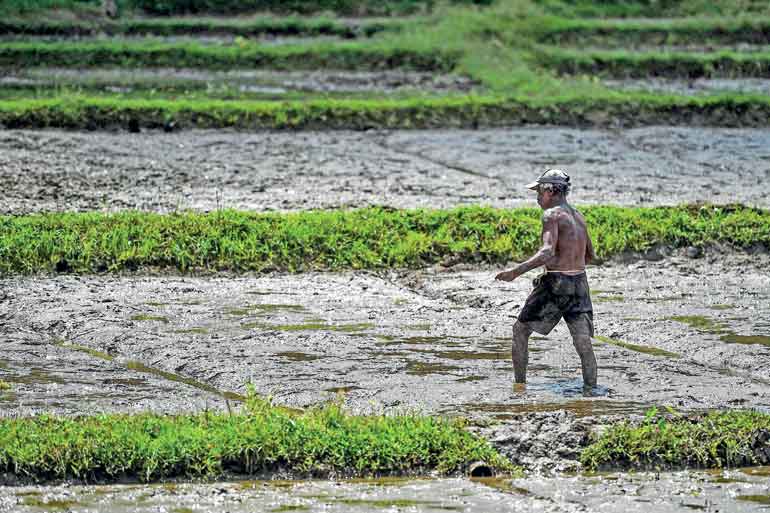
 Agriculture in Sri Lanka, and in many other countries, is sitting on a ticking time bomb. The burning signs are no longer hidden. We see it in erratic monsoons, prolonged dry spells, flash floods, landslides, heat stress, damaged irrigation systems and repeated crop losses. Now another warning light is flashing. On 13 August 2026, NOAA reported that El Niño was strengthening, with a greater than 90% chance of becoming a very strong event. The Department of Meteorology of Sri Lanka had warned of substantial rainfall changes, while the Cabinet of Ministers has appointed special committees for possible water, electricity and food crises.
The question is whether we will act before the crisis, or once again display our well-practiced national experience of becoming surprised by something we were warned about months earlier. In Sri Lanka, an early warning sometimes seems to be heard by the relevant authorities only after the event has occurred.
From cyclone to El Niño: climate whiplash
Cyclone Ditwah in November 2025 showed the other face of climate vulnerability. The Food and Agriculture Organisation of the United Nations (FAO) reported that about 106,000 hectares of paddy, roughly one-fifth of the cultivated area in the Maha season sown at that stage, were partially damaged or lost. More than 227,000 farmers were affected, together with livestock, fisheries, irrigation infrastructure and household food stocks. FAO subsequently estimated that more than 1.1 million people required urgent food-security, agricultural and nutrition assistance.
The warning is not confined to Sri Lanka. The catastrophic disaster in Nepal in August 2026, triggered by a glacier collapse and cascading landslide and flash flooding near the Nepal-China border, killed hundreds, affected more than 90,000 people and destroyed roads, bridges and other infrastructure. It is true that the precise contribution of climate change to any such single event requires scientific attribution, but rapidly warming high-mountain environments are creating new and cascading risks. Nepal is a grim reminder that climate hazards do not read development plans before arriving.
Sri Lanka therefore faces not one climatic threat but climate whiplash, with too much water, too little water, excessive heat and increasingly unreliable timing for farming.
Sri Lanka cannot prevent El Niño, cyclones, droughts or extreme rainfall. But, hazards become disasters when they meet vulnerability. The climate may create the hazard, but the policy determines how exposed we remain. Food security must become the organising principle of agricultural climate policy
The food-security problem
Climate vulnerability is sometimes discussed as though it were mainly a farmer-welfare issue. It is much bigger. Food security has four dimensions, namely, availability, access, utilisation and stability. Climate extremes can damage all four.
A drought or flood reduces availability by lowering food production including paddy, maize, vegetable, fruit, plantation crops, livestock, poultry and fish. Reduced supply can raise prices, undermining access for low-income consumers. Loss of diverse foods can worsen nutrition. Repeated shocks destroy stability by making both household income and national food supply unpredictable.
Sri Lanka has little room for complacency. The World Food Program (WFP) and FAO estimated that 28% of the population was moderately acutely food insecure during the 2022 economic crisis. Conditions subsequently improved, but vulnerability did not disappear. Climate shocks arrive on top of economic vulnerability. A failed harvest is not simply fewer tons in an agricultural statistics table. It can become higher food prices, lower farmer profits, increased imports, pressure on foreign exchange, poorer diets and greater fiscal expenditure. We may import food after a crisis, but unfortunately, we cannot import lost livelihoods of farmers so easily.
We have policies: implementation remains the issue
Sri Lanka is certainly not short of policies, strategies, plans, committees and elegantly bound reports. If agricultural resilience could be achieved through documentation alone, we would probably be exporting it by now. The Nationally Determined Contributions (NDC) 3.0 for 2026–2035 for reducing greenhouse gas emissions (GHGs) and minimising the rate at which climate change is happening, has already identified sensible priorities including climate-resilient agriculture, improved water management, climate information, diversified production and reduced post-harvest losses.
The Government has recognised the El Niño threat and established a high-level coordination mechanism. The Climate Caucus of the Parliament of Sri Lanka provides a cross-party parliamentary space to inform and mobilise Members of Parliament on the climate emergency. In August it specifically called for moving beyond reactive crisis management towards “Anticipatory Crisis Governance”, with discussions covering El Niño, agriculture, water, disaster management and environmental management. That role should be strengthened: Parliament can demand cross-ministerial preparedness, scrutinise budgets for resilience, track implementation, promote science-based legislation and keep climate risk above the electoral cycle.
The real question is whether these arrangements change decisions impact fully and timely, before the next shock. Too often we respond to drought with relief, floods with compensation, shortages with imports and surpluses with emergency discussions on storage. It is an impressive system for treating symptoms while preserving the disease.
The vulnerability extends beyond the farm
A crisis can disrupt food systems far beyond farm boundaries, affecting the supply chains. A surviving vegetable crop still becomes a loss if electricity, cold storage or transport fails. Milk production is meaningless if chilling and collection collapse. Paddy recovery is constrained when irrigation canals are damaged or reservoirs are poorly managed. Food security must be planned from watershed to consumer.
The upper watersheds of Sri Lanka deserve particular attention. Degraded slopes, inappropriate land use, erosion and inadequate drainage amplify downstream flooding, sedimentation and dry-season water scarcity. Watershed restoration is not an environmental ornament; it is food-security infrastructure. Irrigation can no longer mean only delivering water. In a climate of extremes, systems must manage scarcity and excess through drainage, storage, groundwater recharge, tank-cascade restoration and catchment management.
The ticking time bomb is not climate change alone. It is climate change combined with degraded landscapes, fragile supply chains, fragmented institutions and delayed decisions. Sri Lanka now has an El Niño warning before us. From Ditwah to Nepal, we have ample evidence of what cascading climate disasters can do
Seven actions before the fuse of the time bomb burns shorter
(1) Make climate-risk information operational. This has to be done immediately, as seasonal and sub-seasonal forecasts, reservoir levels, soil moisture and short-term weather information will directly influence cultivation calendars, crop choices, fertiliser timing and irrigation decisions. A forecast that changes a decision of the farmer is adaptation.
(2) Prepare agricultural contingency plans before each high-risk season. Urgent attention should be on identifying exposed districts, crops and irrigation schemes, establishing water-allocation priorities, securing seed and planting material, preparing alternative crop recommendations, protecting livestock feed and drinking water; and pre-position recovery of resources. Planning after reservoirs are empty would be admirably precise, but late.
(3) Establish an integrated national agricultural climate-risk platform linking Departments of Meteorology, Irrigation, Agriculture, Animal Production and Health, and Agrarian Development, Mahaweli Authority of Sri Lanka, Disaster Management Center, Research Institutions, Universities and Markets. Data scattered among institutions cannot protect a national food system. Climate is already integrated; our institutions should consider trying the same.
(4) Diversify food-production risk through crop diversification, mixed farming, homegardens and locally adapted production systems rather than overdependence on a few crops, narrow planting windows and concentrated supply chains.
(5) Protect what is produced. Drying, storage, cold chains, milk chilling, processing and decentralised logistics can prevent a production shock from becoming a consumer-price shock. Agricultural insurance, contingency finance and rapid recovery mechanisms must complement these investments.
(6) Accelerate development and deployment of varieties tolerant to drought, heat, flooding, salinity and emerging pests and diseases. “Climate resilient” should be a measurable breeding objective, not decorative vocabulary in project proposals.
(7) Redesign water management from catchment to field. Restore tanks and cascades, protect watersheds, improve soil-water retention, modernise irrigation scheduling and invest in drainage.
Stop rewarding vulnerability
Every public agricultural investment should face a simple question: does it reduce future climate risk, or merely reconstruct yesterday’s vulnerability? Rebuilding repeatedly damaged infrastructure to the same standard is not adaptation; it is an expensive subscription to the next disaster. Encouraging production in chronically unsuitable locations and compensating predictable losses is not farmer protection. Subsidising inputs without linking support to better water, soil and risk management may lower today’s cost while quietly increasing tomorrow’s bill.
Agricultural productivity and adaptation cannot be separated. Higher and more stable yields reduce production cost per kilogram. Better nutrient management lowers costs and emissions. Better weather information prevents wasted inputs. Better storage protects farmer income and consumer supply. The objective should be more food per unit of water, land, input, and climate risk.
Parliament can demand cross-ministerial preparedness, scrutinise budgets for resilience, track implementation, promote science-based legislation and keep climate risk above the electoral cycle. The real question is whether these arrangements change decisions impact fully and timely, before the next shock. Too often we respond to drought with relief, floods with compensation, shortages with imports and surpluses with emergency discussions on storage. It is an impressive system for treating symptoms while preserving the disease
Defusing the bomb
Sri Lanka cannot prevent El Niño, cyclones, droughts or extreme rainfall. But, hazards become disasters when they meet vulnerability. The climate may create the hazard, but the policy determines how exposed we remain.
Food security must become the organising principle of agricultural climate policy. It should not merely be the amount of rice produced in a normal year, but the capacity of the entire food system to continue supplying adequate, nutritious and affordable food when the year is anything but normal.
The ticking time bomb is not climate change alone. It is climate change combined with degraded landscapes, fragile supply chains, fragmented institutions and delayed decisions. Sri Lanka now has an El Niño warning before us. From Ditwah to Nepal, we have ample evidence of what cascading climate disasters can do.
We can finance preparedness today, or finance crop losses, food imports, compensation and recovery tomorrow. We have become rather efficient at budgeting for the consequences of vulnerability, but it is time to become equally efficient at preventing them.
One of those options is considerably cheaper. The clock is already ticking.
(The author is attached to the Department of Crop Science, Faculty of Agriculture, University of Peradeniya)




