Friday Mar 13, 2026
Friday Mar 13, 2026
Saturday, 7 February 2026 00:10 - - {{hitsCtrl.values.hits}}
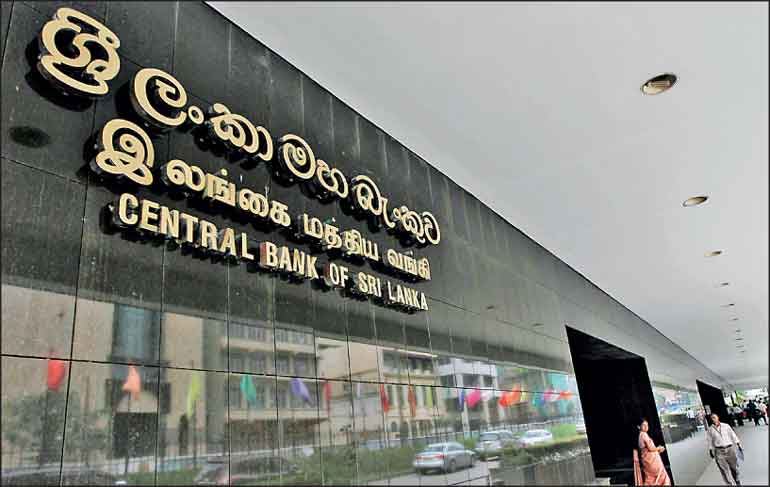
Central Bank of Sri Lanka
 The role of a Central Bank greatly depends on the economy of a country. Its role would be determined by if the economy is developed, developing, or underdeveloped.
The Central Bank of each country would therefore focus on what is needed for that particular economy. Monetary policies used in a developed economy are of limited usefulness in an underdeveloped or developing economy. Conversely, the policies needed in a developing or underdeveloped economy may not be relevant in a developed one.
However, one unifying factor is that in times of crisis – like war, depression, recession, financial instability, or pandemics – the Central Bank has to step in to prevent the collapse of the economy. It is the lender of last resort. This has been seen across the world over the past decades.
Some Central Banks in developing and underdeveloped countries follow orthodox theories and methods. This ‘one-size-fits-all’ approach is propagated by agencies like the International Monetary Fund (IMF) and World Bank (WB), and has hindered development in many countries. Unfortunately, Sri Lanka is one such country.
It should also be kept in mind that in any economy (developed, developing, or underdeveloped), the broad goal is economic development. However, over the past four and a half decades, this fundamental goal has somewhat been distorted.
Central Banking in developing and underdeveloped economies
In developing or underdeveloped economies, ‘economic development’ is a prior condition of effective central banking. Those who kept this in mind devised their own methods to achieve development objectives, while others stuck to orthodox methods and continued to struggle.
The countries that broke from orthodoxy, realised that the Central Bank has a major role to play in the development process, and that both the Government and the Central Bank have to work together towards a common objective. Even in the United States, in the early 1960s, this recipe – called ‘the new economics’ – was followed to revive the economy.
Many might expect that a country like Canada would have followed the orthodox model and economic theory, being a country in the Western Hemisphere. However, though a large country in size, but with a population of around ten million in the 1940s, it soon realised that the orthodox method of savings for investment would not be able to meet its development objectives.
In the early 1940s, the Industrial Development Bank of Canada was formed as a subsidiary of, and funded by, the Central Bank. Many loans were disbursed, making it one of the first development banks in the world. No unusual inflation was noticed and the Quantity Theory of Money was brought into question.
In developing countries, the desire for development brings both the Government and the Central Bank to the table. Once both understand the needs of development, much work goes ahead in developing a plan. Those who had a plan were able to achieve their objectives with the Central Bank as an active participant in the development process.
Examples from around the world
Some examples of Central Bank involvement in development could be observed from around the world.
In Japan, after the war, the Bank of Japan together with the Ministry of International Trade and Industry directed funds to strategic industries for development. When Takahashi Korekiyo was Finance Minister in the 1930s, Japan used Central Bank funding to get itself out of the depression.
In Taiwan, the Central Bank assisted and participated in the development drive. For example, the Taiwan Semiconductor Manufacturing Company established in the late 1980s was mostly funded by the state via the National Development Fund.
In South Korea, after President Park Chung-hee assumed office in the early 1960s, his Government was more aggressive than Japan and nationalised the financial sector and even brought the Bank of Korea under the influence of the Ministry of Finance. Central bank funds were directed to strategic industries as long as those companies performed well.
These countries were not limited by Government revenue and debt financing in their development effort. They had the additional support of Central Bank funding. Moreover, these countries had visionary ideas for development.
The opening of the Central Bank of Ceylon
There is much debate over whether Sri Lanka is a developing or underdeveloped economy. For the purpose of this article, let’s assume that Sri Lanka is a developing economy where much has gone wrong. I would like to draw on two matters that would be of interest to the reader.
In 1950, at the opening of the Central Bank, then Prime Minister D. S. Senanayake mentioned in his speech how Central Bank money creation was abused in some countries after WWII. He also pointed out how other Central Banks had wisely participated in the development of Canada, Australia and New Zealand.
This is the crux of it all. Central Banks could participate positively in the development process by investing in economic expansion and development. Alternatively, it could just increase the money supply for consumption, without a corresponding increase in production and supply, causing inflationary pressure.
The major need in a developing country is development and the best way to achieve that objective is for the Central Bank to work in coordination with the Government. The meeting point for the Government and Central Bank is the development plan, with both working towards a common objective. Unfortunately, Sri Lanka never implemented its first 10-year plan, and the 5-year plan of 1972 was derailed with the oil crisis of 1973.
However, traditional or orthodox methods prevented Central Banks from participating in development. Sri Lanka stuck to the orthodox path, while others who realised the limits of the orthodox theory looked beyond for a more practical method.
The Reserve Bank of India participation in development
In India, the Reserve Bank of India (RBI) played a major role in the development effort. The RBI and the Planning Commission established the Industrial Finance Corporation of India (IFCI) as early as 1948 to get the industrial development process off the ground. Thereafter, many other development banks and institutions were created with the active participation of the RBI.
Below is short list of the RBI’s contribution to India’s industrial development:
The Planning Commission and the RBI were able to develop India’s industrial base, which enabled it to liberalise in the 1990s, as Indian companies were able to compete and collaborate with foreign firms for mutual benefit.
The role of the Central Bank in a developing country
The Central Bank can play a positive role in development by coordination with the Government or it could operate as if it was in a developed economy with a narrow mandate – just inflation targeting and price stability.
Despite evidence to the contrary, there are many who still believe that Central Banks in developing countries should follow the orthodox ‘one-size-fits-all’ model. But Central Banks can achieve much more success when actively participating in the development effort.
Central Banks in developing countries have a responsibility beyond inflation targeting and price stability. Central Banks that prefer a narrowed mandate have shirked their responsibility to the people and country. The Central Bank must realise its true responsibility to perform its true role.
Over the past four and a half decades, Sri Lanka has struggled with its Balance of Payments. We should not be trapped in blindly following growth rates which distorts the real situation of poverty and inequality.
Sri Lanka should rethink its development strategy, if it has one at all. The current level of private investment and foreign direct investment are insufficient to meet the growth targets. The only possible alternative would be to use monetary financing from the Central Bank, and the creation of development banks for different sectors.
This requires visionary political leadership, both in the Government and in the Central Bank.
(The author was CEO of Sri Lanka’s largest heavy construction company. He has a master’s degree from the University of Wales and is reading for a PhD in economics. He is a member of the Asia Progress Forum, which can be contacted at [email protected])




