Friday Oct 16, 2026
Friday Oct 16, 2026
Wednesday, 24 June 2026 00:00 - - {{hitsCtrl.values.hits}}
By the Neelan Tiruchelvam Trust
When Sri Lanka opened its doors to global markets in 1977, it was hoped that liberalising trade would bring about prosperity, new industries and secure employment. More than four decades later, the picture is far more complex. 
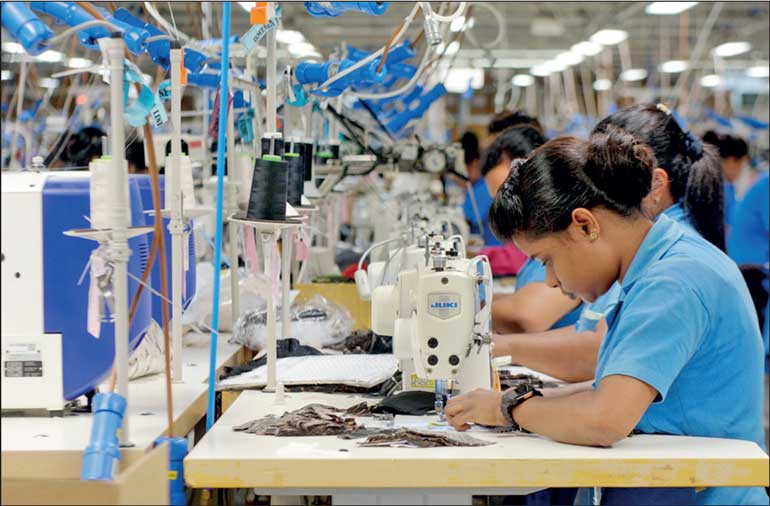
While trade has transformed parts of the economy, one stubborn reality persists: nearly 70 per cent of Sri Lanka’s workforce remains trapped in informal jobs, positions without legal contracts, social security or reliable protections.
These jobs are everywhere, from garment factories and rural workshops to small-scale production lines. They are often unstable, poorly paid and leave workers without recourse when exploited. Why has the expansion of trade not led to more secure employment? And what does this mean for Sri Lanka’s future?
A timely study by Nilupulee Rathnayake, conducted under the Neelan Tiruchelvam Trust’s Macroeconomic Policy and Socioeconomic Rights Fellowship, provides some answers. Her paper, titled “Trade Policy and Informal Employment in Sri Lanka’s Manufacturing Sector,” examines how tariffs, imports and exports between 2014 and 2021 shaped the reality of work for millions of Sri Lankans.
The findings challenge assumptions that global integration automatically improves people’s livelihoods. It also suggests that, without the right safeguards, trade reforms can deepen inequality rather than reduce it.
Trade policy and informal reality
Economic theory often assumes that trade liberalisation, reducing tariffs and opening markets, creates jobs and improves living standards. Yet, Rathnayake’s study shows that whether those jobs are secure or vulnerable depends on how industries respond to market incentives.
Her analysis found that industries with higher tariffs, i.e., those shielded from global competition, had more informal jobs. Protected firms, facing little external pressure to innovate, often choose the easiest way to cut costs, i.e., by hiring workers without contracts, benefits or protections. By contrast, industries exposed to competition through lower tariffs tended to see reductions in informality, as firms were compelled to modernise and comply with more formal labour standards.
Imports were linked to lower levels of informal employment, possibly because imported goods pushed domestic firms to raise efficiency and standards. Yet, surprisingly, exports were associated with higher levels of informal work.
This finding runs counter to global patterns. In many countries, export-oriented industries tend to formalise because international buyers demand compliance with labour standards. In Sri Lanka, however, flagship export industries like apparel often rely heavily on subcontracting and casual labour. Instead of generating secure employment, booming exports have reinforced dependence on flexible, low-cost and often informal work arrangements.
A shock that changed the equation
The COVID-19 pandemic added another twist. Rathnayake’s research found that during 2020–21, the usual patterns between tariffs, imports, exports and informality broke down. Faced with the crisis, firms scrambled to cut costs and workers were pushed in greater numbers into precarious, informal jobs.
This disruption exposes the fragility of the protection available to workers. Without strong safety nets, economic crises, global pandemics, debt defaults or currency crashes tend to hit the most vulnerable workers the hardest.
The human cost of informal work
The consequences of Sri Lanka’s informal-dominated labour market go far beyond economics. At its core, this is about rights and dignity. Informal workers lack access to pensions, health coverage and unemployment benefits. They cannot bargain collectively or easily seek justice if mistreated. For many, this means a lifetime of insecurity.
Women bear the brunt. They are more likely than men to be employed informally, especially in sectors like apparel and small-scale manufacturing. Trade-related shifts that increase informality thus deepen existing gender inequalities.
Rural and provincial workers are also disproportionately affected. Unlike their counterparts in Colombo, they often lack access to formal job opportunities and remain trapped in informal arrangements. Similarly, workers with lower levels of education face higher risks of informality, limiting their prospects for upward mobility.
The ripple effects are profound. Families that depend on informal incomes face cycles of vulnerability and poverty. Entire communities risk exclusion from the benefits of economic growth. When crises hit, as Sri Lanka’s recent economic collapse so painfully showed, informal workers are the first to fall through the cracks.
What needs to change?
Rathnayake’s study makes a clear case that trade liberalisation alone will not deliver decent work. To ensure that integration with global markets uplifts people rather than exploits them, trade policies must go hand in hand with labour protections.
She offers several recommendations. Trade reforms must be paired with strong labour protections, where opening markets is accompanied by enforcement of fair contracts, safe working conditions and compliance with labour standards.
Social safety nets must be strengthened as systems of unemployment benefits, health insurance and pensions are vital to protect workers, especially during crises.
Export sectors should be targeted for reform—since industries like apparel rely heavily on informal subcontracting, they must be prioritised for oversight and reform. Policies should support small producers in transitioning to formal operations while holding larger firms accountable.
Finally, crisis-sensitive policies must be built: economic shocks are inevitable, but policies can be designed to prevent sudden spikes in informal employment. Emergency protections for workers can make the difference between survival and destitution.
A question of justice
Rathnayake’s research underscores that trade policy is not just an economic issue but a matter of justice and rights. The right to decent work is internationally recognised as a socioeconomic right. Yet, in Sri Lanka, that right remains elusive for the majority of workers.
If trade continues to expand without parallel labour protections, the country risks entrenching inequality and exclusion. If policymakers act decisively, trade could become a driver of inclusive growth, such as lifting women and rural workers into secure, dignified and formal employment.
As Sri Lanka grapples with economic recovery and seeks to rebuild its global competitiveness, the question is not simply how much the country trades but also on what terms and at whose expense.
Looking ahead
The debate over trade and jobs is not unique to Sri Lanka. Across the Global South, countries struggle with how to balance competitiveness with fairness, efficiency with protection, and growth with dignity. Rathnayake’s research adds an important Sri Lankan perspective to this global conversation.
Her findings remind us that economic reforms cannot be judged solely by GDP growth or export earnings. They must also be measured by whether ordinary workers gain security and stability.
For now, Sri Lanka’s workers, especially those in informal manufacturing jobs, continue to live in uncertainty. This demands a different path of trade-based growth, one where trade is harnessed, not just for markets and profits, but also for people and their rights.
(Nilupulee Rathnayake authored the research paper “Trade Policy and Informal Employment in Sri Lanka’s Manufacturing Sector” under the Macroeconomic Policy and Socioeconomic Rights Fellowship of the Neelan Tiruchelvam Trust. The full compilation of research papers produced through this fellowship can be accessed here: https://neelan.org/macroeconomic-_policy/)




