Monday Sep 21, 2026
Monday Sep 21, 2026
Monday, 21 September 2026 02:23 - - {{hitsCtrl.values.hits}}
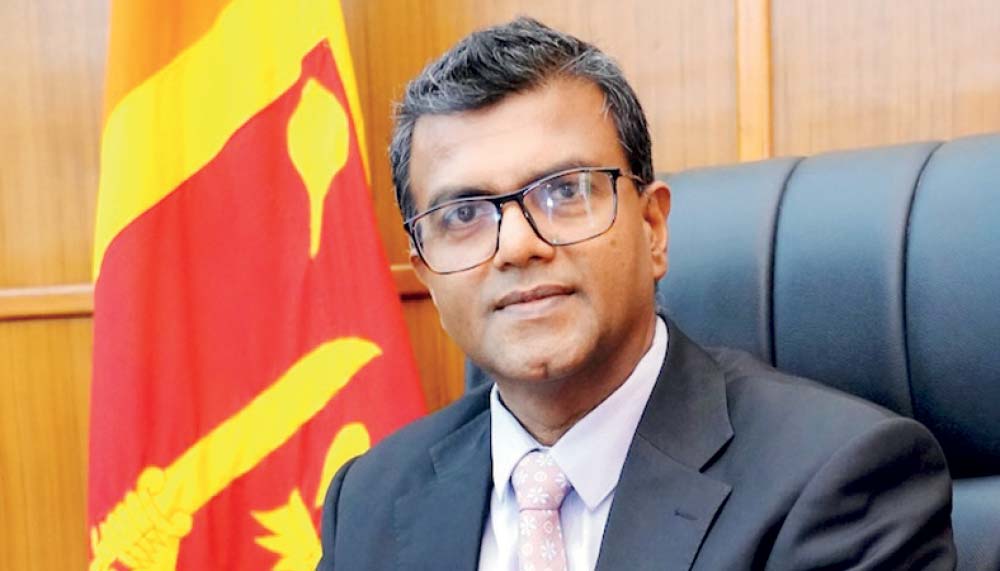
Treasury Secretary Dr. Harshana Suriyapperuma
 With various exigencies disrupting the global order of business the Government must toe a careful line. The ideal state-of-play for Budget 2027 seems to be to maintain the status quo. The tax-to-GDP ratio has risen significantly over the past year, and the Government must maintain that impressive growth trajectory
By Riyaz Hamid
With revenue collection sitting at over 60% at the end of the H1 of 2026, the Government looks well set to achieve its estimate of Rs. 5.3 trillion in revenue for the year. Two strong years of earnings will bolster the Government’s economic position, and it must consolidate this position during the upcoming Budget.
With various exigencies disrupting the global order of business the Government must toe a careful line. The ideal state-of-play for Budget 2027 seems to be to maintain status quo. The tax-to-GDP ratio has risen significantly over the past year, and the Government must maintain that impressive growth trajectory. A 27% jump in State revenue is a strong indicator of tax administration and maintaining confidence. Had Cyclone Ditwah not come, the story could have been even better.
For Budget 2027, the Government then simply needs to maintain this current course. The managed opening up of vehicle imports has yielded over Rs. 512 billion in revenue during the first half, but the recent slowdown in imports on top of a 50% Customs Duty surcharge is timely, and a short-term extension is unlikely to cause any harm to the market. A reversal of the duty will lead to a surge in Letters of Credit for vehicle imports, which will require some management. Over 630,000 LCs were opened since January last year, and that is a significant number of new vehicles already on Sri Lankan roads.
Earnings from Excise tax on Tobacco and Alcohol products have produced positive results. Both the alcohol and tobacco industries have recorded an increase in Government revenue vs. 2025. A crucial detail that is frequently ignored or left out in the narrative driven in mainstream media.
The cost of living in Sri Lanka is high. Colombo is amongst the most expensive places to live and eat in the South Asian region and even the world in terms of per capita earnings. Accordingly, the prudent measure is likely to maintain tax on essential items as it is. The measures to maintain import duties on items like dhal and onions is laudable, and a continuation of that policy in the medium-term will give the market (the public) a degree of stability and confidence.
Price controls need greater enforcement, and the Consumer Affairs Authority has stepped up raids on institutions that have violated these laws across the board. Confidence sits at a high ebb and what must happen now is to maintain them. Enforcement of regulations across all segments and categories remains key to delivering a higher yield to both the public and the administration.
Relief on income
Recently, the Secretary to the President spoke on the possibility of reducing the burden of PAYE tax on the general public from the Budget. Whilst this would be a welcome statement to many, the Government could also consider delivering higher value to the public in return for their taxes. Countries like the UK, Japan, Germany and more have income tax rates overs 40%. But the difference is the quality and level of public services they receive in return be it public transport, emergency services, sanitation and many more. This could be a decisive factor in turning the trend for Sri Lanka tax payers. The Government has taken many steps recently in the sphere of transport such as the MetroBus initiative. It simply needs to maintain that trend and extend it to other sectors at the same pace and vigour.
Thus, the 2027 Budget is primarily about maintaining the status quo. Where it should focus on delivering change is transforming the business and investment landscape. The cost of capital and the cost of energy in Sri Lanka is the highest in the region, rendering our businesses uncompetitive against the rest of the world. The country needs a cohesive plan to enhance its business edge; to identify and deliver to high-value niche markets. We are not built to serve large-scale.




