Monday Oct 05, 2026
Monday Oct 05, 2026
Monday, 5 October 2026 03:43 - - {{hitsCtrl.values.hits}}
 The request in our Budget 2027 proposals is a practical one. Create one place that will listen. Let anyone bring an idea. Carry the credible ones through to activation. Measure honestly what the country gains, and keep opening more. Sri Lanka’s durable economic independence will be built by what it can earn, retain and reinvest, not by how much it can borrow again
By the Free Trade Zone Manufacturers’ Association
Sri Lanka’s budget is written in rupees. Its debt falls due in dollars.
That single difference sits behind most of what went wrong in 2022, and behind most of what still has to go right. It is the starting point of the proposals we have submitted for Budget 2027.
We should state our own interest at the outset. Our Association represents companies that work at the point where investment, manufacturing, exports and Government policy meet every day. Our members cannot plan, invest or employ people with confidence in an economy that keeps running short of dollars. A country that earns steadily is the only environment in which any business can operate normally. What we are asking for serves our members, and it serves every other business and household in exactly the same way.
We understand the duty of the Central Bank to protect foreign exchange liquidity, and our members comply with the rules that follow from that duty. Those rules decide how the dollars the country already has are shared out. They cannot create the next one.
Taxation cannot create a dollar
Better revenue collection and tighter spending are necessary, and that work is under way. A fiscal deficit is a shortage of rupees, and rupees can be raised at home.
The external deficit is a different problem. It is a shortage of foreign currency, and no level of taxation turns a rupee into a dollar. Those dollars can only come from what the country earns, retains or attracts from the rest of the world.
The current account has now been in deficit for four months running. In the first seven months of this year, it recorded a shortfall of 387 million dollars, against a surplus in the same period last year. One external shock was enough to move the balance by close to 1.7 billion dollars in half a year. That is how thin the base we stand on really is.
The repayment schedule for the coming decade is already fixed by contract. The earnings that will meet it are not.
Sri Lanka has never had difficulty finding lenders. Finding new earnings has been the harder task, and it is the one Budget 2027 must now take up.
Somebody, somewhere, already knows
This country has never been short of people with ideas.
A new earning path may be spotted by an exporter who sees demand her factory could serve with a small change. By an entrepreneur with a service the region would buy. By a doctor, an engineer or a researcher who knows what our skills are worth abroad. By a Sri Lankan living overseas who can see exactly what her adopted country imports and from where. By an investor weighing two locations. Or by a public officer who knows that a rule sitting in his own file is quietly stopping something worthwhile.
Ask what happens to that idea today.
Where does the person take it? Who studies it and decides whether it holds together? Who brings the four or five agencies involved into the same room? Who identifies the regulation that blocks it and asks whether that regulation is still serving its purpose? And when nobody is against it but nobody can approve it either, who owns the case until an answer is reached?
An idea with nowhere to go is the cheapest thing a country can waste.
Much attention is now going into removing what obstructs businesses that already exist. That work is necessary and long overdue. What we have asked for is the other half of the same task. No one in this country has ever been given the job of going looking for new ways to earn.
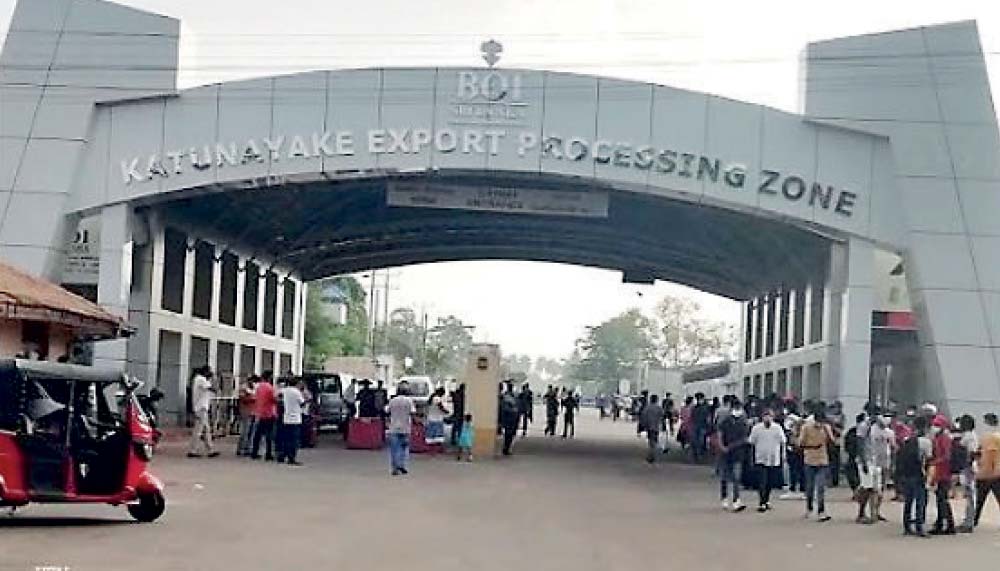
New investors look for plug and play infrastructure within and around. To support accelerated economic development investors, need integrated logistics solutions in place before they plant their machinery on the ground. It has become an urgent and high-priority action to develop necessary infrastructure for the rural EPZs such as Expressway access, water, key areas requiring immediate attention, sometime as industrial townships with all amenities
Listen, receive, activate
Our proposals ask Budget 2027 to establish one standing national mechanism that does three things.
Listen. There should be an open invitation to the whole country, and to Sri Lankans abroad, to bring forward ideas for earning or retaining foreign exchange, and to point out the rules that are preventing such activity today. A person should not need to be a large company, or a well-connected one, to be heard.
Receive. There should be a clear entry point, with a short first submission that tests the foreign exchange logic and the practical readiness of an idea. Nobody should be asked for a full business plan before anyone has told them whether the idea is worth pursuing. Most good ideas die in the paperwork long before they die on merit.
Activate. Once an idea passes that first test, a named officer should own the case, coordinate the institutions involved within fixed time limits, and carry it through to a decision. Every credible idea deserves a route to an answer, even when the answer is no.
Not everything submitted will be practical. Some proposals will need safeguards, some will need redesign, and many will be declined. We are not asking for automatic approvals, and we are not asking for another large institution. A small team with the authority to get answers out of other agencies would achieve far more than a new department with none.
What we are asking to end is the silence. An opportunity delayed for three years cannot earn, cannot learn, cannot attract investment and cannot grow. When the answer is no, the reason should be given in writing, because a written reason often reveals a rule that should itself be reconsidered.
Measure what the country actually keeps
Our proposals also ask for a common national test, which we have called Net Foreign Currency Contribution.
Gross export and investment figures can flatter. Foreign currency comes in while large amounts go straight back out again through imported inputs, equipment, overseas services, software, licence fees and finance costs. The number that matters to the country is what remains.
Net Foreign Currency Contribution asks the harder question. After the foreign currency outflows that the activity itself causes are deducted, how much did the country actually gain?
It should also count the dollars a business saves the country, for instance when a local supplier replaces an imported input. A dollar not spent abroad is worth the same as a dollar earned.
A test of this kind does more than measure. It protects the mechanism from itself, because it separates real earning from activity that only looks like earning, and it allows results to be published and checked rather than announced.
Why this matters beyond our members
Our submission includes several opportunities that we believe are ready to move. Those matter less than the point behind them, which is that no country finds its next industry by accident, and none finds it once and then stops looking.
For our members, a stronger national foreign exchange position means a predictable environment in which to invest, manufacture, employ and export. For investors deciding between Sri Lanka and somewhere else, it means a country that looks dependable. For everyone else, it means the difference between an economy that recovers and an economy that keeps having to be rescued.
The request in our Budget 2027 proposals is a practical one. Create one place that will listen. Let anyone bring an idea. Carry the credible ones through to activation. Measure honestly what the country gains, and keep opening more.
Sri Lanka’s durable economic independence will be built by what it can earn, retain and reinvest, not by how much it can borrow again.
Payment of dividends to non-resident shareholders
The country introduced a 15% dividend tax on non-resident shareholders in 2023 and a proposed tax credit scheme aims to incentivise profit reinvestment therefore in order to encourage non-resident shareholders to retain and reinvest their profits in Sri Lanka, we propose the introduction of:
The Government must prioritise infrastructure development for Free Trade Zones (FTZs) and improve internal facilities too
New investors look for plug and play infrastructure within and around. To support accelerated economic development investors, need integrated logistics solutions in place before they plant their machinery on the ground. It has become an urgent and high-priority action to develop necessary infrastructure for the rural EPZs such as Expressway access, water, key areas requiring immediate attention, sometime as industrial townships with all amenities.
We understand that the Government is planning several new EPZs as well in the coming years. We hope that Government take into consideration the above ideas when doing so and not to step in with the same blueprint of the existing traditional zones.
The existing traditional zone too needs further attention in terms of Improving external logistics and amenities plus updating, renovating and modernising the aging, dilapidated internal infrastructure. This will help expansions, reinvestments and also attracting new investments to the existing zones.



