Breaking the corrupt bureaucratic chain and the 323 container clearance saga 

Tuesday, 9 June 2026 03:22 -     - {{hitsCtrl.values.hits}}
 

The advent of the National People›s Power (NPP) Government marked a significant turning point in the political history of Sri Lanka. After decades of widespread public frustration over corruption, abuse of power, economic mismanagement, and political patronage, the overwhelming majority of the people viewed the NPP›s rise as the beginning of a new political era. The Government came to power solely on promises of the rule of law, social justice, and clean governance, generating renewed hope among the public that State institutions could finally be reformed in the public interest.

This political change also created high public expectations regarding the eradication of corruption, not only at the political level but throughout the entire administrative system. The growing public trust in the new leadership reflects a broader national desire to rebuild confidence in democratic institutions and establish a State that genuinely serves the people rather than political or bureaucratic elites.  

Alas, much of the public remains unaware of the distinction between the political and bureaucratic corruptions and that bureaucratic corruption is deeply rooted within the administrative system and is often committed under the guise of official duty through the misuse of the “discretionary powers” entrusted to public officers.

Political vs. Bureaucratic Corruption

I wish to quote loosely part of my previous article titled “Preventing Corruption at Bureaucratic level” published in Daily FT. (https://www.ft.lk/columns/Preventing-corruption-at-bureaucratic-level/4-771168).

Corruption can be broadly divided into two main types based on where it originates:

  • Political corruption: This involves the abuse of public power, office, or resources by elected politicians for personal or partisan gain, prioritising personal interests over public welfare, or rather corruption committed by politicians.
  • Bureaucratic corruption: This refers to unethical or illegal behavior by Government officials within public institutions, where they use their official position to gain personal benefits at the cost of public service and fairness. In other word, corruption done by public servants.

Alas, much of the public remains unaware of the distinction between political and bureaucratic corruption and that bureaucratic corruption is deeply rooted within the administrative system and is often committed under the guise of official duty through the misuse of the “discretionary powers” entrusted to public officers

Although both types are harmful, bureaucratic corruption is often more hidden and widespread. It takes place during the day-to-day implementation of Government work and is harder to detect because it operates under the guise of performing duties, exploiting system gaps and the discretionary and flexible powers granted to officials.

Key features of political and bureaucratic corruption

  • Methods: Political corruption exploits authority, while bureaucratic corruption exploits legal loopholes and discretionary powers assigned to perform official duty.
  • Operational level: Political corruption occurs at higher decision-making levels, while bureaucratic corruption operates at the implementation level.
  • Speed ​​of implementation: Political corruption usually takes longer, while bureaucratic corruption can happen quickly.
  • Scope: Political corruption is significant in quality and scale, while bureaucratic corruption is quantitative and widespread.
  • Immunity: Bureaucratic corruption often enjoys a degree of legal immunity, as it is frequently carried out under the guise of “discretionary powers” exercised in “good faith.” In contrast, political corruption generally lacks such protection, since it typically involves the blatant abuse of political authority for personal or partisan gain.
  • Collaboration: Political corruption is usually committed in collaboration with corrupt public officials and institutional actors, whereas bureaucratic corruption can often be carried out individually by officials within the administrative system.
  • Detectability: Political corruption is often more visible because it involves a few high- ranking officials. Bureaucratic corruption tends to be hidden in systemic processes because it is usually carried out individually.

It is also noteworthy that even corrupt politicians and opportunistic political parties have not seriously alleged direct personal involvement in corruption by any member of the ruling party. Rather, their criticisms have been directed primarily at the so-called deep state and deep-seated elements of the corrupt bureaucracy


It is also noteworthy that even corrupt politicians and opportunistic political parties have not seriously alleged direct personal involvement in corruption by any member of the ruling party. Rather, their criticisms have been directed primarily at the so-called deep state and deep-seated elements of the corrupt bureaucracy. This is a significant observation, as it implicitly acknowledges the absence of credible allegations of political corruption against the Government’s leadership, while highlighting the continuing challenge posed by bureaucratic corruption and institutional resistance to reform.

How the corrupt deep state survives political change

The term “deep state” refers to deep-rooted networks within the bureaucracy and State institutions that continue to exercise influence regardless of a change of Government. These networks may consist of senior officials, regulatory authorities, or trade unionists who possess long-term control over administrative systems, information, and decision-making processes. Because they can significantly influence how laws and policies are implemented.

Bureaucratic corruption often survives changes in Government because it is embedded within the administrative system rather than linked to a particular political regime. Over time, corrupt practices can become normalised within public institutions, where bribery, favoritism, abuse of discretion, and procedural manipulation are treated as routine ways of getting things done. As a result, even when a new Government comes to power with a mandate for reform, the underlying corrupt networks within the bureaucracy often remain intact.

The corrupt deep state benefits from many of the structural advantages associated with both political and bureaucratic corruption. In addition, several other factors contribute significantly to its persistence, resilience, and ability to resist reform efforts.

  • Patronage of Corrupt Politicians: Corrupt political actors often have little interest in eliminating corruption for two principal reasons. First, they seek to normalise corruption in the eyes of the public by portraying it as an unavoidable and integral part of governance and public life. Second, such normalisation serves to justify their own past misconduct while also creating a conducive environment for future corrupt practices.
  • Political Opportunism: In many developing countries, including Sri Lanka, many opposition political parties function primarily as opportunistic forces driven by the pursuit of power at any cost. As a result, they may weaken anti-corruption initiatives, democratic principles, and good governance whenever such efforts are perceived to threaten their political advantage or future electoral prospects.
  • Unethical Trade Unionism: Certain trade unions, under the guise of protecting good governance and institutional independence, resist or obstruct genuine reform measures aimed at eradicating entrenched corruption. A better example is 323 container release saga that would be addressed in detail later. In some instances, trade union action is manipulated to shield corrupt practices and vested interests rather than to safeguard the legitimate rights of workers or uphold administrative integrity.

The term “deep state” refers to deep-rooted networks within the bureaucracy and State institutions that continue to exercise influence regardless of a change of Government

Deep state tactics to sabotage reforms

Opportunistic political elements and corrupt trade unions often resist reform initiatives undertaken by Governments, portraying their actions as being motivated by public interest. 

In reality, every policy, reform, or administrative decision has both advantages and disadvantages. However, these groups selectively highlight the negative aspects of reforms, often exaggerating them far beyond their actual significance, while deliberately ignoring the broader public benefits and long-term objectives.

The following tactics are commonly used to weaken reform efforts:

  • Distortion of Facts: Isolated shortcomings or temporary inconveniences are magnified to create a false perception that the entire reform process is flawed.
  • Fear-Mongering: Employees, beneficiaries, and the general public are misled into believing that reforms will threaten their rights, livelihoods, or welfare.
  • Politicisation of Administrative Reforms: Genuine governance reforms are portrayed as politically motivated actions aimed at victimising certain groups or individuals.
  • Organised Resistance and Industrial Action: Strikes, protests, and work slowdowns are used to create public dissatisfaction and pressure the Government to abandon reforms.
  • Misinformation Campaigns: False or misleading information is disseminated through traditional and social media to confuse the public and erode confidence in reform initiatives.
  • Exploitation of Genuine Public Concerns: Legitimate concerns are manipulated and amplified to rally opposition against reforms that ultimately serve the public interest.
Successful reform requires not only strong political commitment but also an informed, vigilant, and discerning public. Citizens must critically assess claims made by interested parties and distinguish genuine concerns raised in the public interest from deliberate attempts to protect vested interests. Only through such public awareness can necessary reforms achieve their intended objectives and contribute to a system of governance that is transparent, accountable, efficient, and free from corruption.


In reality, every policy, reform, or administrative decision has both advantages and disadvantages. However, these groups selectively highlight the negative aspects of reforms, often exaggerating them far beyond their actual significance, while deliberately ignoring the broader public benefits and long-term objectives


The corrupt deep state benefits from many of the structural advantages associated with both political and bureaucratic corruption. In addition, several other factors contribute significantly to its persistence, resilience, and ability to resist reform efforts


323 Container Clearance Saga: A case study in resistance

Sri Lanka Customs, a critical revenue-generating institution, has long been vulnerable to systemic corruption risks. In such an environment, even fully compliant importers are often tempted to dodge customs regulations, as clearing imported goods in full compliance with the law—without paying unofficial inducements—can be extremely difficult, if not impossible.

Following its election on a strong anti-corruption mandate, the Government signaled clearly that corrupt practices within public institutions would no longer be tolerated. This sent a strong message to deep-rooted interests within SLC, including elements of the bureaucratic deep state and corrupt trade union networks. Anticipating reforms that would threaten their established privileges, these groups began resisting change.

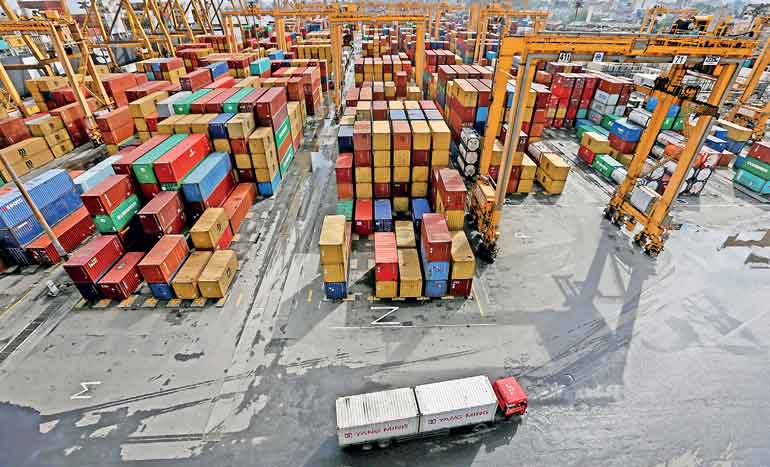
Container congestion and operational bottlenecks are not uncommon in ports around the world. Such situations may arise due to natural and operational factors, including the simultaneous arrival of multiple vessels, shortages of manpower, limited storage capacity, or other logistical constraints. They may also result from artificial causes, such as administrative delays, excessive bureaucracy, or deliberate obstruction within the system. In such circumstances, it is the responsibility of the top management to take timely and practical decisions to ensure the smooth flow of trade and prevent unnecessary disruption to economic activity.

In the case of the 323 Container Release Saga, it was reported that a large number of containers were red-flagged for physical inspection, resulting in significant delays in the clearance process. Critics alleged that these actions were influenced not only by routine operational considerations but also by resistance to the reform initiatives of the newly elected NPP Government. It was further alleged that certain elements within the system sought to embarrass or undermine the Director General of Customs (DGC), who had earned a reputation for resisting corruption and rejecting improper demands.


Sri Lanka Customs, a critical revenue-generating institution, has long been vulnerable to systemic corruption risks. In such an environment, even fully compliant importers are often tempted to dodge customs regulations, as clearing imported goods in full compliance with the law—without paying unofficial inducements—can be extremely difficult, if not impossible


The 323 Container Clearance Saga illustrates how deep state can exploit administrative powers, public narratives, and political opportunism to resist reforms that threaten established corrupt practices


Faced with mounting congestion and growing disruption to import operations, the top management of SLC reportedly took the decision to expedite the clearance of the affected containers in order to ease the bottleneck and restore normal operations. Such interventions are not first-time. It has been reported that similar directives had been issued multiple times on previous occasions by the management of SLC when such circumstances required prompt administrative action.

However, unlike previous instances, this particular decision was made for several ulterior motives as the subject of intense public controversy. The Customs trade union alliance highlighted and challenged the management’s directive, while various vested interests and political actors seized upon the issue to advance their own agendas. As a result, what might otherwise have been regarded as an operational decision aimed at resolving a logistical crisis was transformed into a broader political and institutional controversy.

The 323 Container Clearance Saga illustrates how deep state can exploit administrative powers, public narratives, and political opportunism to resist reforms that threaten established corrupt practices. It underscores the importance of evaluating such controversies in their full context and recognising that resistance to reform often disguises itself as a defense of legality, procedure, or public interest.

Conclusion

The eradication of corruption requires more than political change or isolated prosecutions. It demands a comprehensive transformation of State institutions, administrative culture, and public accountability mechanisms. While the elimination of political corruption is a significant achievement, the greater and more enduring challenge lies in dismantling deep-seated bureaucratic corruption that undermines governance from within and weakens public trust in State institutions.

The creation of a corruption-free, transparent, and accountable society is not the responsibility of any single political party, Government, or segment of the population. It is a collective national obligation that requires the active participation and vigilance of all citizens. Therefore, narrow political opportunism, vested interests, and self-serving trade unionism that obstruct necessary reforms must be firmly resisted in the larger public interest. Only through a united commitment to integrity, transparency, and accountability can a nation build strong institutions, ensure justice, and secure sustainable progress for future generations.


(The author is a retired Deputy Commissioner General of the Inland Revenue Department, and can be contacted via [email protected])


The creation of a corruption-free, transparent, and accountable society is not the responsibility of any single political party, Government, or segment of the population. It is a collective national obligation that requires the active participation and vigilance of all citizens. Therefore, narrow political opportunism, vested interests, and self-serving trade unionism that obstruct necessary reforms must be firmly resisted in the larger public interest


Recent columns

COMMENTS