Friday Oct 16, 2026
Friday Oct 16, 2026
Wednesday, 29 April 2026 00:02 - - {{hitsCtrl.values.hits}}
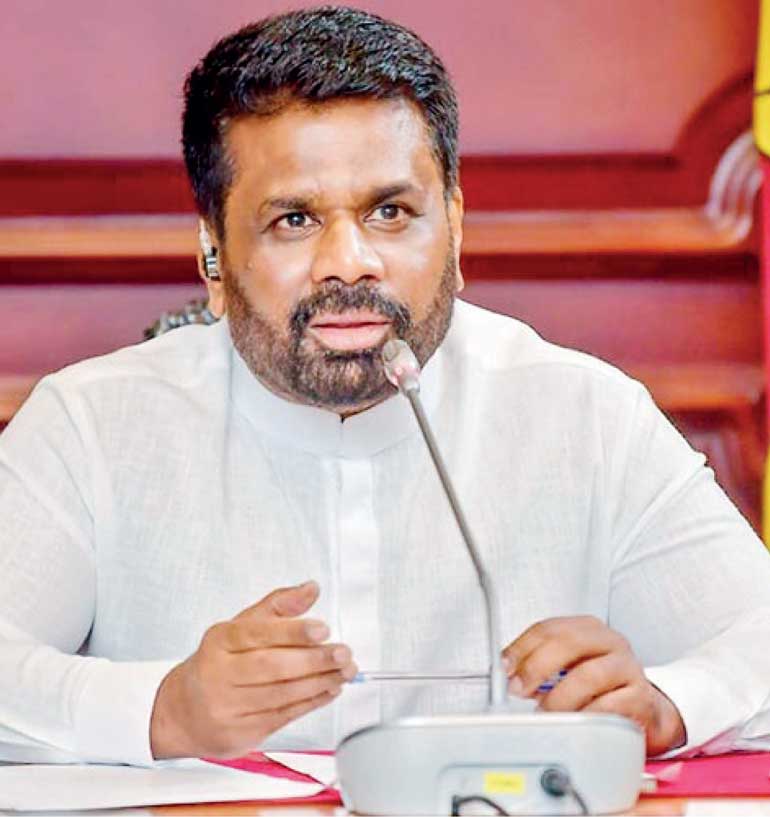
President and Finance Minister Anura Kumara Dissanayake
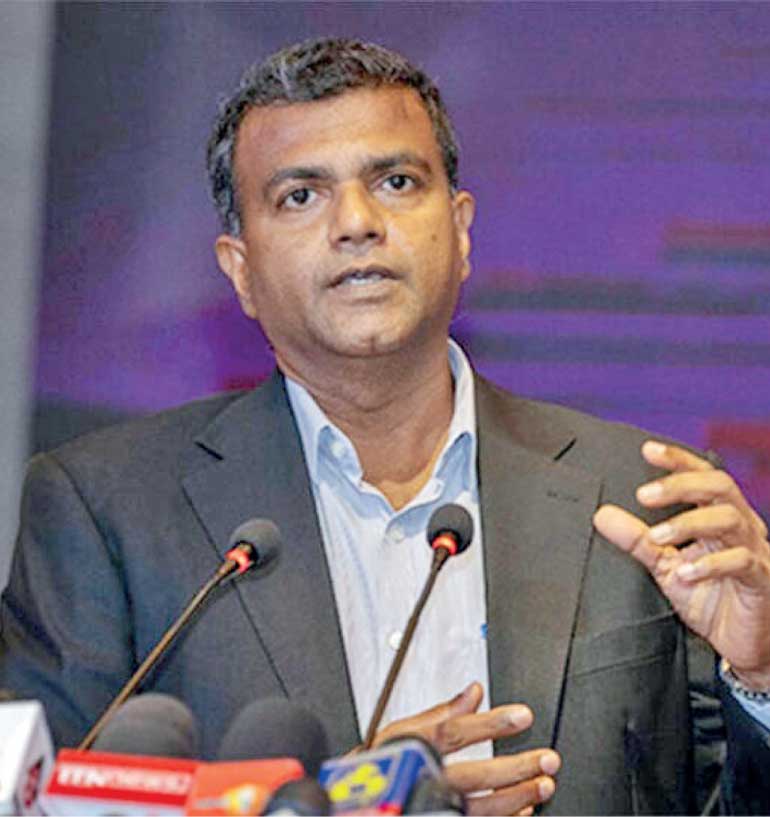
Treasury Secretary Dr. Harshana Suriyapperuma
By Shelton Dharmaratne
In Robert Louis Stevenson’s 1886 classic, Dr. Henry Jekyll makes a startling confession: that human beings are fundamentally "commingled out of good and evil." Jekyll’s tragic downfall was not the existence of his darker side, but his hubris in believing he could use a "potion" of secrecy to compartmentalise his virtues from his vices.
Today, the Sri Lankan Treasury finds itself at a similar crossroads of duality.
On one hand, we see the "Jekyll" of our economic aspirations: bold 7% GDP targets and ambitious digital transformation agendas. On the other, we are confronted by the "Hyde" of systemic fragility—vividly illustrated by the recent $2.5 million "cyber-heist" involving diverted debt repayments to Australia.
The danger of compartmentalisation
The diversion of these funds via a simple email spoofing scheme is more than a technical glitch; it is a manifestation of an institutional "Shadow Self" that we have long refused to integrate.
For months, the administration of Treasury Secretary Dr. Harshana Suriyapperuma maintained a silence characterised by "ongoing investigations," only for the truth to emerge through external pressures.
In diplomacy and finance, true maturity is defined by integration, not separation.
When a "good" institution ignores its inherent vulnerabilities, it creates a smokescreen that eventually erodes public and international trust.
By treating this breach as an external anomaly rather than an internal systemic failure, the Treasury risks repeating Jekyll’s mistake: pretending the shadow does not exist until it takes control.
From defence to integrated leadership
To move beyond this "smokescreen" narrative, the Treasury’s leadership must undergo a persona shift.
Secretary Suriyapperuma, transitioning from a partisan political background into a traditionally apolitical office, faces a unique challenge of duality.
To secure public trust, his leadership must pivot from a defensive posture to one of "Integrated Leadership." This means acknowledging that institutional strength comes from radical honesty regarding operational risks.
We must move past the "Good Doctor" facade and adopt a framework of institutional maturity through three critical reforms:
Independent oversight: We must move beyond internal probes. Mandating regular external forensic audits—aligned with global ISO 27001 standards—is essential to validate financial controls and reassure international creditors.
Legal formalisation : The transfer of debt servicing from the Central Bank to the Treasury must be re-evaluated. It is imperative that these operations are managed by personnel with specialised technical and security qualifications that match the complexities of global finance.
Mandatory disclosure: Transparency is the only antidote to the "shadow." Implementing mandatory breach disclosure protocols ensures that the public and Parliament are informed partners in our national security, rather than bystanders to a crisis.
Dr. Jekyll’s tragedy was his refusal to accept his whole self. For Sri Lanka’s Treasury, the path to credibility lies in abandoning the "potion" of denial and optimistic projections. By integrating our vulnerabilities into our national strategy, we stop the "Hyde" of systemic incompetence from overtaking our "Jekyll" of economic growth.
True fiscal maturity requires us to stop hiding from the shadow and start the difficult work of fixing it.
The human cost: Why every citizen has a stake
Ultimately, the duality of the Treasury is not merely a concern for policymakers or international creditors; it is a fundamental issue of public confidence. When an ordinary citizen walks into a local bank, they do so based on a social contract of absolute trust. They believe that the systems guarding their modest savings are as robust as those guarding the state’s millions.
(The author is communications professional with an academic background spanning leading international institutions. A graduate of RMIT University in Australia, and postgraduate studies at Bournemouth University in the United Kingdom)




