Thursday Oct 01, 2026
Thursday Oct 01, 2026
Friday, 19 June 2026 01:22 - - {{hitsCtrl.values.hits}}
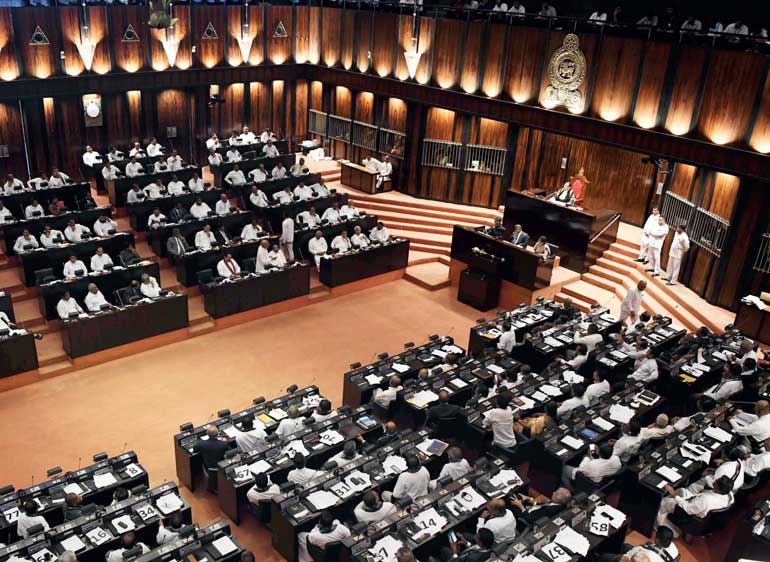
 Sri Lanka has made commendable progress since the economic crisis that brought the nation to its knees in 2022. Inflation has stabilised, foreign reserves have improved, tourism is recovering, and confidence is gradually returning to the economy. The International Monetary Fund (IMF) program has undoubtedly played a crucial role in restoring macroeconomic stability and rebuilding international confidence.
However, an important question now confronts policymakers and citizens alike: what comes next?
The IMF program was designed to help Sri Lanka recover from a crisis. It was never intended to serve as a long-term national development strategy. Fiscal consolidation, debt restructuring, and economic reforms are necessary, but they are only part of the solution. The real challenge lies beyond stabilisation. Sri Lanka must now decide what kind of country it wants to become over the next twenty years.
Recent discussions organised by the Pathfinder Foundation provided valuable insights into this challenge. During a presentation on Indonesia’s Vision 2045, Indonesia’s Ambassador to Sri Lanka Dewi Gustina Tobing outlined how the country is pursuing a long-term national development strategy aimed at transforming Indonesia into one of the world’s leading economies by the centenary of its independence. What stood out was not merely the ambition of the vision but the commitment to continuity. Indonesia understands that economic transformation cannot be achieved within a single political term. Development requires consistency, institutional strength, and a shared national direction that transcends political cycles. Sri Lanka would do well to learn from this approach.
The problem with governing through manifestos
One of Sri Lanka’s greatest weaknesses is the absence of a long-term national vision.
Every election produces a new manifesto, new priorities, and new promises. While political competition is the cornerstone of democracy, national development cannot be reinvented every five years. Too often, initiatives launched by one administration are altered, suspended, or abandoned by the next. Infrastructure projects, investment policies, administrative reforms, and development programs frequently become victims of political transition. As a result, the country struggles to maintain momentum.
Investors become uncertain. Institutions lose direction. Long-term programs fail to mature. Valuable experience and institutional memory are lost. The issue is not a lack of ideas. Sri Lanka has produced countless plans, reports, committees, and policy frameworks over the years. The problem is continuity.
Countries that have successfully transformed their economies maintain national priorities regardless of who occupies political office. Governments change, but the broader direction remains intact. Sri Lanka must move beyond governing through election manifestos and establish a national development framework that survives changes in administration.
Strong institutions are the foundation of development
No nation achieves sustainable progress through political leadership alone. Strong institutions provide continuity, professionalism, accountability, and stability. They ensure that successful policies and programs continue irrespective of political change. Sri Lanka has several examples that demonstrate the importance of institutional continuity.
The Board of Investment (BOI) is one such example. Since its establishment, the BOI has been at the centre of Sri Lanka’s efforts to attract foreign direct investment. Through decades of political transitions and changing economic circumstances, it has remained one of the country’s principal investment promotion institutions.
While reforms and modernisation may be necessary, the broader lesson remains important. Institutions that have contributed to economic development should be strengthened, modernised, and empowered rather than repeatedly disrupted. Attracting foreign investment requires credibility and consistency. Investors make decisions based on long-term expectations. They seek policy stability, institutional reliability, and confidence that commitments will be honoured. These qualities can only be provided by strong institutions.
The untapped potential of the Sri Lankan Diaspora
Sri Lanka’s overseas community represents one of the country’s most valuable but underutilised national assets. Across the world, Sri Lankans occupy leadership positions in business, finance, academia, medicine, technology, engineering, and international organisations. Their expertise, networks, and investment potential could play a transformative role in national development. Recognising this opportunity, Sri Lanka established the Office of Overseas Sri Lankan Affairs to strengthen engagement with the diaspora and facilitate meaningful contributions to the country’s progress.
Many overseas Sri Lankans welcomed the initiative. For the first time, there was an institutional mechanism dedicated to building structured relationships between the country and its global community. The subsequent abolition of the office was disappointing for many who believed it had begun to create a valuable bridge between Sri Lanka and its diaspora.
The issue extends beyond a single institution. It raises a broader question about policy continuity. Successful initiatives should be evaluated objectively and improved where necessary, rather than abandoned simply because political priorities have shifted. Countries such as India, Ireland, Israel, and Singapore have successfully leveraged their diaspora communities to attract investment, transfer knowledge, expand exports, and build international partnerships. Sri Lanka should be pursuing a similar strategy.
Depoliticising the public service
Perhaps the most important requirement for long-term development is a professional and politically independent public service. No country can be effectively governed through politicians alone. Political leaders provide direction and leadership, but implementation depends on bureaucrats, administrators, planners, economists, engineers, diplomats, and technical experts. The world’s most successful economies are supported by highly capable public institutions staffed by professionals who provide continuity across administrations.
Singapore’s rise was not achieved solely through political leadership. It was also supported by an exceptionally competent civil service. Similar examples can be found in South Korea, Japan, and several Southeast Asian economies. Sri Lanka possesses many talented public servants. However, excessive politicisation has often undermined institutional effectiveness.
Frequent transfers, politically motivated appointments, and changing priorities weaken institutional memory and discourage professional decision-making. A modern public service must serve the State rather than any particular political party. Recruitment, promotion, and appointments should be based on competence, integrity, and performance. If Sri Lanka is serious about implementing a Vision 2045 or Vision 2048, it must first ensure that the institutions responsible for delivering that vision are capable of operating beyond electoral cycles.
Economic diplomacy must become a national priority
A national vision cannot be implemented through domestic reforms alone. It requires effective engagement with the international community. In an increasingly interconnected world, diplomats are no longer responsible solely for political relations. They are also expected to attract investment, promote trade, strengthen tourism, facilitate technology transfers, engage diaspora communities, and build strategic partnerships that support national development.
Countries such as India, Singapore, South Korea, Vietnam, and Indonesia have successfully integrated economic diplomacy into their broader development strategies. Their diplomatic missions actively promote national economic interests, identify investment opportunities, and communicate a clear and consistent message about their country’s future. Sri Lanka must adopt a similar approach.
The country requires a professional diplomatic service equipped with the skills, resources, and institutional support necessary to promote Sri Lanka effectively on the global stage. Diplomats should be evaluated not only on protocol and political reporting but also on their contribution to trade promotion, investment facilitation, tourism development, diaspora engagement, and strategic partnerships.
Equally important is consistency in messaging. Investors and international partners must understand where Sri Lanka is heading and what opportunities exist within the country. This requires a clear national narrative supported by both policymakers and diplomatic missions.
Sri Lanka possesses significant strengths: a strategic location in the Indian Ocean, a highly educated workforce, strong maritime connectivity, growing digital capabilities, and a globally successful diaspora. Yet these advantages must be communicated effectively to the world.
A country cannot attract investment or build partnerships if it cannot clearly articulate its vision. The diplomats of the future must therefore become ambassadors not only of Sri Lanka’s foreign policy but also of its economic ambitions, development priorities, and national potential.
Looking beyond the IMF
The IMF program has provided Sri Lanka with a pathway out of crisis. Yet stabilisation alone does not create prosperity. The national conversation must now move beyond debt restructuring and fiscal targets. The central challenge facing Sri Lanka is wealth creation.
These questions require answers that extend well beyond the scope of any IMF program.
The countries that transformed themselves did not stop at economic stabilisation. They developed long-term strategies supported by strong institutions, capable bureaucracies, and clear national objectives. Indonesia has Vision 2045. India has articulated its ambition of becoming a developed nation by 2047. Singapore has consistently planned decades ahead. Sri Lanka too must begin thinking beyond the immediate demands of recovery.
A vision for the future
As the country approaches the centenary of independence in 2048, there is a compelling case for developing a national Vision 2045 or Vision 2048. Such a vision should not belong to one political party, one Government, or one leader. It should represent a national consensus supported across political divides. Its implementation should be entrusted to strong institutions, a professional public service, an effective diplomatic corps, and a clear framework for accountability. The economic crisis taught Sri Lanka many painful lessons. Perhaps the most important is that short-term thinking carries long-term consequences.
Recovery is necessary.
Reform is essential.
But vision is indispensable.
The future of Sri Lanka cannot be determined solely by the manifesto of the next election. It must be guided by a shared national strategy that survives political transitions and focuses on the long-term interests of the nation. Strong institutions, a professional public service, an empowered diplomatic corps, and a clear national vision are not separate objectives. Together, they form the foundation upon which Sri Lanka’s next chapter of development must be built. The IMF can help us recover. Only a national vision can help us prosper.
(The author is a researcher, writer, and strategic affairs analyst with interests in international relations, economic diplomacy, public policy, and national security. He regularly engages in policy discussions on Sri Lanka’s economic development, trade integration, foreign policy, and institutional reform. His work focuses on the intersection of governance, economic resilience, and Sri Lanka’s role in the evolving Indo-Pacific region)



