Monday Aug 24, 2026
Monday Aug 24, 2026
Thursday, 21 May 2026 04:01 - - {{hitsCtrl.values.hits}}
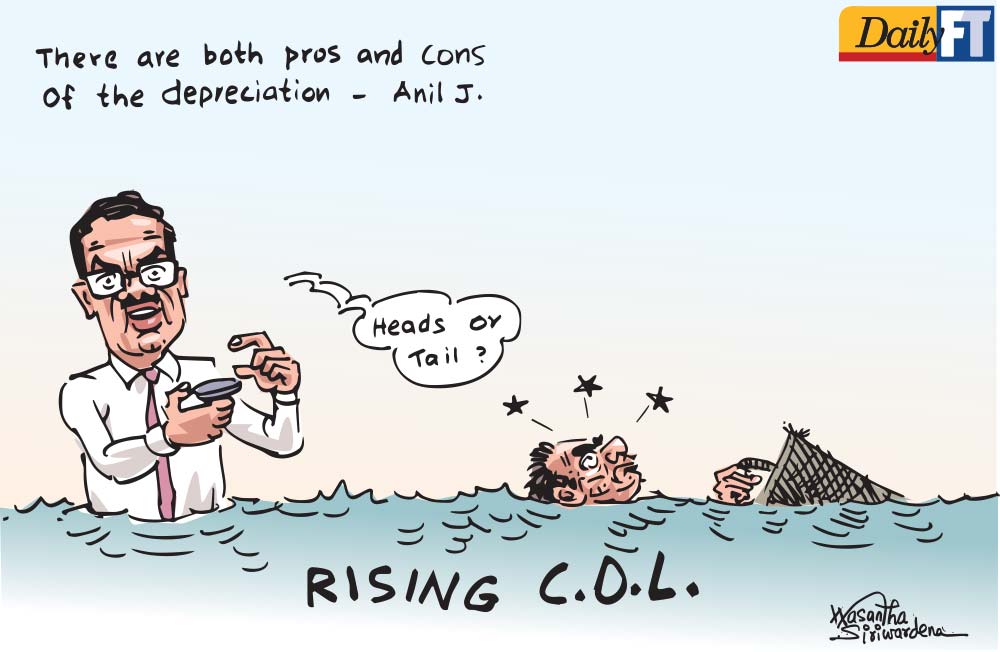
 The widening gap between spot rates and bank selling rates also reflects tighter liquidity conditions and increased demand for foreign currency, particularly from importers and businesses with external payment obligations. As banks price in risk and market expectations, the higher selling rates indicate underlying pressure in the foreign exchange market rather than just short-term fluctuations
 Sri Lankan exporters are increasingly sounding the alarm that the recent sharp depreciation of the rupee, rather than delivering the usual boost to export competitiveness, is instead placing them under mounting financial strain. While a weaker currency typically makes exports cheaper and more attractive in global markets, this advantage is being rapidly undermined by the country’s heavy reliance on imported inputs. The cost of essential items such as fuel, raw materials, machinery, and intermediate goods has surged in rupee terms, significantly driving up production expenses across key export industries.
As a result, the margin gains expected from favourable exchange rates are being almost entirely wiped out by higher input costs. Many exporters report that they are unable to fully pass these increased costs on to international buyers due to intense global competition, forcing them to absorb the impact and operate with shrinking profit margins. This is particularly challenging for small and medium-sized exporters who have less financial flexibility and limited capacity to hedge against currency volatility.
Sri Lanka’s long-term competitiveness
Beyond the immediate pressure on profitability, exporters warn that prolonged currency instability could erode Sri Lanka’s long-term competitiveness. Unpredictable cost structures make it difficult for businesses to plan, price contracts, and maintain consistent supply commitments. Over time, this may lead to lost market share, reduced investment in export-oriented industries, and a weakening of the country’s overall export base. Consequently, industry stakeholders are emphasising the urgent need for macroeconomic stability and policy measures that can help mitigate the adverse effects of currency fluctuations on production costs and export performance.
The Sri Lankan rupee has come under renewed pressure in recent months, weakening by approximately 3.6 to 4.5% against the US dollar since the end of last year. In practical terms, this has pushed the dollar’s value in the spot market to a range of around Rs. 321 to Rs. 325, while commercial bank selling rates have climbed even higher to about Rs. 334. These levels mark the weakest point for the rupee since late 2023, signalling a notable shift after a period of relative stability.
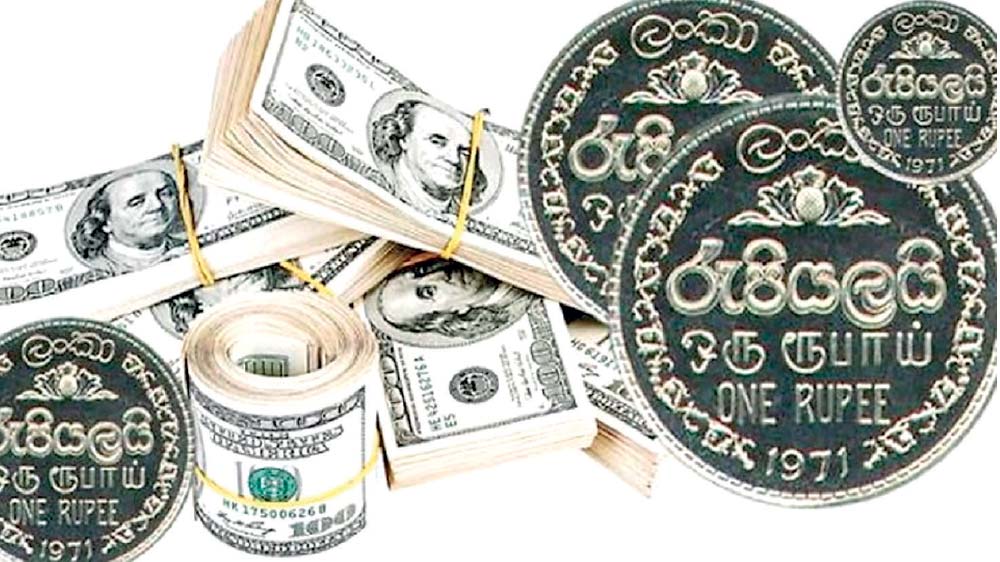 The widening gap between spot rates and bank selling rates also reflects tighter liquidity conditions and increased demand for foreign currency, particularly from importers and businesses with external payment obligations. As banks price in risk and market expectations, the higher selling rates indicate underlying pressure in the foreign exchange market rather than just short-term fluctuations.
Importantly, the rupee’s depreciation is not limited to the US dollar alone. Other major currencies, including the British Pound and the Euro, have also strengthened against the rupee, compounding the impact on Sri Lanka’s external sector. This broad-based weakening suggests that the pressure stems not only from global dollar strength but also from domestic economic factors such as import demand, debt servicing requirements, and market sentiment.
For businesses and consumers alike, this trend translates into higher costs for imports, overseas travel, education, and foreign-denominated debt repayments. For exporters, while there may be some nominal exchange rate advantage, the simultaneous rise in the cost of imported inputs and global competition limits the net benefit. Overall, the current exchange rate movement underscores ongoing vulnerabilities in Sri Lanka’s external balance and highlights the importance of maintaining foreign exchange inflows and macroeconomic stability.
Critical paradox
Typically, a depreciating currency is expected to provide a natural boost to a country’s export sector by making its goods and services cheaper in international markets. This price advantage can help exporters gain market share, while also increasing the value of their foreign-currency earnings when converted back into local currency, thereby improving profitability. In theory, this dynamic should strengthen export performance and support economic growth.
However, industry stakeholders, including the National Chamber of Exporters (NCE), point out that Sri Lanka is facing a structural constraint that limits these expected gains. The country’s export manufacturing base is heavily dependent on imported inputs, ranging from fuel and raw materials to machinery, chemicals, and intermediate goods. As the rupee depreciates, the cost of these imports rises sharply in local currency terms, directly increasing production costs across nearly all export-oriented industries.
This creates a critical paradox: while export revenues may increase nominally due to favorable exchange rates, the cost base of producing those exports is rising even faster. In many cases, the increase in input costs outweighs the benefits gained from currency depreciation. Exporters are therefore caught in a squeeze where their margins are compressed rather than expanded.
Compounding the problem is the limited ability of Sri Lankan exporters to pass these higher costs onto international buyers. Global markets remain highly competitive, and buyers often resist price increases, especially when alternative sourcing options are available from other low-cost countries. As a result, exporters are forced to absorb much of the cost escalation, eroding profitability and weakening their financial resilience.
Over time, this imbalance between rising costs and constrained revenues can discourage investment in export industries, reduce capacity expansion, and undermine Sri Lanka’s long-term export competitiveness. What emerges is not the typical export-led benefit of a weaker currency, but rather a cost-driven strain that exposes the vulnerabilities of an import-dependent production structure.
The impact is already rippling through Sri Lanka’s industrial supply chains, with cost pressures becoming increasingly visible across multiple layers of production. In March alone, the country’s fuel import bill surged by 74.7% year-on-year to $630 million, underscoring how energy costs have become a dominant burden. Notably, fuel accounted for nearly half of all intermediate goods imports during the month, reflecting both elevated global oil prices and supply uncertainties linked to ongoing tensions in the Middle East.
This sharp increase in fuel expenditure has broader implications beyond just energy costs. Fuel is a foundational input that affects transportation, power generation, and manufacturing processes, meaning that higher fuel prices cascade through the entire production ecosystem. As a result, businesses are facing rising logistics costs, increased electricity expenses, and higher operating overheads, all of which feed directly into the final cost of export goods.
Overall spending on intermediate goods climbed to $1.26 billion in March, the highest monthly level recorded since December 2021, highlighting the scale of import dependence in Sri Lanka’s production model. This follows an already substantial annual expenditure of around $11.8 billion on intermediate goods in 2025, indicating that the current surge is not an isolated spike but part of a sustained structural trend.
At a sectoral level, key industrial inputs such as textiles, chemicals, plastics, and machinery components have all recorded significant price increases. These inputs are essential for major export industries, including apparel manufacturing, rubber-based products, and light engineering. For example, apparel manufacturers rely heavily on imported fabrics and accessories, while rubber and plastic product exporters depend on imported chemicals and processing materials. Similarly, engineering firms require machinery parts and components that are largely sourced from abroad.
The cumulative effect is a direct squeeze on production margins. As input costs rise across the board, manufacturers are forced to either absorb the higher expenses or attempt to pass them on, often with limited success in competitive global markets. This intensifying cost pressure is now disrupting supply chain planning, reducing operational flexibility, and raising concerns about the sustainability of export growth if such trends persist.
Structural adjustments are urgently needed to strengthen domestic value addition and reduce import dependency over the long term. Without such reforms, continued currency depreciation could have damaging long-term consequences for Sri Lanka’s manufacturing sector. Businesses may gradually scale back investment, delay modernisation, and reduce production capacity in response to rising costs and uncertain returns
Headline numbers mask the growing financial strain
Beneath the surface of Sri Lanka’s strong headline export performance, mounting cost pressures are beginning to expose deeper vulnerabilities within the country’s export economy. On paper, the figures appear highly encouraging. Merchandise exports reached a historic high of $13.5 billion in 2025, reflecting resilience in external trade despite global economic uncertainty. The momentum has continued into 2026, with export earnings in the first quarter rising by 3.4% year-on-year to approximately $3.4 billion. Key sectors such as apparel, tea, and rubber products have remained the primary drivers of this growth, sustaining foreign exchange inflows and supporting overall economic recovery.
However, industry stakeholders caution that these headline numbers mask the growing financial strain faced by exporters at the operational level. According to the National Chamber of Exporters (NCE), the apparent gains from a weaker rupee are being steadily eroded by escalating production and logistics costs, particularly for industries that rely heavily on imported inputs and foreign services.
Exporters are now grappling with significantly higher expenses related to freight charges, fuel, electricity, machinery, spare parts, chemicals, and imported raw materials. Global shipping and logistics costs remain volatile, while the depreciation of the rupee has made every dollar-denominated import substantially more expensive in local currency terms. This means that although exporters may receive more rupees for each dollar earned, they are simultaneously paying far more to sustain production.
For high-import-dependent industries such as apparel manufacturing, rubber-based exports, plastics, and light engineering, the increase in operational costs is offsetting much of the exchange rate advantage that would normally accompany a weaker currency. In some cases, exporters report that profit margins are either stagnating or narrowing despite higher export earnings.
The challenge is further intensified by competitive pressures in international markets. Many exporters are unable to increase selling prices because global buyers remain highly price-sensitive and have access to alternative suppliers from competing countries. Consequently, Sri Lankan firms are often forced to absorb the higher costs internally, placing pressure on cash flow, investment capacity, and long-term expansion plans.
As a result, the export sector is facing a growing disconnect between strong revenue figures and weakening profitability. While the country continues to record impressive export earnings, the underlying cost structure suggests that the sustainability of this growth could become increasingly fragile unless exchange rate stability, lower import costs, and greater domestic value addition are achieved.
Exporters assert that stabilising production costs by addressing currency volatility has now become an urgent economic priority rather than merely a financial concern. While businesses can adapt to gradual market movements, persistent and unpredictable fluctuations in the exchange rate create severe uncertainty for manufacturers and exporters who rely heavily on imported fuel, machinery, raw materials, and intermediate goods. In such an environment, companies struggle to accurately forecast costs, price products competitively, or plan investments with confidence.
Industry stakeholders emphasise that exchange rate instability significantly increases financial risk across the export sector. Sudden currency depreciation can sharply inflate the local-currency cost of imports within weeks, disrupting production budgets and eroding already narrow profit margins. Exporters operating on long-term contracts are particularly vulnerable, as many agreements are negotiated months in advance at fixed international prices. When the rupee weakens unexpectedly during the production cycle, businesses are often unable to adjust selling prices quickly enough to offset higher operational expenses.
According to industry leaders, the resulting uncertainty is making long-term planning increasingly difficult. Firms become hesitant to invest in expansion, technology upgrades, workforce development, or new product lines when future costs remain unpredictable. Smaller and medium-sized exporters are especially exposed, as they often lack the financial reserves or hedging mechanisms needed to manage currency risk effectively.
At the same time, exporters warn that Sri Lanka’s deeper structural weakness lies in its heavy dependence on imported production inputs. Despite strong export earnings, a large share of manufacturing value is still tied to foreign-sourced materials, energy, chemicals, textiles, machinery, and components. As a result, the economy gains less from currency depreciation than expected because higher import costs quickly filter through the entire production chain.
Industry leaders therefore argue that structural adjustments are urgently needed to strengthen domestic value addition and reduce import dependency over the long term. This includes expanding local supply chains, promoting domestic raw material production, encouraging technology transfer, investing in energy efficiency, and improving industrial productivity. Increasing the proportion of locally sourced inputs would help reduce exposure to exchange rate shocks and improve the resilience of export industries.
Without such reforms, continued currency depreciation could have damaging long-term consequences for Sri Lanka’s manufacturing sector. Businesses may gradually scale back investment, delay modernisation, and reduce production capacity in response to rising costs and uncertain returns. Over time, this could weaken industrial productivity, reduce competitiveness in global markets, and place sustained pressure on employment and economic growth. Exporters caution that unless macroeconomic stability and structural reforms are pursued together, the country risks undermining the very industries that generate its critical foreign exchange earnings.
(The author is a Snr. Lecturer in Industrial Management, Faculty of Management Studies, Rajarata University of Sri Lanka)



