Sunday Sep 13, 2026
Sunday Sep 13, 2026
Saturday, 25 July 2026 00:29 - - {{hitsCtrl.values.hits}}

Prof. Patrick Mendis
Arjuna Herath

Harsha Amarasekera
Lakshan Madurasinghe

Shehara de Silva
 Prof. Patrick Mendis proposes a “Mahaweli Doctrine” that links foreign policy, trade and national development through greater global connectivity
PRASL President Nimal Gunawardena says strategic communications must move beyond publicity to build support for national transformation
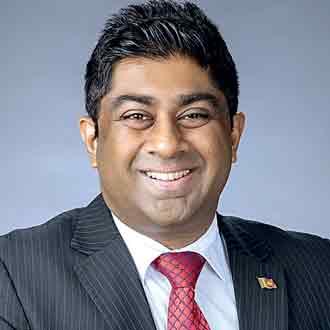
Solutions Ground Ltd. CEO Lakshan Madurasinghe calls for one authentic national investment narrative backed by consistent execution and investor confidence
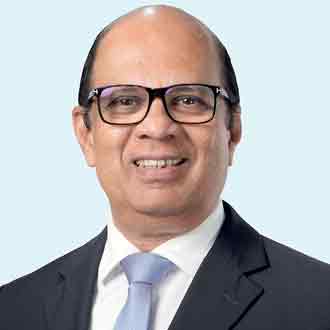
Former BOI Chairman Arjuna Herath says competitiveness, logistics and institutional reforms—not geography alone—will determine Sri Lanka’s investment appeal
Port City Economic Commission Chairman Harsha Amarasekera positions Port City as a platform to integrate Sri Lanka with the global services economy through knowledge, innovation and international business
Sri Lanka’s next phase of economic transformation will depend less on its strategic location than on its ability to articulate a clear national proposition backed by credible institutions, consistent policies and stronger global engagement, speakers said at a forum on “Taking Sri Lanka to the World” recently organised by the Public Relations Association of Sri Lanka together with the Sri Lanka Institute of Directors, AMCHAM Sri Lanka and Port City Colombo.
Addressing the discussion, Visiting Professor of Transatlantic Relations at the University of Warsaw Prof. Patrick Mendis, PRASL President Nimal Gunawardena, Solutions Ground Ltd. CEO Lakshan Madurasinghe, former BOI Chairman Arjuna Herath and Port City Economic Commission Chairman Harsha Amarasekera argued that while Sri Lanka possesses significant strategic and economic advantages, it must better align its history, capabilities and policy direction into a coherent proposition that resonates with investors, businesses and international partners.
Ancient wisdom as modern foreign policy blueprint
Sri Lanka should look less to contemporary development models and more to its own civilisational experience as it reshapes foreign policy for a rapidly changing global order, according to Prof. Patrick Mendis.
Delivering the keynote address titled “The Mahaweli Doctrine: Sri Lanka’s Foreign Policy Must be Like Water for a National Renaissance”, Mendis argued that the country’s ancient hydraulic civilisation provides lessons that extend well beyond engineering or agriculture. It demonstrated how governance, commerce, diplomacy and infrastructure could operate as an integrated system to generate national prosperity.
Drawing on the reign of King Parakramabahu I, Mendis said the Mahaweli River served as the backbone of a connected economy, linking agricultural production through an extensive irrigation network to Gokanna, present-day Trincomalee, from where goods were traded across Asia. Historical accounts, he noted, suggest Sri Lanka maintained commercial links with China while naval forces protected maritime trade from piracy.
“The Mahaweli River offers a powerful metaphor,” he said. “Like the river itself, Sri Lanka’s foreign policy should not divide but connect; not isolate but unite. It should link villages to global markets, local enterprise to international opportunity, and ancient wisdom to modern statecraft.”
Mendis drew parallels with the United States and China, arguing that great powers had similarly used rivers and waterways to integrate domestic economies with international commerce. He cited the Potomac, Mississippi and Missouri river systems in the United States, together with China’s Yangtze River and Grand Canal, as examples of how infrastructure supported economic expansion and State-building.
Against that backdrop, he said Sri Lanka should pursue a pragmatic strategy of “multi-alignment”, strengthening relationships with the United States, China, India, Europe, ASEAN, the Middle East and Africa without becoming overly dependent on any single partner.
Foreign policy, he argued, should also extend beyond diplomacy to encompass agriculture, tourism, education, technology, entrepreneurship and cultural exchange, allowing local communities to become active participants in connecting Sri Lanka to global opportunities. Rather than seeking to replicate Singapore or Dubai, he said Sri Lanka should rediscover development principles rooted in its own history and geography.
Strategic communications for national transformation
Building on the discussion about how Sri Lanka presents itself internationally, PRASL President Nimal Gunawardena argued that strategic communications should be recognised as an essential tool of national development rather than being confined to media relations and corporate reputation management.
Opening the discussion, Gunawardena said public relations was often viewed narrowly through press conferences, media coverage and events. However, he described it as a strategic communications discipline capable of both protecting institutional reputation and building support behind major policy initiatives.
“The Government has huge initiatives,” he said, pointing to programmes such as digital transformation, energy transition and broader economic reforms. Successfully implementing those initiatives, he argued, requires more than policy decisions. It requires communicating their purpose clearly enough to secure public understanding and participation.
According to Gunawardena, public relations has a dual role. While managing image and reputation remains important, its broader contribution lies in helping governments and businesses mobilise stakeholders around long-term objectives.
His remarks added another dimension to the broader discussion on Sri Lanka’s global positioning, with speakers highlighting that international competitiveness increasingly depends not only on economic fundamentals but also on the ability to build confidence among citizens, investors and partners.
Aligning the investment proposition
That question of confidence was taken further by Solutions Ground Ltd. CEO Lakshan Madurasinghe, who approached Sri Lanka’s global positioning from an investment perspective.
Sri Lanka needs a clear and authentic national positioning if it is to compete more effectively for foreign direct investment, he said.
Speaking during the panel discussion, Madurasinghe acknowledged Sri Lanka’s success in attracting multinational companies that have generated exports, employment and repeat investment over several decades. However, he argued that the country has not communicated those successes effectively, particularly the expansion of existing investors.
“We celebrate investment, but we sometimes forget to celebrate reinvestment,” he said, noting that repeat investments often provide the strongest evidence of investor confidence.
Looking ahead, he said Sri Lanka’s ambitious FDI targets would require a more coordinated national approach. Rather than relying solely on investment promotion agencies, he argued that every institution—from the President’s Office and Government ministries to overseas missions and the private sector—should consistently project the same national proposition.
“If we want to say Sri Lanka is the trusted business gateway to South Asia, everything has to align behind it,” he said.
Competitiveness—not incentives
The discussion then shifted from national positioning to the practical conditions needed to convert investor interest into investment, with former Board of Investment Chairman Arjuna Herath arguing that Sri Lanka’s strategic location remains a significant advantage, but warning that maintaining competitiveness will require sustained investment in infrastructure, logistics and institutional reform.
Drawing parallels with Sri Lanka’s historic role as a trading hub, Herath said the country’s future depended on strengthening its position as a regional logistics centre while adapting to increasing competition from neighbouring ports.
He noted that Colombo continues to handle substantial transhipment volumes linked to India but cautioned that competing investments in regional port infrastructure could erode that advantage unless Sri Lanka continued improving efficiency and service quality.
Herath argued that attracting investment is not primarily about offering incentives, but about creating an ecosystem where businesses have confidence in regulation, administration and long-term policy consistency.
“We need to get our act together,” he said, identifying labour reforms, competitiveness, infrastructure and public sector efficiency as areas requiring continued attention.
Reflecting on his tenure at the Board of Investment, Herath said Sri Lanka had built a significant pipeline of investment proposals, demonstrating that international investor interest exists. The challenge, he suggested, is converting that interest into realised investments through stronger execution and institutional capability.
The Port City strategy
Picking up on the discussion about execution and long-term competitiveness, Port City Economic Commission Chairman Harsha Amarasekera said Colombo Port City should be viewed as a platform for integrating Sri Lanka into global services markets rather than simply as a real estate development.
Speaking during the panel discussion, Amarasekera described Port City as Sri Lanka’s largest public-private partnership and emphasised that the reclaimed land remains owned by the Government of Sri Lanka, with development rights granted under long-term arrangements.
He said the special economic zone had been designed primarily around international services, including finance, professional services, tourism and mixed-use development, rather than manufacturing.
Unlike conventional investment zones, businesses established within Port City are intended to provide services to international markets, operating within a dollarised environment using multiple approved foreign currencies.
Amarasekera said the project’s broader objective extends beyond infrastructure to creating an ecosystem capable of attracting multinational companies, highly skilled professionals and knowledge-intensive industries. Knowledge transfer to Sri Lankan workers, he added, would be an important component of that process.
He also outlined the governance framework under which investment approvals are assessed, noting that recommendations by the Port City Economic Commission are subject to Cabinet approval before incentives are granted.
Returning to one of the central themes of the forum, Amarasekera said Port City should be viewed as a modern platform that complements Sri Lanka’s historic role as a trading nation by connecting the country with emerging opportunities in international services, innovation and global commerce. Shehara de Silva moderated the discussion.




