Wednesday Sep 30, 2026
Wednesday Sep 30, 2026
Monday, 27 July 2026 04:29 - - {{hitsCtrl.values.hits}}
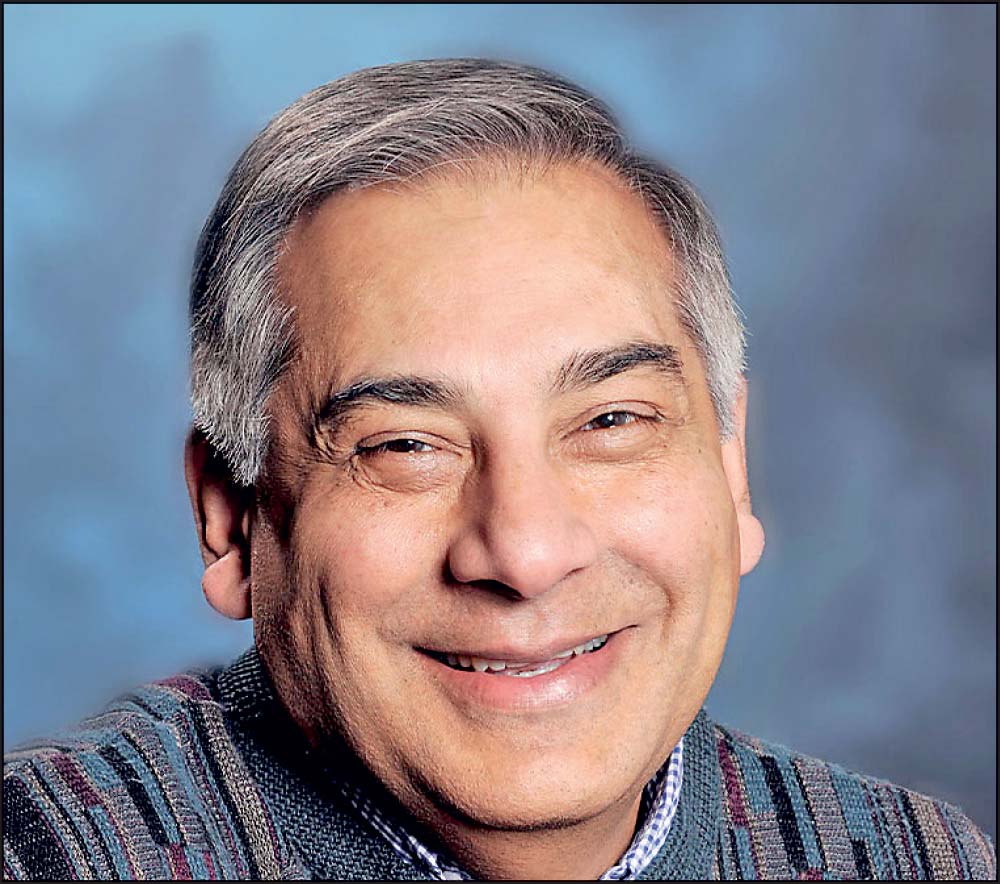
Prof. Asgi T. Fazleabas
 Few Sri Lankan scientists have left a greater mark on modern reproductive medicine than Professor Asgerally “Asgi” T. Fazleabas. His discoveries changed the way scientists understand early pregnancy and endometriosis, influencing research and fertility care around the world.
Despite an illustrious international career, he remained deeply committed to helping Sri Lanka develop its own research and clinical expertise. To many of us, he was not simply a world-renowned scientist; he was a generous mentor, an unfailingly supportive colleague, and a cherished friend. He was remarkably approachable. Whether speaking to a young postgraduate student or a senior professor, he displayed the same warmth, humility, and genuine interest in helping others succeed. Those qualities earned him not only admiration but lasting affection.
His research uncovered how an embryo communicates with the mother’s uterus during the earliest days of pregnancy, revealing the biological signals that allow an embryo to attach successfully to the lining of the womb. These discoveries helped advance assisted reproductive technologies and improved our understanding of early pregnancy.
He became one of the world’s foremost authorities on endometriosis—a debilitating disease affecting millions of women. By developing the baboon model of endometriosis, his laboratory provided scientists with a unique opportunity to study how the disease develops and why it causes its symptoms. His work continues to influence laboratories across the globe.
His scientific output was remarkable. He authored nearly 250 scientific papers, dozens of book chapters, and delivered hundreds of invited lectures at international conferences. Asgi received his schooling at St. Thomas’ College, Guruthalawa and Mount Lavinia, and studied at Aquinas College before leaving for the United States. He earned his bachelor’s degree from California State University, completed his PhD at the University of Illinois, and undertook postDr.al research at the University of Florida before joining the University of Illinois faculty. He later moved to Michigan State University, where he became a University Distinguished Professor and Michigan State University Foundation Professor, spending most of his distinguished career there.
His achievements earned him many of the highest honours in reproductive science, including election as a Fellow of the American Association for the Advancement of Science, the Carl G. Hartman Award from the Society for the Study of Reproduction, and appointment as an Ambassador of the World Endometriosis Society.
He served on the editorial boards of several leading international journals, including Biology of Reproduction, Fertility and Sterility, Scientific Reports, and Frontiers in Reproductive Health.
Despite his international commitments, Asgi never forgot Sri Lanka and worked tirelessly to help build the country’s research capacity in reproductive medicine. It was at his encouragement that we established our Endometriosis and Adenomyosis Association, and he graciously agreed to serve as its Patron.
We received enormous support from Asgi for the 13th Asian Congress on Endometriosis, held in Colombo in November 2025. By happy coincidence, the meeting coincided with his 75th birthday. Many of his close colleagues from the United States—among the world’s leading researchers in endometriosis—travelled to Colombo to participate in the Congress and to celebrate this important milestone with Asgi and his wife, Sherebanu. Their presence greatly enhanced the scientific stature of the meeting, as did the participation of the World Endometriosis Society, which he helped bring to Colombo.
Together, these reflected the extraordinary respect and affection his colleagues had for him. If respect and love from colleagues were a measure of a life well lived, Asgi stood among the finest.
Despite exhausting treatments for his terminal illness, he was determined to travel to Colombo to participate in the Congress. That decision reflected the qualities that defined Asgi throughout his life—his commitment to science, his generosity in sharing knowledge, and his enduring affection for Sri Lanka.
He was very supportive of our young researchers. On several occasions, he came to Sri Lanka with his colleagues to conduct workshops on advanced laboratory techniques. He arranged opportunities for promising young researchers to train in his laboratory in Michigan. Many later went on to earn Dr.al degrees.
He remained active in cutting-edge research until a late stage of his terminal illness. Even as late as November last year, he was the Principal Investigator on four large, prestigious research grants. Three of these had a central focus on understanding endometriosis.
Professor Asgerally “Asgi” Fazleabas leaves behind not only an outstanding body of scientific work but also a generation of scientists he inspired and discoveries that continue to improve the lives of women around the world. Sri Lanka has lost one of its finest scientific sons, but his influence will endure in the laboratories, clinics, and classrooms where his work continues to shape reproductive medicine.
(The author is the President, Asian Society of Endometriosis and Adenomyosis (ASEA) and Emeritus Professor, University of Colombo,
Sri Lanka)



