Thursday Oct 22, 2026
Thursday Oct 22, 2026
Tuesday, 5 May 2026 00:24 - - {{hitsCtrl.values.hits}}
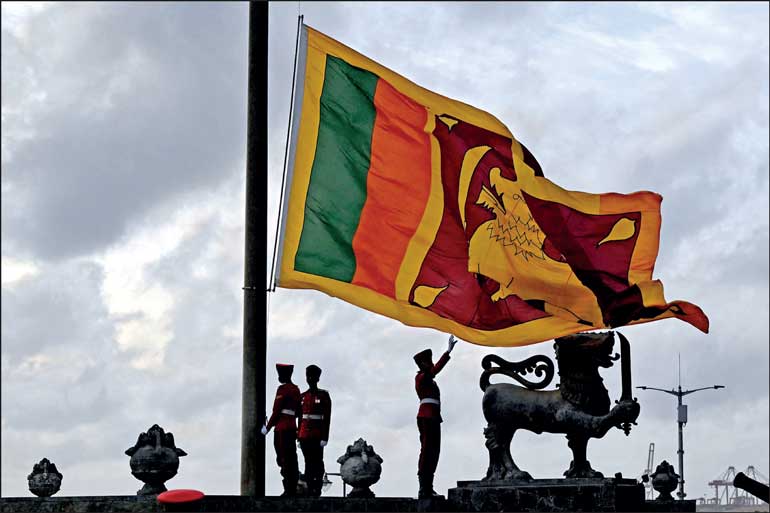
 Sri Lanka is passing through a rare and potentially transformative political moment. The present Government enjoys an unusual combination of presidential legitimacy, parliamentary strength, and political cohesion. The result is an exceptional platform for legislative control and policy direction. In a country long burdened by unstable coalitions, rival power centres, and fragmented reform efforts, this degree of unity creates a genuine opportunity to reimagine the nation’s future.
What makes this moment especially significant is not only the scale of the mandate, but also the character of the governing space. The present leadership has been widely viewed as representing a different political style, with stronger emphasis on discipline, accountability, inclusion, and institutional renewal. The visibility of younger leaders, women in governance, and professionals from diverse backgrounds has strengthened the public sense that Sri Lanka may be entering a new political phase. That alone does not guarantee results, but it broadens the possibility of a more credible and reform-oriented state.
Extraordinary range of challenges
Within less than a year, however, the present Government and its leadership team have had to confront an extraordinary range of challenges. In the early months, they had to function through a smaller Cabinet arrangement until the parliamentary election while establishing governance procedures, institutional authority, administrative legitimacy, and implementation systems. This was not a routine transfer of power. It was a test of whether a new political leadership could convert public expectation into practical administration under severe national constraints.
Soon after assuming office, the Government showed urgency in addressing fragmented, outdated, slow, and often poorly coordinated systems that had weakened public administration for years. It has attempted to redirect governance toward a more productive, results-oriented, and implementation-focused model, drawing increasingly on field expertise and practical policy engagement. The early momentum suggests that the effort has begun on the correct path. Yet the road ahead is far from easy. Growing uncertainties, internal pressures, and external shocks have made the reform journey more turbulent and demanding. For this reason, the  Government’s path forward will require broader support from both local stakeholders and the international community. Equally important is the modernisation of public sector service delivery, where quality, speed, efficiency, and responsiveness must improve if reform is to become credible and meaningful to the wider public.
That first phase unfolded while Sri Lanka was still navigating the after-effects of its worst economic crisis in decades. The Government inherited a country in which debt restructuring remained unfinished, the IMF program required continued compliance, and households and firms were still carrying the social and financial scars of the 2022 collapse. This is where the Government’s challenge becomes more demanding than headline politics. It is not enough to manage macroeconomic stabilisation on paper. It must also manage Sri Lanka’s internal socio-economic vulnerabilities: household pressure, uneven recovery, business debt distress, job insecurity, social fatigue, and public impatience. Even where inflation and reserves improve, public trust will depend on whether the benefits of stabilisation are felt in ordinary life. Recovery, in the public mind, is not a spreadsheet exercise; it is about livelihoods, affordability, confidence, and dignity.
National development
The local business community remains central to that question. Many Sri Lankan enterprises, especially SMEs and regional businesses, continue to struggle with financing constraints, debt settlements, tax and compliance burdens, weak demand, and uncertainty in the operating environment. The sustainability of local business will depend on whether the Government can turn stabilisation into liquidity, regulatory clarity, and a practical environment for investment and expansion.
The Government should also actively draw into the national development process successful entrepreneurs, large corporates that have built resilient and high-performing enterprises, and the wider private sector, both local and foreign, as strategic partners in rebuilding the country. National recovery and long-term development cannot rest on the public sector alone. They require structured collaboration between the State and enterprise leaders who understand investment, productivity, markets, technology, exports, employment generation, and institutional efficiency. If properly aligned, such partnerships can help shape the governance, recovery, and development landscape of Sri Lanka into one that is more robust, competitive, innovative, and better positioned among the emerging economies of the region.
 The Government and its political and regional network, together with the public sector, the armed forces, and the private sector, have also shown an exemplary and generous spirit by rapidly assisting the recovery of livelihoods, damaged infrastructure, and devastated areas following Sri Lanka’s terrible disaster, working around the clock as one team. That same spirit and shared sense of purpose can be applied to rebuilding the country’s social fabric and economy. More importantly, the same collaborative approach is needed to rebuild the private sector, business, and entrepreneurial community that has been devastated by multiple economic and social crises arising from frequent regime changes, the Easter Sunday attacks, COVID-19, the prolonged economic crisis, and the current Middle Eastern crisis.
Entrepreneurship
This is why entrepreneurship, business continuity, and job creation must sit at the centre of the national development agenda. Sri Lanka does not only need macroeconomic recovery; it needs enterprise recovery. A modern economy cannot be built on debt workouts and fiscal targets alone. It must be built on productive business activity, startup growth, innovation, industrial renewal, services expansion, and employment opportunities for youth and skilled workers. If the Government can lower barriers to enterprise, support domestic capital formation, and improve policy predictability, it can help transform public frustration into productive economic confidence.
Regulatory reform and modernisation therefore become essential. For decades, Sri Lanka’s development has been hindered not only by political instability but by slow approvals, cumbersome procedures, overlapping institutions, and weak policy execution. A government with a strong parliamentary majority has a rare chance to modernise this system. The opportunity is to create a governance architecture that is faster, more transparent, more digitally enabled, and more aligned with national competitiveness. This is where a new political regime can truly distinguish itself from its predecessors: not merely through speeches, but through redesigning the state to work better.
When viewed over the past three decades, this opportunity becomes even clearer. Sri Lanka’s earlier governments each recorded some achievements, including infrastructure expansion, social welfare delivery, post-war rebuilding, and periods of external engagement. Yet the broader political culture often remained dominated by patronage, over-centralisation, policy discontinuity, institutional politicisation, and reactive rather than strategic governance. Opposition parties too often failed to provide a disciplined and coherent alternative, leaving the country trapped in cycles of electoral change without systemic reform. That history explains why this present mandate carries so much symbolic and practical weight.
 The Government must also manage a difficult external environment. Sri Lanka remains highly exposed to global trade uncertainty, energy price volatility, shipping costs, geopolitical rivalry, and regional economic tension. The present Middle Eastern conflict is especially important in this context. For Sri Lanka, any escalation in the region can affect fuel prices, freight costs, tourism confidence, remittance flows, and inflation transmission. Such shocks place additional pressure on households, businesses, construction activity, transport, and food systems. A government trying to consolidate recovery must therefore operate with constant awareness that external crises can quickly reopen domestic vulnerability. Economic resilience is now inseparable from foreign policy balance, energy security, and strategic preparedness.
Sri Lanka’s sovereignty and integrity must also be understood in this wider sense. National security today is not limited to territorial defense. It includes economic resilience, food and energy security, maritime strategy, debt sustainability, digital infrastructure, and the ability to engage major powers without compromising autonomy. A stable and united government is better placed to protect that sovereignty, but only if it combines diplomatic balance with internal strength and credible institutions.
Reasons for optimism
There are, however, strong reasons for optimism. The present regime holds a comparative advantage that few governments before it possessed at the start of their term: a large mandate, a public appetite for cleaner governance, and a national moment shaped by the failure of the old order. It has the chance to align reform, social trust, entrepreneurship, digital modernisation, and institutional rebuilding within one broad national project.
The ultimate test will be delivery. The people of Sri Lanka are no longer looking only for change in rhetoric. They are looking for outcomes: jobs, investment, fairness, efficiency, opportunity, and relief from prolonged uncertainty. The present Government has been given a rare historic window to rebuild trust, modernise regulation, strengthen business sustainability, create jobs, and reposition Sri Lanka as a confident, reform-oriented, and resilient nation. That is the true promise of this moment: not merely a change of rulers, but the possibility of a change in the way the country is governed, developed, and imagined.




