Wednesday Oct 07, 2026
Wednesday Oct 07, 2026
Tuesday, 16 September 2025 05:16 - - {{hitsCtrl.values.hits}}
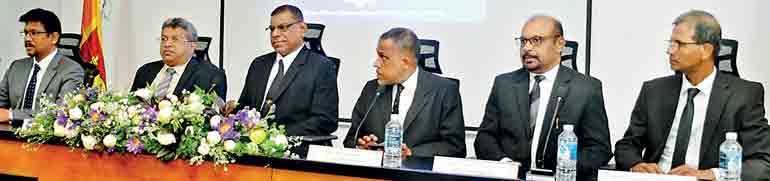
From left: Digital Economy Deputy Minister Eng. Eranga Weeraratne, Justice and National Integration Minister Harshana Nanayakkara, Chief Justice Preethi Padman Surasena, Attorney General Parinda Ranasinghe PC, and Judicial Service Commission Members and Supreme Court Judges S. Thuraijara PC and Mahinda Samayawardena
In a historic step towards building a modern, transparent, and citizen-focused judiciary, the Supreme Court of Sri Lanka, in collaboration with the Judicial Service Commission and the Justice Ministry, officially launched the “e-Courts” project, featuring a state-of-the-art Web Portal and an integrated e-Case Management System for all Court Houses.
The ceremonial launch took place at the Sri Lanka Judges’ Institute Auditorium under the distinguished patronage of Chief Justice Preethi Padman Surasena, and was graced by Justice and National Integration Minister Harshana Nanayakkara, Digital Economy Deputy Minister Eng. Eranga Weeraratne, Chief Advisor to the President on Digital Economy Dr. Hans Wijesuriya, Attorney General Parinda Ranasinghe PC, Judicial Service Commission Members and Supreme Court Judges S. Thuraijara PC and Mahinda Samayawardena, Justice and National Integration Ministry Secretary Ayesha Jinasena PC, Bar Association of Sri Lanka President Rajeev Amarasuriya and a distinguished gathering of members of the judiciary, legal professionals, and dignitaries.
Welcoming the guests, Supreme Court/Magistrate Registrar Judge Aravinda Gunaratne noted that the system had been designed and developed in just a few months for the Supreme Court, and emphasised the wide-ranging benefits it brings to litigants, judges, attorneys-at-law, and court staff.
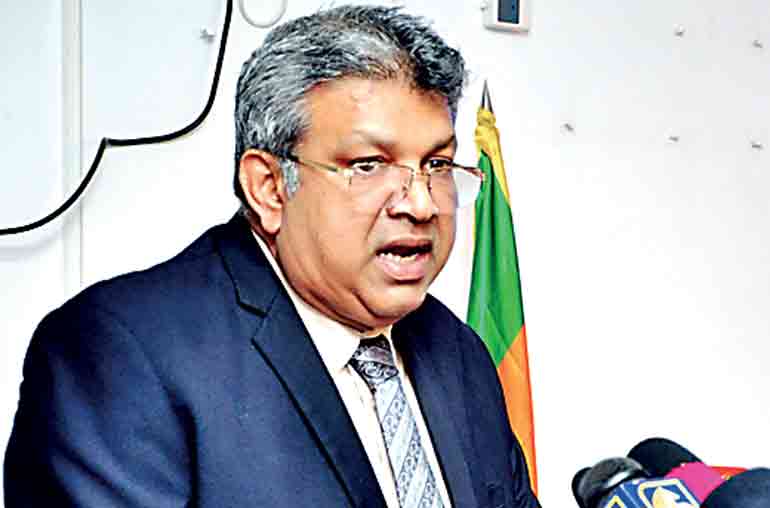
Justice and National Integration Minister Harshana Nanayakkara
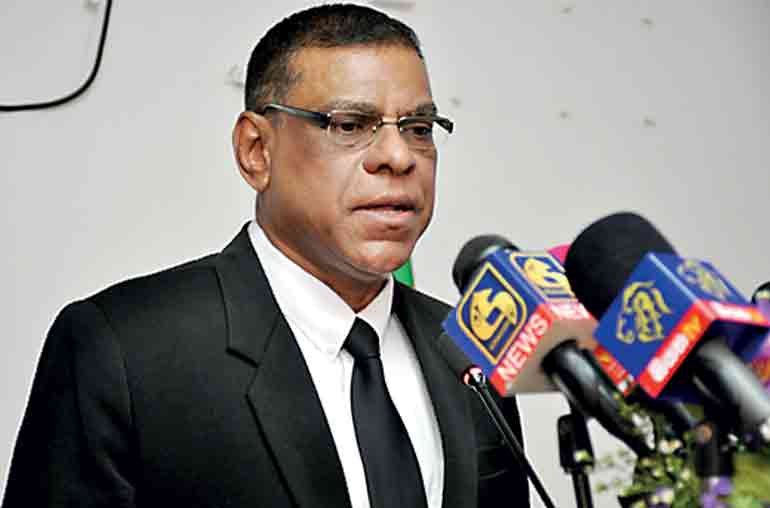
Chief Justice Preethi Padman Surasena
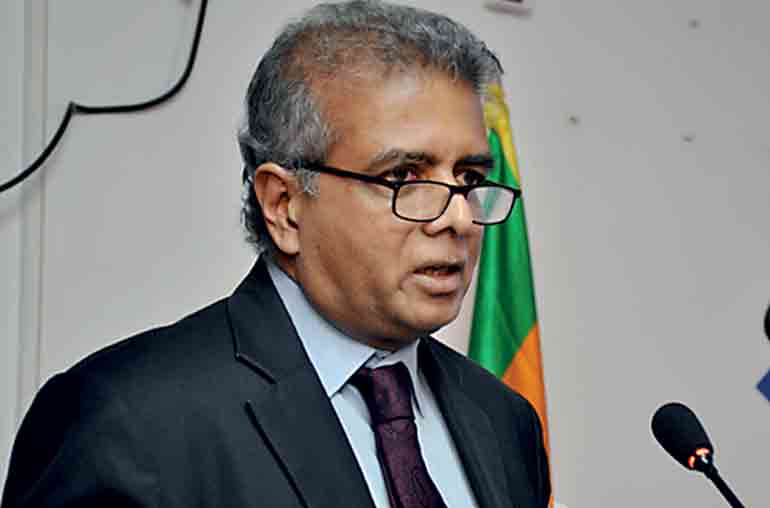
Chief Adviser to the President on Digital Economy Dr. Hans Wijayasuriya
Addressing the gathering, Chief Justice Preethi Padman Surasena highlighted the judiciary’s responsibility to the people in enhancing efficiency, transparency, and accessibility. He reiterated that the rapid digitalisation of the court system is a priority project in fulfilling the obligations entrusted to the judiciary by the general public.
In his keynote speech, Dr. Hans Wijesuriya underscored the importance of the initiative in advancing Sri Lanka’s broader digital economy goals through a more effective justice sector. The e-Courts project is an integrated digital system that connects all courts nationwide—from rural Magistrates’ Courts to the Supreme Court providing seamless access to information for judges, attorneys-at-law, court staff, and the public. Key features include real-time daily case lists, live case status updates, downloadable judgments and journal entries, online issuance of certified copies, web-based case management and scheduling, publicly accessible judicial statistics, and enhanced online services for attorneys-at-law. Importantly, the system also introduces online payment facilities to minimise delays and strengthen transparency.
Looking to the future, the platform provides the foundation for further advancements such as e-filing, virtual hearings, and digital document management, representing a strategic shift in the delivery of justice in Sri Lanka.
BASL President Rajeev Amarasuriya emphasised the importance of collaboration between the Bar and the Bench to eliminate inefficiencies through digital solutions and ensure the success of this transformative initiative.
This project is part of a broader national program supported by the Government of Sri Lanka to digitalise the judiciary at all levels, ushering in a new era of efficiency, accountability, and accessibility from Magistrates’ Courts to the Supreme Court.
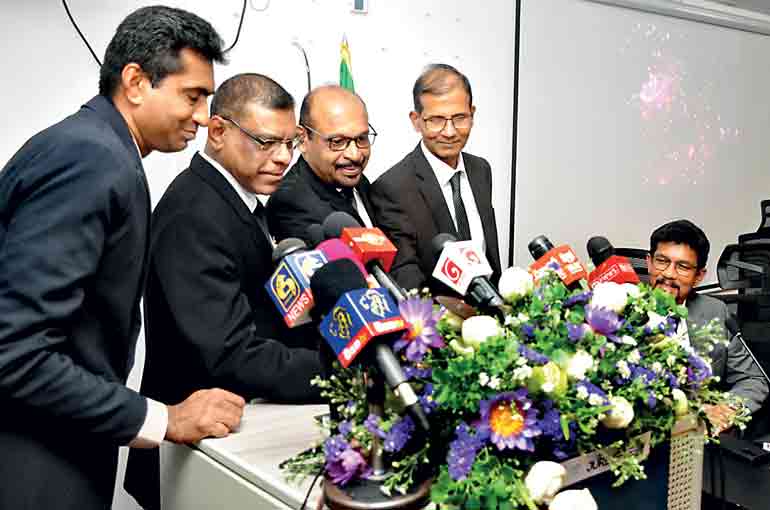
The launch of the Supreme Court Case Management System and the revamped Supreme Court website, as the first phase of the e-Court project, was presided over by Chief Justice Prithi Padman Surasena – Pix by Lasantha Kumara



