Wednesday Oct 07, 2026
Wednesday Oct 07, 2026
Wednesday, 28 January 2026 00:00 - - {{hitsCtrl.values.hits}}
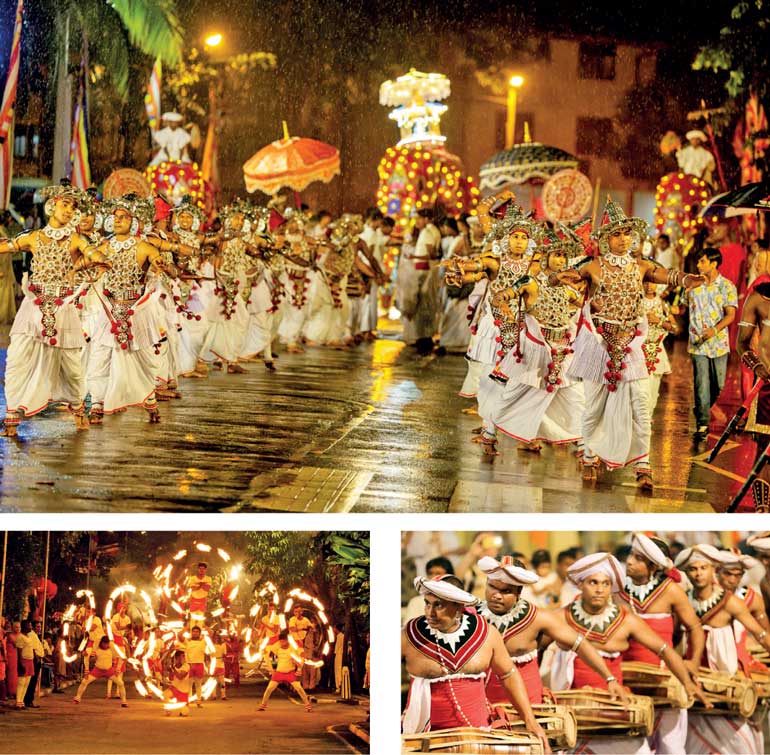
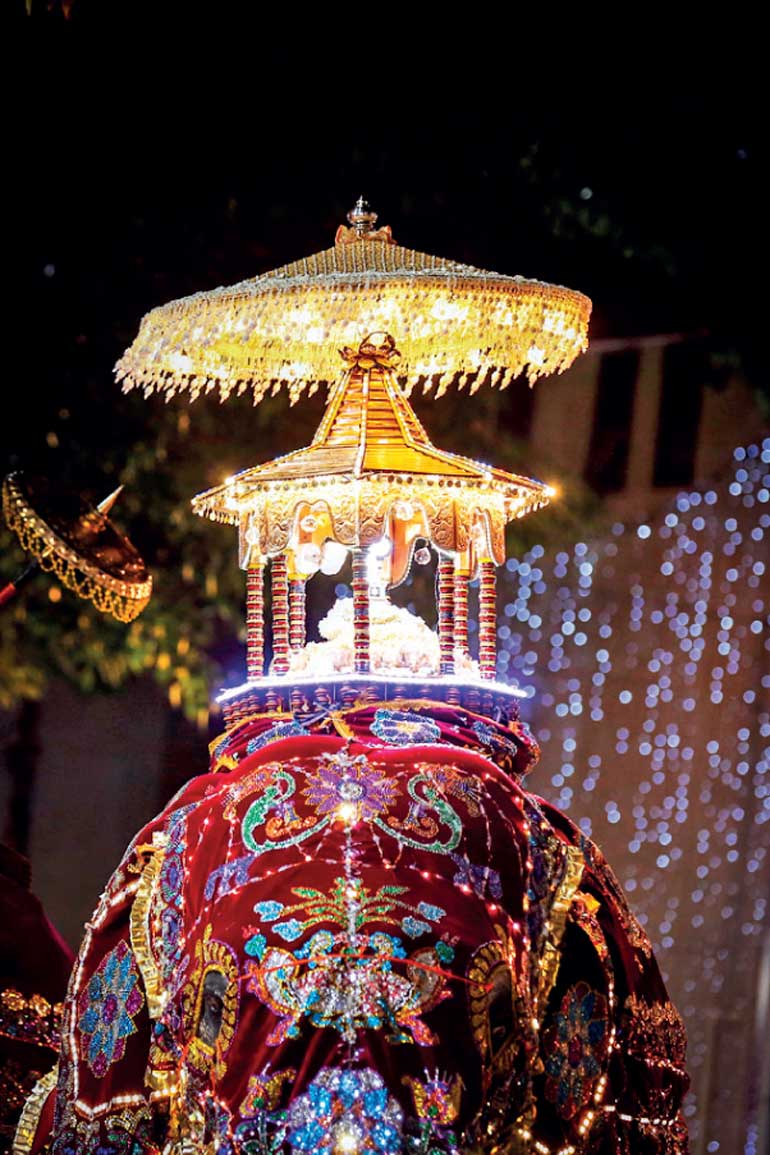
PREPARATIONS are underway for the Navam Maha Perahera of the Gangaramaya Temple which will bring alive the streets of Hunupitiya, Colombo in a few days. This cultural event has long earned the respect and admiration of people locally and internationally.
This Perahera, a significant artistic festival happening in the capital of Sri Lanka, captivates the eyes and hearts of individuals from all races and religions. The contribution of the Perahera to the nurturing and preservation of Sri Lanka’s cultural heritage is unparalleled. This was clearly displayed when Sri Lankan Airlines, inspired by the Gangaramaya Temple, decorated and painted its Airbus aircraft ‘A-321 Neo (4R-ANC)’ in vibrant colours. The livery was a showcasing of Sri Lanka’s cultural identity on the global stage and it turned into a kind of international procession itself, inviting the world to engage with, study, and celebrate Sri Lanka’s rich cultural traditions.
The Gangaramaya Navam Maha Perahera had its first procession in 1979. It’s inception was inspired by the Esala Perahera, previously held in the capital, with the Gangaramaya Kulangana Samiti leading the initiative. That initial procession was on the streets of Colombo from Pettah to Maradana and its central theme depicted Lord Buddha’s preaching to the five sangha disciples.
Reasons for when the Perahera is held
While many traditional Peraheras, including the historic Kandy Esala Maha Perahera, take place in the latter half of the year, the Gangaramaya Navam Maha Perahera is held in the first quarter for several important reasons. The primary reason is the religious significance of Navam poya, which honours Lord Buddha’s Ovāda Pātimokkha. Another important reason is the influx of foreign visitors to Sri Lanka during this time.
This clearly shows how traditional cultural practices also benefit the national economy significantly.
As preparations continue for this year’s unique procession, it is fitting to reflect on the significance of the Gangaramaya itself. Gangaramaya is not just a temple. It is the sacred place where Hikkaduwe Sri Sumangala Thero, an enduring symbol of Sri Lankan Theravada Buddhism, resided in Colombo. He can rightfully be called the intellectual leader behind the national awakening which aimed to end colonial rule. Among his significant visions, extending beyond political independence, was the revival of the country’s education system. Fluent in more than eight languages, the monk became the first head of the Sri Padasthana Viharaya in the low country. Through his unwavering service, extraordinary intellect, and compassionate leadership, he earned the endearing title ‘Our Buddha’ among the people, reflecting the immense trust and respect placed in him as the main moral force of his time. He built strong relationships with colonial administrators while passionately reviving local identity. He also prepared foundational lecture materials for Anagarika Dharmapala’s addresses at the World Buddhist Congress in the United States. These lectures later inspired Colonel Henry Steel Olcott to visit Sri Lanka.
Sri Sumangala Thero’s historic contributions
The guidance of Sri Sumangala Thero deserves renewed examination in light of these historic contributions. He also founded the Vidyodaya Maha Pirivena, established in 1873, with seven young novice monks. This institution later evolved into Vidyodaya University, now known as the University of Sri Jayewardenepura. This university would achieve distinction and recognition both nationally and internationally. As an alumnus of the University of Sri Jayewardenepura and later as a member of its academic staff and eventually its Vice-Chancellor, I hold great devotion to Sri Sumangala Thero and his lasting vision. Every time I see the Gangaramaya Temple, blessed by the footsteps of such a revered figure, my sense of reverence grows deeper.
The late Galboda Gnanissara Thero, known affectionately as the Podi Hamuduruwo of the Gangaramaya Temple, represented the fourth generation of Hikkaduwe Sri Sumangala Thero’s lineage. The current incumbent, Dr. Kirinde Assaji Thero, is the respected fifth representative of this tradition. From personal experience, I have seen in him the same fearless integrity, impartiality, and ability to address national leaders directly and clearly in multiple languages, qualities passed down from Sri Sumangala Thero. The magnificent Bo tree at the Gangaramaya Temple, planted by Sri Sumangala Thero, is a moment that stands as a historic blessing for Colombo. He also initiated a gleaming educational revival across the island through institutions like Ananda, Dharmapala, Mahinda, and Dharmaraja Colleges. Galaboda GnanissaraThero was also a proud alumnus of Vidyodaya University and once served as President of its student union. These shared histories and personal connections are why the Perahera of the Gangaramaya Temple is extremely meaningful to us.
Legendary accounts
Another sacred reflection about Sri Sumangala Thero comes
to my mind. The Swarnamaali Maha Seya of Anuradhapura is a sacred jewel of Sri Lanka and a blessing to the entire country. Legends claim that
the Samanpichcha flowers thrown in the air by Arahant Mahinda came down in different places, and that those were the places where the Atamasthana were built. The Swarnamaali Maha Seya was a significant sacred place among these. It was at this sanctified site that King Dutugemunu subsequently built the Swarnamaali Maha Seya, enshrining within it, several sacred relics. Today, the Maha Seya is revered as the supreme centre of merit, believed to house the largest collection of such sacred relics in the world. The lesser known is the fact that the chaitya of the Maligakanda Vidyodaya Pirivena in Colombo holds the second largest collection of sacred relics. This is a source of great pride for Vidyodaya and the University of Sri Jayewardenepura, entirely due to the vision and dedication of Sri Sumangala Thero. Such sacred sites must be protected, developed, and promoted with respect.
All these reflections emerge when one considers the Navam Maha Perahera of the Hunupitiya Gangaramaya Temple, the cultural procession of the capital that represents the religious, cultural, social, and educational revival envisioned by Sri Sumangala Thero. Even the way this Perahera reflects the contemporary religious and cultural identity today was part of his original vision. I recall, as a student of Ananda College, Colombo, carrying the Buddhist flag and participating in this grand procession. Fifty Ananda students marched together during that inaugural occasion of the Navam Maha Perahera. Though I understood little at the time, that memory now returns with deep emotion whenever I write about this sacred procession.
In conclusion, it is clear that the Gangaramaya Temple is a national heritage site. The Bo tree of the Gangaramaya Temple, the Vidyodaya Temple, Vidyodaya Pirivena, and the Dagoba are all national treasures which deserve increased State support beyond the level currently provided. Through positive interventions by the Central Cultural Fund and the Cultural Triangle Fund, contributions can be made through these national treasures for national development. These sacred spaces must be preserved, properly promoted, and introduced to future generations with wisdom and care. With these thoughts in mind, I extend my heartfelt congratulations and best wishes to the 2026 Colombo Navam Maha Perahera of the Hunupitiya Gangaramaya Temple.



