Tuesday Sep 29, 2026
Tuesday Sep 29, 2026
Tuesday, 29 September 2026 01:36 - - {{hitsCtrl.values.hits}}
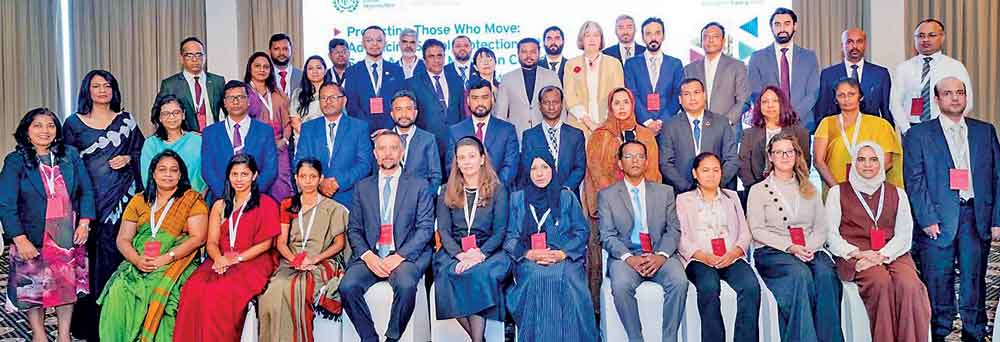
Sri Lanka is stepping up efforts to strengthen social protection, safe migration pathways and long-term economic security for migrant workers, with Foreign Affairs, Foreign Employment and Tourism Acting Minister Arun Hemachandra calling for protection across the entire migration cycle.
Opening the ILO STREAM introductory training on “Protecting Those Who Move: Advancing Social Protection in the South Asia–Gulf Migration Corridor” in Colombo yesterday, Hemachandra said migration should be a pathway to opportunity rather than vulnerability.
He stressed that worker protection must begin before departure and continue through recruitment, overseas employment, access to social security, return and reintegration.
“Protecting those who move means ensuring that opportunities abroad translate into greater security for migrant workers and their families at home,” Hemachandra said.
The program brought together representatives of countries of origin and destination to strengthen cooperation on the protection and social security of migrant workers, particularly along the South Asia–Gulf migration corridor.
Hemachandra outlined several measures undertaken over the past two years, including increasing death compensation for eligible registered migrant workers to Rs. 2 million.
He also said work was progressing on a contributory pension scheme for migrant workers, while preparations were underway for a new Foreign Employment Bill aimed at strengthening the policy and regulatory framework governing overseas employment.
The Government is also preparing a mechanism to enable Sri Lankans living overseas to exercise their voting rights, he said.
Digitalisation is emerging as another component of the Government’s effort to improve services for migrant workers. Hemachandra highlighted LankaKonect, developed in partnership with the International Labour Organisation (ILO) and the Sri Lanka Bureau of Foreign Employment (SLBFE), which enables Sri Lankan migrant workers to submit complaints, track cases and access Government support remotely.
He said Sri Lanka’s foreign employment strategy must also move beyond simply increasing the number of workers leaving the country for overseas employment.
The policy focus, he stressed, should include skills development, better employment opportunities, safe and regular migration, stronger worker protection and long-term economic security for workers and their families.
Hemachandra also called for closer cooperation between migrant-sending and destination countries, particularly on social security arrangements, recruitment regulation, family protection and the reintegration of returning workers.
With migrant workers making a significant contribution to household incomes and the national economy, he said their rights, dignity and security must remain at the centre of Sri Lanka’s foreign employment policy.
Hemachandra acknowledged the continued support of the ILO, its Country Office for Sri Lanka and the Maldives, the STREAM Program team and development partners in strengthening social protection and security mechanisms for migrant workers.
The STREAM initiative seeks to bring origin and destination countries together to address gaps in social protection for workers moving across borders, an issue of particular importance to Sri Lanka given the scale of its overseas employment sector.




