Sunday Oct 18, 2026
Sunday Oct 18, 2026
Thursday, 3 September 2026 00:04 - - {{hitsCtrl.values.hits}}
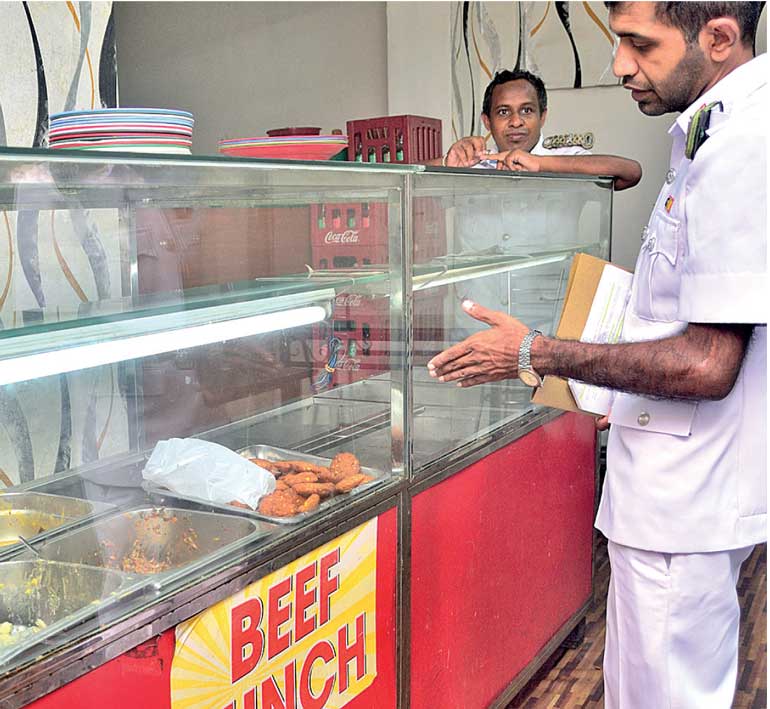
Sri Lanka has reached a major milestone in strengthening its national food control system with the launch of its first National Food Safety Policy, providing a comprehensive framework to safeguard public health, strengthen food systems, and support economic growth through a coordinated, risk-based approach to food safety.
Developed under the leadership of Health and Mass Media Ministry through the Food Control Administration Unit (FCAU), the policy establishes a national vision to ensure safe, healthy and quality food for all while strengthening coordination among institutions responsible for food safety across the entire food chain – from production to consumption.
Although Sri Lanka has an established legal framework governing food safety, the country previously lacked an overarching national policy to guide and coordinate food safety efforts across institutions and sectors. The new policy addresses this gap by providing strategic direction for strengthening governance, enhancing surveillance systems, improving risk assessment and communication, building laboratory capacity, strengthening food safety legislation, and promoting greater awareness among producers, food businesses and consumers.
The policy also seeks to address emerging food safety challenges associated with changing food production systems, expanding domestic and international food trade, evolving consumer preferences, and increasingly complex food supply chains. It promotes a preventive, risk-based approach to food safety while strengthening coordination among stakeholders at national, provincial and local levels.
Health Secretary Dr. Anil Jasinghe welcomed the adoption of the policy as a significant step towards strengthening Sri Lanka’s food safety system. “The National Food Safety Policy marks a significant milestone in Sri Lanka’s efforts to strengthen public health and build greater confidence in our food systems. By establishing a clear national framework that promotes prevention, scientific risk management and stronger coordination across sectors, we are laying the foundation for safer food for every citizen while enhancing the competitiveness of Sri Lanka’s agrifood sector. We appreciate the technical support provided by FAO and the European Union through the BESPA program in helping us develop this important national policy.”
Delegation of the European Union to Sri Lanka and the Maldives Head of Cooperation Dr. Johann Hesse, highlighted the importance of strong food safety systems for public health and sustainable economic development. “Food safety is essential not only for protecting the health and well-being of consumers, but also for building resilient food systems, strengthening market confidence and creating new economic opportunities. Through the European Union-funded BESPA programme, we are pleased to support Sri Lanka in establishing its first National Food Safety Policy, which provides a strong foundation for modern, risk-based food safety governance. We are hopeful of seeing this policy translate into a robust implementation . This milestone reflects our continued partnership with Sri Lanka in promoting sustainable agrifood systems that benefit producers, businesses and consumers alike.”
The Food and Agriculture Organisation of the United Nations (FAO), through the European Union-funded Mainstreaming Standards-Based Best Practices for Agri-Food Sector Development (BESPA) programme, has supported the Health Ministry since the program’s inception in developing the National Food Safety Policy. Through the program, FAO provided national and international technical expertise to develop the initial draft of the policy and continued to support its refinement through multiple rounds of technical review and stakeholder consultations.
The operationalisation of the National Food Safety Policy will be supported by the proposed updated Food Act, which will provide the legislative framework for strengthening food safety control in Sri Lanka. In July 2026, FAO supported a national stakeholder consultation, chaired by the Director General of Health Services, to review the latest draft of the proposed Act and obtain final technical inputs from key stakeholders.
FAO Representative for Sri Lanka and the Maldives Vimlendra Sharan said the policy reflects the importance of coordinated action to strengthen food safety across the agrifood system. “Food safety is fundamental to protecting public health while building resilient and sustainable agrifood systems. This landmark policy provides Sri Lanka with a strategic roadmap to strengthen food safety governance, improve coordination across sectors, and promote preventive, science-based approaches that benefit consumers, producers and the country’s economy. FAO is proud to have supported the Government of Sri Lanka, with funding from the European Union through the BESPA programme, in achieving this important milestone.”
The National Food Safety Policy outlines six strategic priority areas that will guide implementation. These include strengthening food safety governance and institutional coordination; improving food safety control throughout the food chain; enhancing legislation, standards and regulatory systems; strengthening surveillance, laboratories and risk analysis; promoting communication, education and capacity development; and establishing robust monitoring and evaluation mechanisms to support effective implementation.
By strengthening food safety systems, the policy is expected to reduce foodborne illnesses, improve consumer confidence, facilitate international trade, enhance nutrition outcomes, reduce food losses, support tourism, and strengthen the competitiveness of Sri Lanka’s food and agriculture sectors.
FAO remains committed to supporting the Government of Sri Lanka in implementing the National Food Safety Policy and strengthening food safety systems through the European Union-funded BESPA programme as part of broader efforts to promote safer, healthier and more resilient agrifood systems that contribute to the achievement of the Sustainable Development Goals.




