Monday Oct 19, 2026
Monday Oct 19, 2026
Friday, 3 April 2026 00:00 - - {{hitsCtrl.values.hits}}
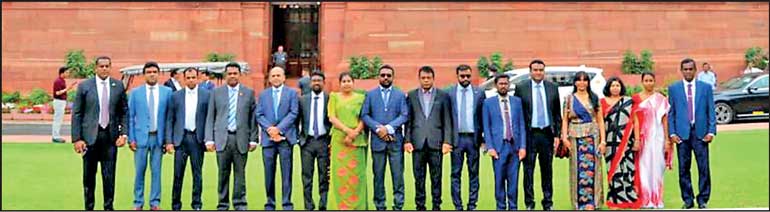
A 15-member delegation from the Sectoral Oversight Committee on Infrastructure and Strategic Development of the Parliament of Sri Lanka recently concluded an official study tour of India from 22 to 27 March at the invitation of the Government of India.
The delegation, comprising 12 MPs and three Parliamentary officials, was led by Committee Chairperson S.M. Marikkar. The program covered engagements in New Delhi and Mumbai, focusing on gaining insights into India’s infrastructure development strategies, institutional frameworks, and the use of modern technologies in large-scale development projects.
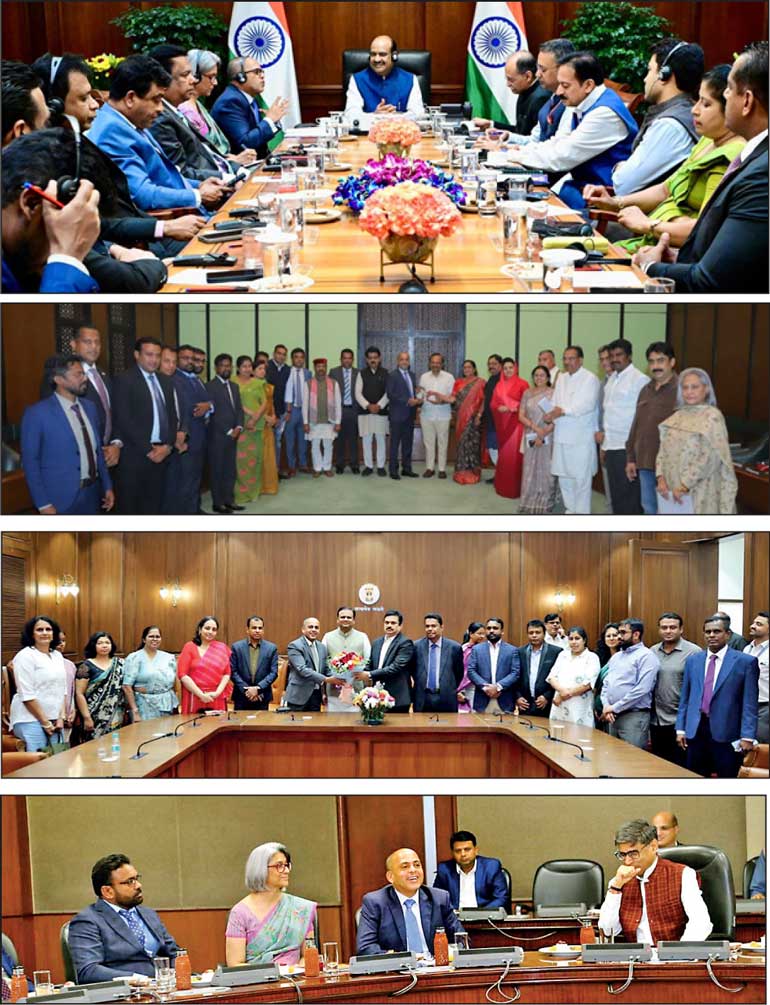
During the New Delhi leg of the visit, the delegation held discussions with Indian Foreign Secretary Vikram Misri on strengthening bilateral development cooperation. The Sri Lankan delegation also encouraged greater Indian investment in Sri Lanka’s infrastructure sector, noting that such partnerships could contribute significantly to boosting the country’s foreign exchange earnings.
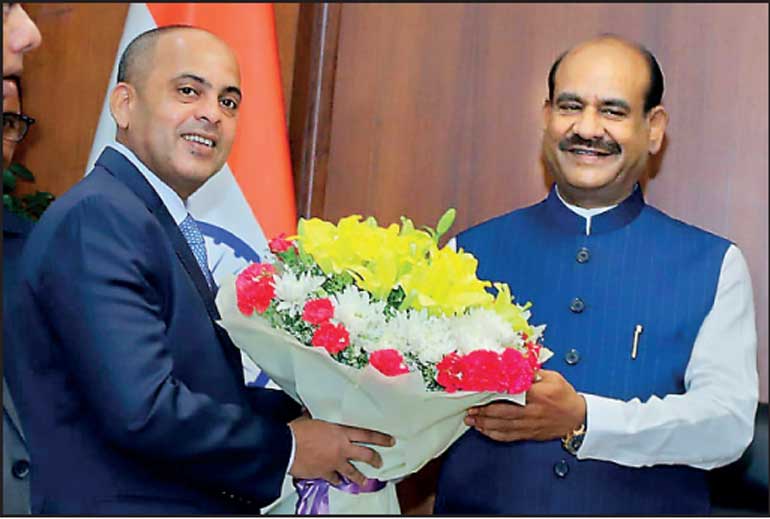
The delegation also called on Lok Sabha Speaker Om Birla, where discussions focused on enhancing parliamentary relations between the two countries. Members of the delegation took part in orientation sessions organised by the Parliamentary Research and Training Institute for Democracies, which provided a comprehensive overview of India’s parliamentary system and committee processes.
The Sri Lankan MPs also interacted with Indian Parliamentary Standing Committees on Transport, Tourism and Culture, as well as Housing and Urban Affairs, facilitating an exchange of views on legislative oversight and governance. The delegation further met with the India-Sri Lanka Parliamentary Friendship Group in the Indian Parliament.
As part of the infrastructure exposure program, the delegation received briefings on flagship initiatives such as the Gati Shakti national infrastructure platform and the Jal Jeevan Mission. The Gati Shakti platform demonstrated how integrated digital systems are used in India to plan, coordinate, and monitor major infrastructure projects.
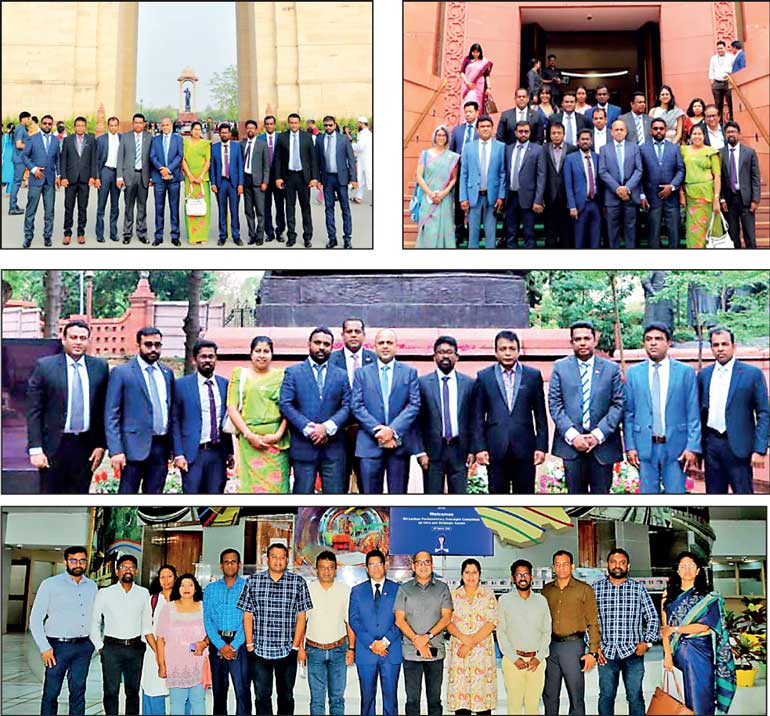
The delegation also visited several key institutions, including the National Highways Authority of India, the Solar Energy Corporation of India, and the Delhi Metro Rail Corporation. These engagements provided valuable insights into highway development, renewable energy initiatives and modern urban transport systems.
In addition, the Confederation of Indian Industry organised a roundtable meeting with industry stakeholders where Indian business leaders were briefed on investment opportunities in Sri Lanka’s highways, railways, ports, and airport sectors.
The Mumbai leg of the visit provided further exposure to large-scale infrastructure projects and operational models. One of the highlights was a visit to the Atal Setu Bridge, India’s longest sea bridge stretching over 20 kilometres, which illustrates how advanced engineering solutions are being used to ease traffic congestion and enhance economic connectivity.
At the Jawaharlal Nehru Port, the delegation observed how all five terminals are operated under Public-Private Partnership arrangements, enabling the Port to generate substantial annual profits with a relatively small workforce. The delegation also visited the Navi Mumbai International Airport project and Power Exchange India Ltd., where they learned how a dedicated electricity exchange platform improves transparency, reduces waste, and allows consumers to purchase electricity at competitive market prices.
The delegation also met Maharashtra Legislative Assembly Speaker Rahul Suresh Narwekar and representatives of the State legislature to exchange views on governance, financial management, and investment promotion under India’s federal system.
Marikkar noted that the rapid emergence of Mumbai as a major regional trade hub underscored the urgency for Sri Lanka to modernise key national infrastructure, particularly port facilities in Colombo.
The study tour highlighted India’s progress in infrastructure development across the transport, energy, and urban sectors, while strengthening parliamentary engagement between Sri Lanka and India. The visit also provided valuable insights that could support Sri Lanka’s efforts to promote sustainable infrastructure development and attract greater international investment.




