Wednesday Oct 07, 2026
Wednesday Oct 07, 2026
Friday, 6 March 2026 00:00 - - {{hitsCtrl.values.hits}}
By Divya Thotawatte
At a joint Sri Lanka–India celebration, leaders, including Prime Minister Dr. Harini Amarasuriya, recently underscored economic resilience, deeper technology engagement, and investment ties as central to evolving bilateral relations.
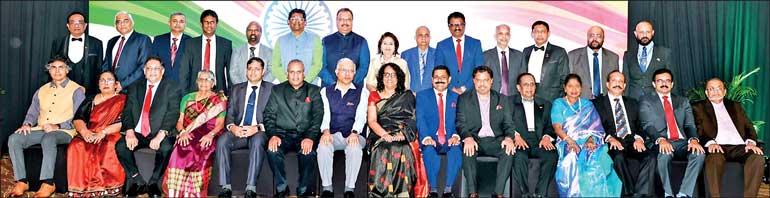
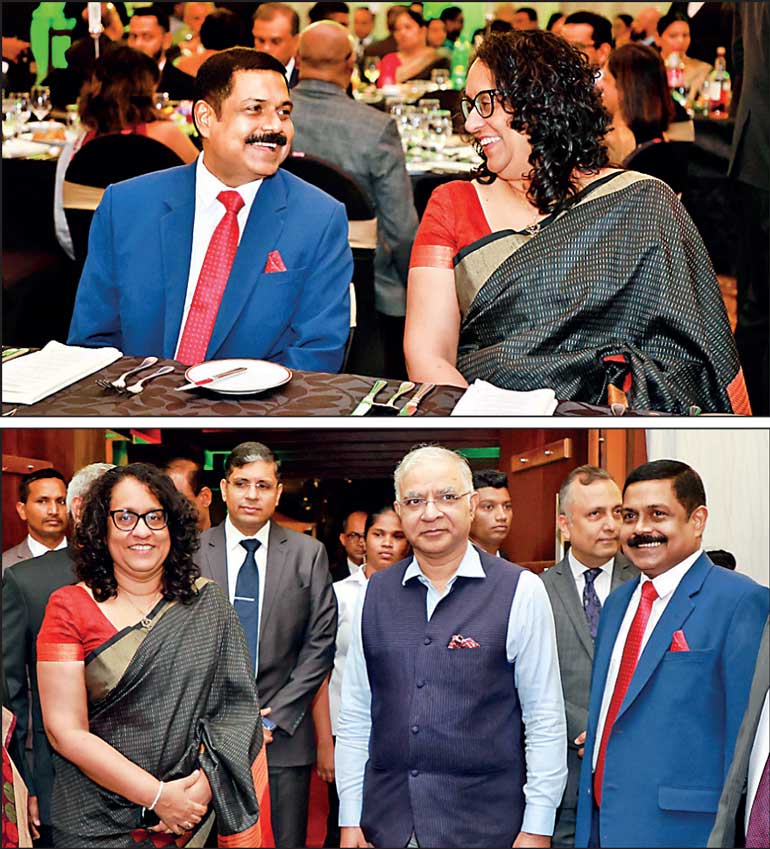
This special celebration and dinner reception was organised by the Sri Lanka India Society (SLIS) to commemorate the 77th Republic Day of India and 78th Independence Day of Sri Lanka. The event, held grandly on 26 February at the Taj Samudra Hotel, was attended by ambassadors, diplomats, officials of the High Commission, and representatives of the Sri Lankan government, underscoring the depth and strategic significance of India-Sri Lanka ties.
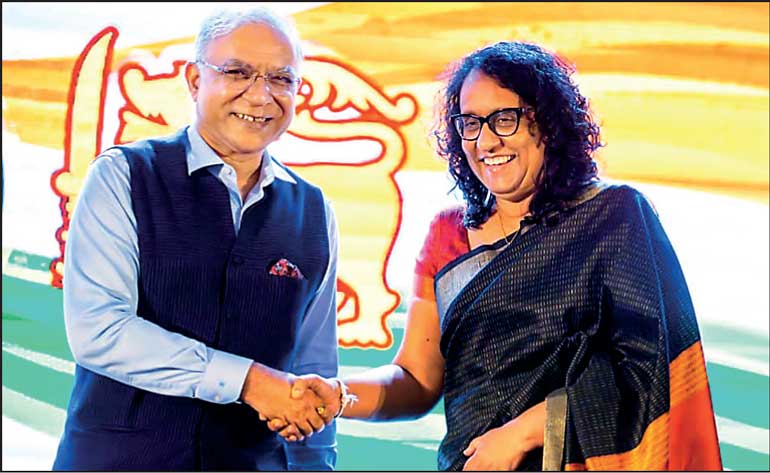
During the ceremony, the Society launched its official magazine, and the book ‘Port of Call’ was presented to the Prime Minister who was present as the Chief Guest and the Indian High Commissioner, the event’s patron.
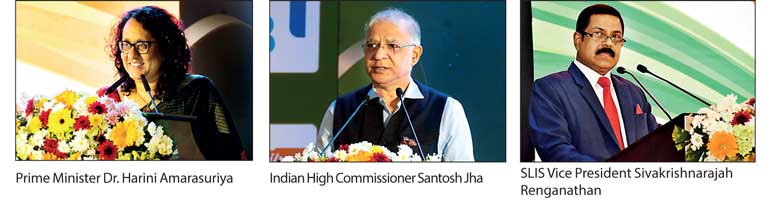
Speaking at the event, Amarasuriya highlighted what she described as “the depth of our bilateral relationship,” acknowledging India’s continued support during Sri Lanka’s recent crises. Recalling that India was the first responder during Cyclone Ditwah through ‘Operation Sagar Bandhu,’ and its US$ 454 million long-term relief package, she said Sri Lanka’s goal now was to “build back better”.
She warned against repeatedly testing public endurance. “We all commend the resilience of our people every time we recover from a disaster, but I don’t think we should keep putting the resilience of our people to test, at least not so frequently.”
Amarasuriya stressed that Sri Lanka must remain globally competitive and ensure it was not left behind, urging that the country sought to be an “equal partner in the world when it comes to technology.” As Sri Lanka continued on its path from “recovery to a more resilient and sustainable future,” she welcomed increased investment and greater tourism flows from India.
The Indian High Commissioner said, “the trust and goodwill between India and Sri Lanka is at an all-time high,” reflected in the breadth of cooperation across energy, connectivity, and people-to-people contacts, as well as a series of high-level exchanges over the past year, including recent presidential visits to India and high-level engagement at the AI Impact Summit in New Delhi.
He said that the introduction of the first international degree offered outside India in Sri Lanka marked a new phase in educational cooperation, while collaboration in connectivity and people-to-people relations continued to expand.
Jha called for intensifying economic cooperation by updating the “25-year old” India-Sri Lanka Free Trade Agreement (ISFTA), urging both sides to “raise our ambition constantly.” “We need to… explore the feasibility of more connections, more clients, ferry routes, and perhaps the land port,” he said, advising that both countries must invest to ensure their economies and societies were “future-ready.”
SLIS Vice President Sivakrishnarajah Renganathan, speaking about the event, said the occasion was “not merely ceremonial. It is a celebration of sovereignty, democracy, resilience, and above all, friendship between the two loving countries.”
He stressed that the relationship between Sri Lanka and India was not transactional, but historical, emotional, and strategic. During Sri Lanka’s recent crises, India had responded “swiftly and decisively,” he noted, explaining that the assistance given was not one of convenience, but a partnership of conviction.
“The future is not about dependency. It is about complementarity. It is about building resilient regional value chains and transforming geography into shared prosperity.”
He said that India’s rapid advancements in AI and digital transformation presented “enormous learning opportunities”, adding that structured collaboration, knowledge sharing, and institutional partnerships could significantly accelerate Sri Lanka’s own technological progress.
Renganathan also called for discussions to elevate the now quarter-century old ISFTA, into a more comprehensive economic and technology partnership. “Revisiting and concluding this process in a spirit of mutual belief would strongly support Sri Lanka’s growth trajectory in a true win-win partnership.”
He added that the SLIS would continue working to strengthen the people-to-people connections between the two countries, deepening ties beyond official government engagement.
SLIS was founded in 1949, soon after the independence of India and Sri Lanka. SLIS is the oldest and largest friendship society in Sri Lanka.



