Tuesday Oct 06, 2026
Tuesday Oct 06, 2026
Thursday, 28 May 2026 06:02 - - {{hitsCtrl.values.hits}}
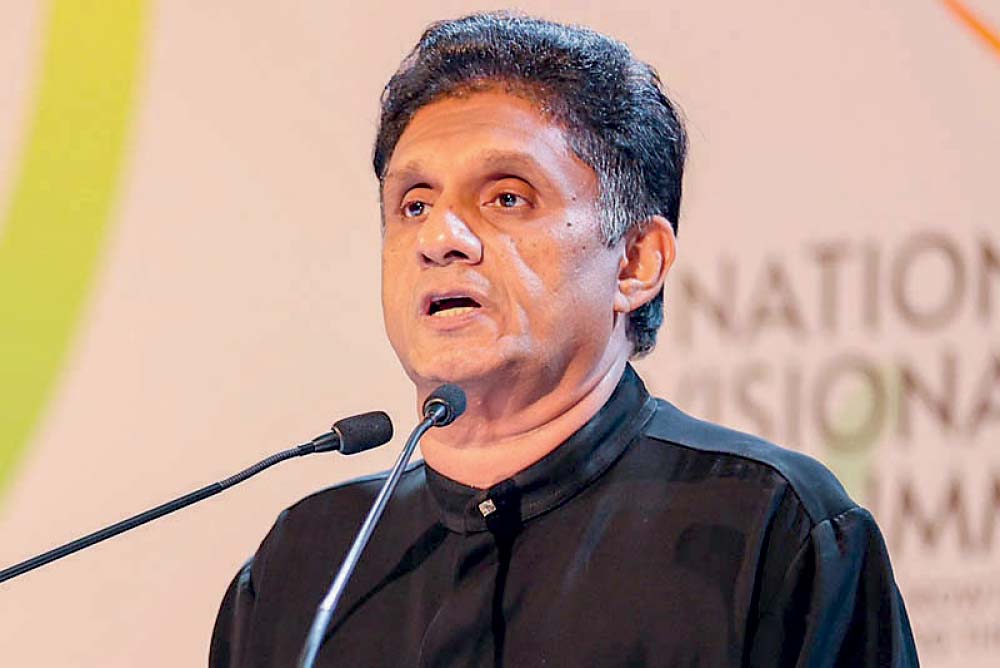
Opposition Leader Sajith Premadasa
Opposition Leader Sajith Premadasa yesterday called for a comprehensive national policy on menstrual equity, describing period poverty as a “multisectoral national crisis” affecting public health, education, labour force participation, and economic productivity in Sri Lanka.
Issuing a statement to mark World Menstrual Hygiene Day on 28 May, Premadasa said Sri Lanka must move beyond cultural stigma surrounding menstruation and treat menstrual health as a national policy issue linked to economic and social development.
“Today, as we observe World Menstrual Hygiene Day, Sri Lanka unites under the global movement and theme: ‘Together for a #PeriodFriendlyWorld’,” he said.
Premadasa claimed that nearly 70% of Sri Lanka’s 4.2 million menstruating individuals lacked reliable access to disposable menstrual hygiene products, while only 12.6% of women experiencing severe menstrual health issues sought clinical medical care due to stigma and social barriers.
He argued that inadequate menstrual health management was contributing to school absenteeism among adolescent girls, citing estimates that between 50% and 60% of schoolgirls miss classes during menstrual cycles due to inadequate water, sanitation and hygiene (WASH) facilities and social pressures.
Premadasa also linked menstrual health challenges to Sri Lanka’s low female labour force participation rate, which remains around 35%, compared with over 45% in many developed economies.
He said inadequate workplace hygiene facilities and poor menstrual health support systems were suppressing productivity, particularly in factories and the apparel sector, and acting as a drag on economic output.
“This lack of proper facilities and workplace empathy directly suppresses their economic productivity, acting as a massive, self-inflicted drag on our Gross Domestic Product,” he said.
Premadasa also criticised the continued taxation of sanitary products despite the Government allocating Rs. 1.44 billion to provide sanitary napkins to schoolgirls.
He referred to what he described as a “taxation paradox,” noting that sanitary products remain subject to multiple taxes including General Duty, VAT, Ports and Airports Development Levy (PAL), CESS, and Social Security Contribution Levy (SSCL).
The Opposition Leader called for the immediate removal of taxes on menstrual hygiene products and proposed support for domestic manufacturing of affordable sanitary products as part of a broader menstrual equity strategy.
He also said his party would explore adopting elements of the “Scotland Model” to provide free menstrual products, while pledging constitutional reforms to include economic, social, and cultural rights, including the rights to health and education.
Premadasa said Sri Lanka should develop a comprehensive national policy on menstrual equity to ensure that women and girls are not disadvantaged in education, healthcare, or economic participation due to period poverty.



