Tuesday Oct 06, 2026
Tuesday Oct 06, 2026
Wednesday, 24 June 2026 00:00 - - {{hitsCtrl.values.hits}}
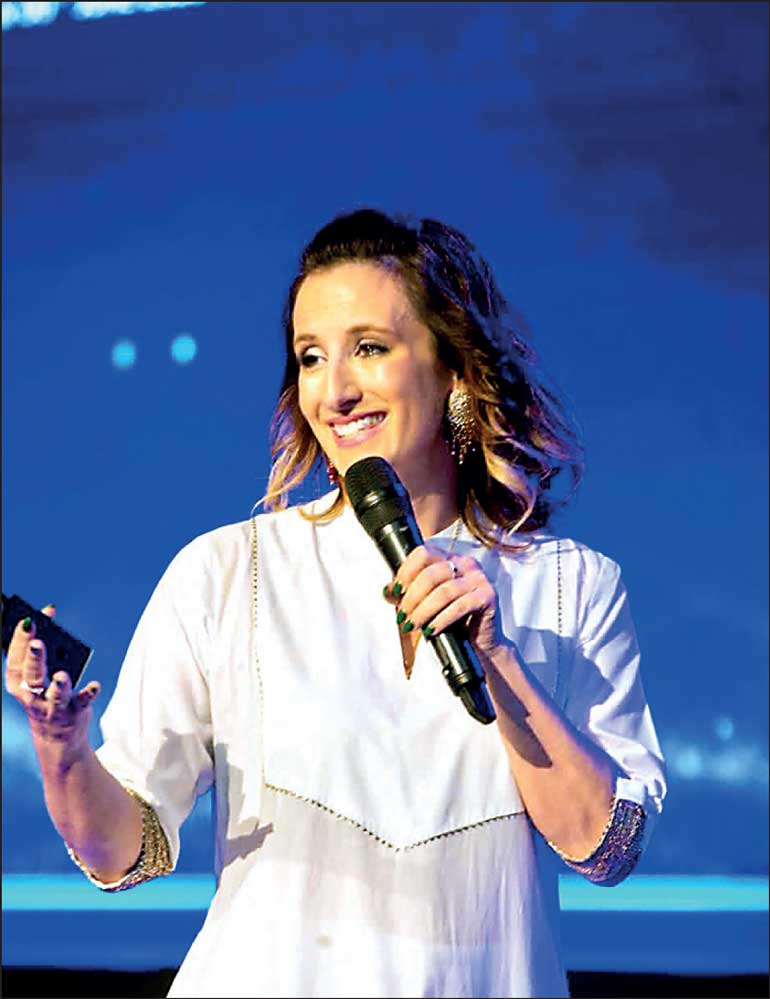
Delegates at the 35th Rotary Sri Lanka and Maldives Conference at ITC Rathnadipa, Colombo, were called to treat empathy not as a soft virtue but as a measurable competency for sustainable humanitarian action by the global expert Mimi Nicklin.
Founder of “ Empathy Everywhere” the keynote framed empathy as “perspective-taking” — the disciplined practice of understanding a beneficiary’s reality before designing interventions in supporting SME’s , disease prevention, education, or disaster response.
“Compassion is the desire to alleviate suffering. Empathy comes first,” the address stated. “It is data-gathering. It asks ‘help me understand’ before we build wells or classrooms. Without it, service risks becoming work to communities, not with them.”
The speech linked low empathy to social fragmentation, noting Nicklin’s finding that when organisational empathy drops, “isms” rise — casteism, ageism, urban-rural bias. In humanitarian terms, this erodes inclusion and local ownership.
Backed by global data, the address quantified the “empathy deficit”: 52% of people report chronic loneliness, a health risk the US Surgeon General equates to smoking 15 cigarettes daily. Only 24% of the global workforce is engaged, creating an $ 8.8 t productivity loss. Conversely, Gallup data showed 79% of workers would work longer hours for an empathetic leader, and teams with high engagement are 21% more profitable.
For Rotary’s 75 clubs, three practical steps were proposed:
1. Active listening as due diligence — pausing to ask beneficiaries “what does dignity look like to you?” before project design.
2. Curiosity as ‘Do No Harm’ — using questions like “help me understand why this failed last time?” to prevent top-down programming.
3. Formal measurement — adding community feedback loops to project M&E and embedding empathy training in RYLA, PETS, and club inductions.
Connecting the theme to local context, the address noted that Sri Lanka’s post-crisis recovery and Maldives’ climate vulnerability both demand solutions rooted in community perspective. “Technical capacity is abundant in 2026. What is scarce is human understanding,” it concluded.
Several Rotarians said the framework resonated with field experience. District Governor Delvin Pereira noted, “We build assets, but lasting impact comes when people feel heard. This gives us language for that.”
The session closed by recalling Paul Harris founding Rotary through dialogue among four men who chose to understand each other’s realities — an early act of empathy. Delegates indicated interest in piloting empathy metrics in upcoming projects.
The Public Image Chair Dr. Rohantha Athukorala said “We have done over 1500 projects across the country by the 75 Rotary Clubs valued at Rs. 2 billion plus. Now we must reflect back and see how we can do better next year. Hence the Rotary Conference is staged annually. The speaker gave us something to take home and change our behaviour.”



