Friday Nov 06, 2026
Friday Nov 06, 2026
Friday, 6 November 2026 00:00 - - {{hitsCtrl.values.hits}}
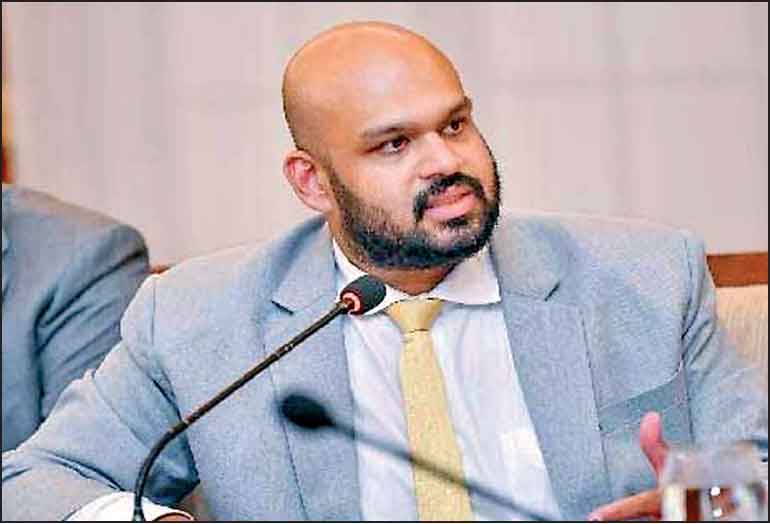
ITAK MP Shanakiyan Rasamanickam
Ilankai Tamil Arasu Katchi (ITAK) MP Shanakiyan Rasamanickam yesterday raised concerns over delays faced by household rooftop solar applicants, reduced incentives and changes to payment arrangements, despite the Government’s ambitious renewable energy generation targets.
Rasamanickam questioned the Government’s renewable energy policy during questions directed at Energy Minister Anura Karunathilaka, highlighting the difficulties faced by ordinary households and small-scale investors.
He questioned why large-scale renewable energy projects were receiving approvals while household rooftop solar applicants continued to face administrative hurdles.
Rasamanickam pointed out that individuals who had registered to generate renewable electricity last year were still awaiting the necessary approvals, raising concerns over unequal access to opportunities in the sector.
He questioned how the Government expected to achieve its renewable energy expansion targets while introducing restrictions and policy changes that could discourage private investment.
Responding, the Minister outlined renewable energy capacity targets of 642 MW in 2027, 300 MW in 2028 and 450 MW in 2029, amounting to 1,392 MW over the three-year period.
However, Rasamanickam questioned whether these targets were achievable under the prevailing policy framework, particularly given the uncertainty surrounding incentives and payment arrangements for solar electricity producers.
He also raised concerns over the suspension of previously available incentives and concessions, as well as changes linking payments to electricity generated during daytime hours. Such changes could affect producers’ earnings and extend the period required to recover their initial investments, he warned.
Rasamanickam said households and small-scale investors had made significant financial commitments to install rooftop solar systems based on existing arrangements, and questioned the rationale for changing the terms after investment decisions had been made.
He also questioned the delayed implementation of the household-level electricity generation framework announced in the Budget, saying outstanding issues affecting existing applicants needed to be resolved.
Separately, he sought details on Sri Lanka’s electricity generation mix, the highest- and lowest-cost generation sources and measures being taken to reduce generation costs.
He also questioned the Government on electricity tariff revisions since the beginning of 2025.
Responding, the Minister confirmed that electricity tariffs had been revised twice in 2025 and twice in 2026, while maintaining that consumers had not incurred additional charges as a result.
The Minister cited domestic electricity rates of Rs. 5 per unit for consumption up to 30 units, Rs. 9 for 31-60 units, Rs. 14 for 61-90 units, Rs. 20 for 91-120 units and Rs. 28 for 121-180 units.
On renewable energy policy, Karunathilaka said payment arrangements for producers would be revised and measures introduced to address existing difficulties in the sector.
He also indicated that new programs to encourage renewable energy development and special incentives for new investors would be introduced through the forthcoming Budget.
Rasamanickam stressed that resolving outstanding approvals, ensuring policy consistency and providing fair opportunities for household producers were essential if the Government was to meet its renewable energy ambitions.



