Sunday Sep 27, 2026
Sunday Sep 27, 2026
Saturday, 8 August 2026 02:14 - - {{hitsCtrl.values.hits}}
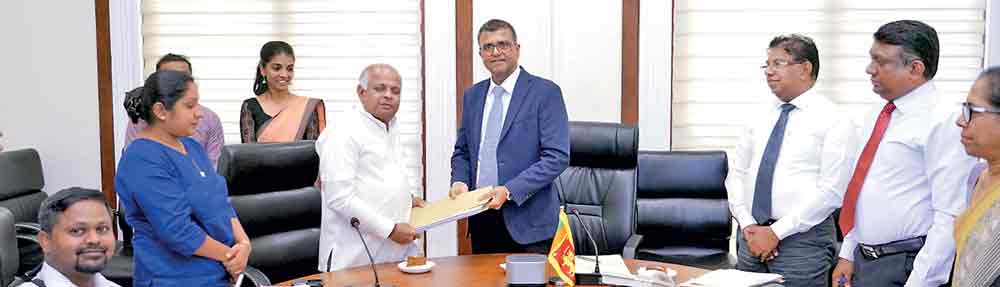
The Parliamentary Caucus for Persons with Disabilities has called for disability inclusion to be embedded across all sectors of the 2027 National Budget, following the official submission of a comprehensive set of recommendations developed through Sri Lanka’s first-ever national participatory Budget consultations with persons with disabilities.
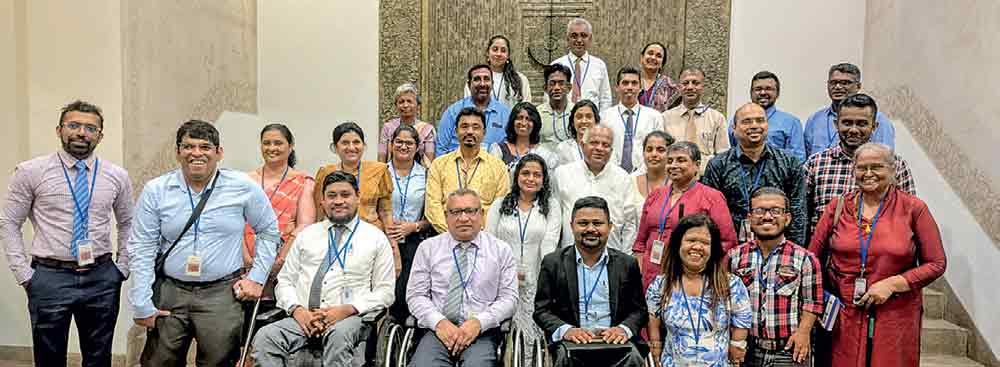
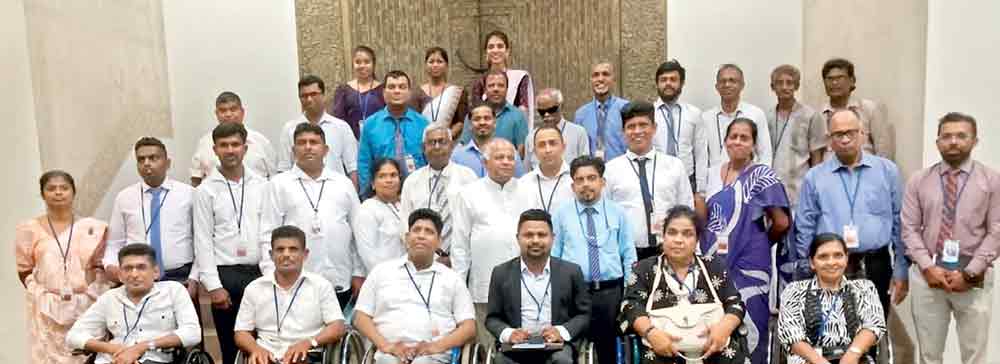
Led by the Parliamentary Caucus for Persons with Disabilities Chair Sugath Wasantha de Silva, MP, alongside participating Members of Parliament from the Caucus, the consultations were held on 25 and 27 May 2026, bringing together persons with disabilities and representatives from across the country to identify national Budget priorities. The process resulted in 234 Budget proposals covering government ministries and independent commissions, together with six overarching policy recommendations aligned with the Government’s “Leaving No One Behind” National Policy Framework.
The recommendations were officially handed over to Secretary to the President Dr. Nandika Sanath Kumanayake, on 16 July 2026, and subsequently submitted to Secretary to the Treasury and Finance Ministry Dr. Harshana Suriyapperuma on 23 July 2026, for consideration during the formulation of the 2027 National Budget.
The six priority recommendations call for:
 Establishing Disability Inclusion Focal Points in every ministry, department, and major state institution to strengthen institutional accountability for disability-inclusive policies, Budgeting, service delivery, infrastructure, and human resource practices.
Introducing a National Disability Inclusion Investment Framework (2027–2031) to integrate disability inclusion across education, healthcare, transport, employment, social protection, and the digital economy through a coordinated five-year investment strategy.
Ensuring accessible digital public services by adopting international web accessibility standards, conducting mandatory accessibility audits, expanding accessible communication formats, establishing centralised digital service platforms, and promoting digital employment opportunities for persons with disabilities.
Promoting disability-friendly tourism through accessible tourist destinations, inclusive accommodation standards, and accessible tourism information systems.
Implementing a social welfare scheme for persons requiring high-support care to provide structured assistance for persons with severe disabilities and support for their caregivers.
Maintaining the Rs. 1 billion allocation introduced under the 2026 National Budget to improve accessibility in public buildings and infrastructure while supporting the implementation of Supreme Court directives and creating more accessible public spaces for both persons with disabilities and Sri Lanka’s growing ageing population.
Speaking on the initiative, MP Sugath Wasantha de Silva emphasised that equal opportunities for persons with disabilities are fundamental to inclusive national development.
“Empowering persons with disabilities through equal opportunities is essential to ensuring their full participation in society. These recommendations seek to translate the Government’s policy commitments into practical action through the national Budget.”
Receiving the proposals, Secretary to the President and Secretary to the Treasury and Finance Ministry, reaffirmed the Government’s commitment to advancing disability inclusion and noted that several policy decisions had already been taken to strengthen the equal participation of persons with disabilities in national development.
The Parliamentary Caucus highlighted that the recommendations represent one of the most comprehensive disability-focused Budget submissions made in Sri Lanka and demonstrate the importance of directly engaging persons with disabilities in national decision-making processes. By incorporating these proposals into the 2027 National Budget, the Government would take a significant step toward ensuring that public investments are accessible, inclusive, and responsive to the needs of all citizens.
The initiative was supported by the International Foundation for Electoral Systems (IFES) Sri Lanka with funding from the Australian Government as part of ongoing efforts to strengthen disability inclusion in public policy and governance.