Wednesday Oct 07, 2026
Wednesday Oct 07, 2026
Tuesday, 3 March 2026 06:08 - - {{hitsCtrl.values.hits}}
 |
 |
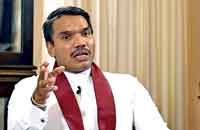 |
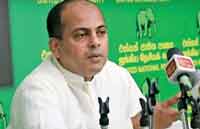
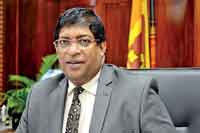
| S.M. Marikkar | Ravi Karunanayake | Namal Rajapaksa |
The Opposition yesterday cautioned that Sri Lanka could face significant economic strain if the escalating conflict in the Middle East drags on, urging the Government to manage emerging risks carefully.
Samagi Jana Balawegaya (SJB) MP S.M. Marikkar said signs of public anxiety were already visible, pointing to panic buying of fuel. He appealed to the public to act responsibly, noting that while a shortage is not anticipated under normal circumstances, a failure to manage the situation over time could create disruptions.
Marikkar also raised concerns over the use of lower-grade coal for power generation, warning that it may not deliver expected output levels. In such a scenario, authorities could be compelled either to impose power cuts or rely more heavily on fuel-based generation. He said this would be challenging amid instability in the Middle East, given the region’s central role in global energy supplies.
Iran, he noted, accounts for a substantial share of global fuel output, which could complicate procurement if hostilities intensify.
“We do not hope for the worst,” he added.
SJB MP Ravi Karunanayake said the impact on Sri Lanka would depend on the duration of the conflict, cautioning that even a two-week escalation could have consequences. He identified fuel supply as an immediate risk over the longer term, followed by potential pressures on worker remittances if Sri Lankan expatriates in the region face employment disruptions.
Karunanayake also commented that internal political dynamics in Iran could influence the length of the conflict, suggesting that its duration would depend on the stability of the country’s leadership.
Separately, Sri Lanka Podujana Peramuna (SLPP) MP Namal Rajapaksa called for preparedness measures, emphasising the need to ensure the safety and welfare of Sri Lankan expatriates working in the Middle East.



