Wednesday Oct 07, 2026
Wednesday Oct 07, 2026
Tuesday, 13 January 2026 02:45 - - {{hitsCtrl.values.hits}}
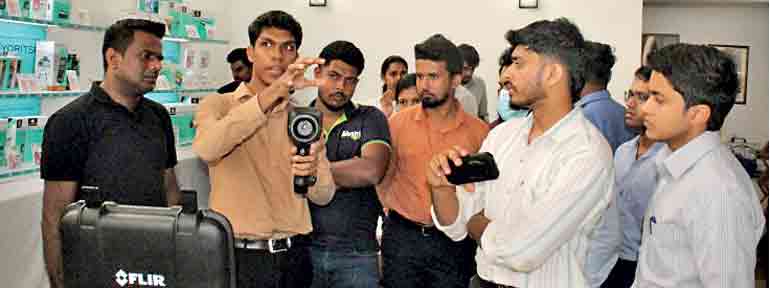
\Global technology continues to reshape the electrical and safety landscape. Sophisticated inspection instruments now enable early detection of loose electrical connections before they spark, identify heat loss from buildings, and locate individuals obscured by smoke during emergencies.
These capabilities are made possible through thermal imaging cameras, which have become essential in modern safety and inspection practices. Unlike conventional cameras, they detect infrared radiation emitted by objects and convert it into visual images, allowing users to identify temperature variations on or beneath surfaces, even in complete darkness or poor visibility.
Reflecting this importance, Marlbo Trading, to strengthen safety standards and expand access to advanced fault detection technologies, has added Teledyne FLIR thermal imaging cameras to its product portfolio.
This introduction brings globally recognised thermal imaging technology to local industries seeking reliable, high-performance inspection and safety solutions.
Once regarded as specialised tools, thermal imaging cameras are now widely used across industries. In buildings and homes, they help detect insulation defects, hidden moisture, and energy losses. In industrial environments, they enable maintenance teams to identify overheating equipment and electrical faults early, preventing breakdowns, fires, and costly shutdowns. Emergency services rely on thermal imaging to navigate smoke-filled spaces and locate people when every second counts.
The impact extends beyond efficiency to directly improving safety. By identifying abnormal heat patterns early, potential risks can be addressed before escalation. This proactive approach reduces downtime, lowers repair costs, and protects both people and property.
Thermal cameras are also transforming security and public safety. They do not rely on visible light, allowing monitoring at night or under challenging conditions without being intrusive. Non-contact temperature monitoring provides added protection while maintaining speed and convenience.
Thermal imaging technology is becoming smaller, smarter, and easier to use. As innovation continues, thermal imaging is evolving from a supplementary tool into an essential solution across industries.



