Monday Sep 28, 2026
Monday Sep 28, 2026
Saturday, 6 June 2026 00:40 - - {{hitsCtrl.values.hits}}
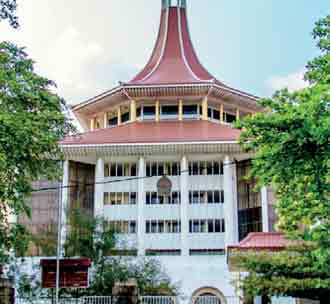 A group of senior lawyers, academics and legal practitioners operating as the Lawyers’ Collective has expressed strong opposition to reports that the Government is considering extending the retirement age of judges of the Supreme Court and Court of Appeal, warning that such a move could undermine judicial independence and public confidence in the courts.
In a statement, the Lawyers’ Collective endorsed concerns previously raised by the Bar Association of Sri Lanka (BASL) and cautioned that any amendment to the Constitution altering the retirement age of superior court judges would represent a significant change to the judicial system that requires careful public scrutiny.
The group noted that the retirement age of superior court judges is currently prescribed under Article 107(5) of the Constitution and any change would require a constitutional amendment. According to the statement, public reports indicate that a draft amendment is being prepared by the Legal Draftsman’s Department.
The Lawyers’ Collective argued that particular concern arises if the proposed amendment is intended to apply to sitting judges. It said such a measure could be perceived as an attempt to preserve the existing composition of the superior courts by allowing current judges to remain in office for longer periods.
The statement described the extension of tenure for sitting judges as a potential form of “court-packing” and cited comparative constitutional scholarship that recognises changes to judicial tenure as a mechanism that can affect judicial independence. The group argued that granting serving judges an extension beyond their existing retirement age could be viewed as conferring a benefit on judges by the executive, thereby creating concerns about the separation of powers and judicial autonomy.
The Lawyers’ Collective also cited observations made by the Supreme Court in the case of Pathirathne v. Abeywardena, which emphasised the importance of public confidence in the judiciary and noted that even suspicion regarding a judge could affect trust in the judicial system. The group argued that any move perceived as favouring sitting judges could create doubts regarding the impartiality of future judicial decisions.
The statement further referred to reports issued by United Nations Special Rapporteur on the Independence of Judges and Lawyers Margaret Satterthwaite, which identify politically motivated changes to judicial tenure and court composition as potential risks to judicial independence. According to the Lawyers’ Collective, international experience demonstrates that altering retirement ages or extending judicial terms can create perceptions of political influence over courts.
Beyond concerns about judicial independence, the group criticised the process through which the proposal is reportedly being developed. It said the amendment appeared to be proceeding without adequate public consultation and argued that such an approach was inconsistent with commitments to participatory governance and public discourse.
The Lawyers’ Collective also questioned why the Government was pursuing a limited constitutional amendment affecting the judiciary while broader constitutional reform proposals promised during the election campaign remain unimplemented. It said piecemeal constitutional amendments undertaken without wider public discussion risk undermining confidence in the reform process.
The statement concluded by calling on President Anura Kumara Dissanayake, Prime Minister Harini Amarasuriya, Justice Minister Harshana Nanayakkara and the Government’s leadership to abandon efforts to introduce a constitutional amendment extending the retirement age of judges of the Supreme Court and Court of Appeal.
The statement was signed by 19 members of the Lawyers’ Collective, including President’s Counsel Geoffrey Alagaratnam, President’s Counsel M.A. Sumanthiran, President’s Counsel M.M. Zuhair, President’s Counsel Anura Meddegoda, Professor Savitri Goonesekere and Professor Camena Guneratne.




