Sunday Oct 25, 2026
Sunday Oct 25, 2026
Wednesday, 9 September 2026 00:03 - - {{hitsCtrl.values.hits}}
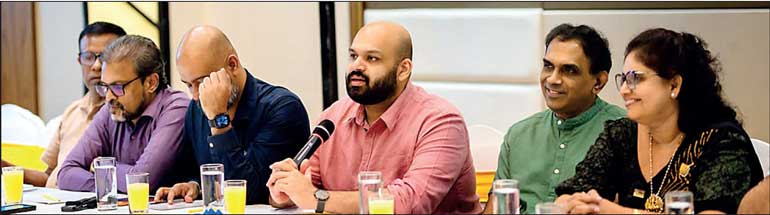
The Parliamentary Caucus for Open Parliament Initiative has concluded the first phase of its Voice to Policy Dialogue series with a session in Kandy, bringing together around 40 young people and eight Members of Parliament for a direct conversation on the issues shaping their lives and communities.
The Kandy dialogue is the third and final leg of the initiative’s opening phase, following earlier sessions in Gampaha and Batticaloa. Across all three locations, discussions have surfaced a mix of region-specific and shared concerns; with education, employment, entrepreneurship, transport and social wellbeing emerging as common threads regardless of where participants were from.
At the Kandy session, young participants raised concerns spanning education, employment, substance abuse, women’s political participation, women’s rights, fairness, entrepreneurship and the development of Kandy as an economic hub.
A recurring theme was the disconnect between what the education system produces and what the job market demands. Participants called for stronger vocational training, closer links between educational institutions and the private sector, and improved access to quality employment opportunities.
Young women at the dialogue pressed for greater opportunities to take part in political decision-making, while the discussion on substance abuse moved beyond the issue itself to examine its root causes, participants pointed to unemployment and a lack of accessible support services as key drivers.
On the economic front, attendees offered ideas for positioning Kandy as a stronger economic centre, citing tourism, entrepreneurship, infrastructure development and digital connectivity as areas of opportunity.
Speaking on the initiative, Co-Chair of the Parliamentary Caucus for Open Parliament Initiative and MP Shanakiyan Rasamanickam said, Parliament needs to do more to bring young people into the policymaking process.
“Parliament must create more opportunities for young people to engage directly in the policy making process,” Rasamanickam said. “Their concerns should not only be heard during elections, but also form part of the discussions that shape government policy.”
He said the defining feature of the Voice to Policy model is that it hands young people the initiative from the outset, letting them identify the issues affecting their own communities, shape recommendations, and then present those recommendations directly to MPs, rather than having their concerns filtered through intermediaries.
Reflecting on the three dialogues held so far, Rasamanickam noted that while young people in different parts of the country face distinct local challenges, many of the underlying concerns around education, employment, entrepreneurship, transport and social wellbeing recur across regions.
He thanked the young participants for speaking openly about their experiences, as well as the MPs and the Assistant Secretary General of Parliament who took part in the discussions. He singled out the Coalition for Inclusive Impact (CII) for particular thanks, crediting the organisation’s partnership with the Parliamentary Caucus for helping build a genuine platform for engagement between young people and Parliament.
“This first phase has shown that there is a real appetite among young people to engage in policy making,” Rasamanickam said. “Our responsibility now is to ensure that the ideas raised through these dialogues are taken forward through the appropriate parliamentary processes.”




