Wednesday Oct 07, 2026
Wednesday Oct 07, 2026
Wednesday, 18 March 2026 00:00 - - {{hitsCtrl.values.hits}}
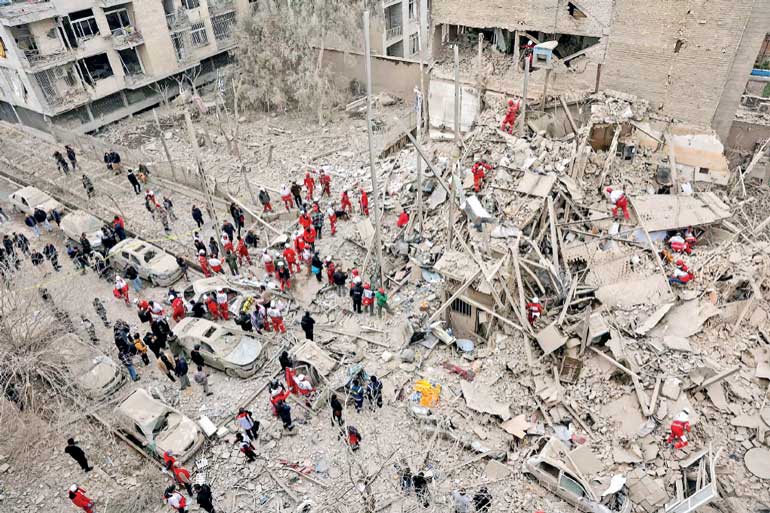
Iran launched fresh attacks on the United Arab Emirates yesterday, widening the conflict across the Gulf and intensifying risks to global energy supply, even as sources said Washington had been warned such escalation was likely.
Markets reacted sharply, with oil prices rising more than 5% and investors increasingly concerned about a combination of higher inflation and slower global growth.
Central banks are beginning to respond. The Reserve Bank of Australia raised interest rates for a second consecutive month, citing the need to contain inflationary pressures stemming in part from higher energy costs.
With energy flows disrupted and geopolitical risks escalating, the conflict is now feeding directly into global macroeconomic conditions, raising the prospect of prolonged volatility across both commodity and financial markets.
The strikes mark a shift toward direct targeting of US-aligned Gulf states, with diplomats in the region telling news agencies that retaliation against these countries had long been anticipated if Iran came under attack.
The conflict, now in its third week, has killed at least 2,000 people, with no clear end in sight. The Strait of Hormuz remains largely closed, disrupting a key artery for global energy flows and pushing up oil prices.
Iranian missiles struck Israel overnight, while Israel said it was carrying out a fresh wave of attacks targeting “Iranian regime infrastructure” in Tehran and Hezbollah-linked sites in Beirut, signalling continued escalation on multiple fronts.
In Iraq, rockets and drones targeted the US embassy in Baghdad in what security sources described as the most intense assault since the conflict began. No casualties were reported.
In the UAE, airspace closures were triggered after missile interceptions, while a drone strike hit an oil facility in Fujairah for a second consecutive day. Debris from an intercepted missile in Abu Dhabi killed one person, while a separate drone attack caused a fire at the Shah gas field.
The disruptions threaten to sever remaining crude export routes from the UAE, compounding supply concerns in global markets.
Despite President Donald Trump describing the attacks as unexpected, US officials and sources familiar with intelligence assessments said Washington had been briefed prior to the conflict that strikes on Iran could trigger retaliation against Gulf allies and attempts to close the Strait of Hormuz.
Several US partners, including Germany, Spain, Italy, Japan and Australia, have declined requests to deploy naval assets to secure the waterway, citing the absence of a clear mandate and lack of prior consultation.
German Chancellor Friedrich Merz said Berlin had not been consulted before the conflict began, adding that legal constraints limited its ability to participate.
Shipping risks remain elevated, with maritime authorities warning that naval escorts cannot fully guarantee safe passage through the strait.
Iran signalled it retains operational capacity despite sustained strikes, with Parliamentary Speaker Mohammad Baqer Qalibaf rejecting claims of diminished capabilities. “They say that our firepower has decreased, but our offensive power, experience, and accuracy have increased,” he said.



