Wednesday Oct 07, 2026
Wednesday Oct 07, 2026
Friday, 5 December 2025 03:29 - - {{hitsCtrl.values.hits}}
By Dishani Senaratne
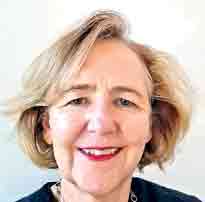 |
| Susan Gasson |
Humanities, Arts and Social Sciences research continues to face resistance and concern, compared to Science Technology, Engineering and Mathematics (STEM). To further exacerbate matters, the career paths of researchers working in Humanities are often precarious and tenuous. Sadly, this seems to be a global phenomenon.
In this exclusive interview, Senior Fellow of Advance HE Susan Gasson, PhD. shares her insights from her latest edited volume Early Career Researcher Pathways, into how early career researchers navigate the challenges in the workforce. Here is an excerpt from the email interview:
Q:How would you describe being an “early career researcher” to someone who is not in academia?
A: The early career researcher I am writing to in my book is anyone enrolled in a doctoral program or within six years of graduating from one. This group of people have the potential to lead global research into the future, and is the engine room for teaching, learning and service in higher education.
Q: What inspired you to write this book, and how did the idea first come to you?
A: As a manager and senior lecturer in the tertiary sector, I saw increasing evidence of challenges facing doctoral graduates in entering the workforce. I wanted to understand those challenges more and to enable the pursuit of careers in academia and industry. I wanted to see this important cohort realise their expectations and realise the benefits they could provide for the broader community.
Q: Your latest edited volume Early Career Researcher Pathways refers to “seven tensions” that new doctoral graduates face. Can you briefly explain these tensions?
A: The tensions emerged from discussions with current early career researchers. They each arose as researchers navigated their doctoral journeys and early years in the job market after graduation. One relates to the conflicting roles of doctoral education – one is to provide an enduring and well-understood qualification that has a global presence, competing with that is the need for the qualification to evolve to meet changes to our social, economic, technological and geopolitical contexts. Another relates to different expectations placed on those seeking to progress careers in the academy and industry.
Another focuses on mid-career professionals and their options after graduation to progress into the academy (pracademics) and advance their existing professional profile through augmented capacity as research-led practitioners (Prosearchers). Another explores the demands placed on early career researchers to collaborate while simultaneously demonstrating individual expertise and capacity. The next may be very relatable to many, the challenge of balancing workload and well-being. The last reveals the role of physical and virtual places in engaging in study, work and society. This last tension emerged as I discussed the impact of COVID-19 with research participants. The ongoing impact of people working from home, and the ability to instantly access and work with colleagues and collaborators around the globe, is explored.
The book covers early career researchers from Australia, Asia, and the Americas.
Q: Did you notice any commonalities across regions, and any distinct regional differences?
A: What I discovered was that there continues to be a huge mobility in this workforce. Many travelled internationally to engage in doctoral studies, and then continued to travel the globe in search of secure employment and career progress. The need to be globally relevant and to pivot to different workplace and cultural environments is a part of following early career pathways for many.
Q: If there’s one message you’d like early career researchers or institutions to take away from this book, what would it be?
A: My message is that the opportunities for early career researchers continue to emerge. Early career researchers need to be open to these and make an effort to use them to meet very diverse career expectations. They must apply themselves to deliberately plan and prepare, and be ready to pivot in order to ensure secure career futures. Institutions and professional bodies have a role in helping them to understand the skills and capacities they have and can refine through doctoral studies. They can offer resources and developmental opportunities that can help early career researchers align their studies and experiences to meet their career aspirations.
Q: Are there lessons from the experiences of early career researchers that apply to other professions (for example, the corporate sector/Government)?
A: The tensions facing early career researchers have relevance for those pursuing professional careers as well. Some of the strategies outlined in the book may also be transferable to these contexts.
Q: Are you working on any related projects or future books?
A: I am just finishing off the second volume of Confident Supervisors, and a third volume is already being considered. I am also hoping to write more on narrative inquiry and conduct additional research to better understand the role of collaboration and communication in building capacity for learning, leadership and well-being in diverse communities.
FT Profile
Susan Gasson’s research focuses on research education and development, research collaboration, and employability. Adopting qualitative approaches, including narrative inquiry, her research has benefited from years spent working in higher education and building strong national and global networks. She managed the Research Students Centre at the Queensland University of Technology (QUT), Australia, for two decades before joining James Cook University as Coordinator, Higher Degrees by Research Advisor Development for five years. She is a Senior Fellow of AdvanceHE.
Her most recent research publications have focused on Early Career Research Pathways, and Collaborative Research and its application in different contexts, including research writing, doctoral studies, and support for the participation of women in higher education. Her PhD thesis explored Early Career Researcher pathways. She was the leading editor on Emerald Publishing’s Early Career Researcher Pathways, and the open-access online ebooks Confident Supervision Volumes 1 and 2 https://jcu.pressbooks.pub/confidentsupervisors/
Susan has co-authored with collaborators in Europe, North America, Asia and the Pacific. Her interest in researcher development has led to the creation and co-creation of several online resources, including interactive and integrated forms, online communities, and Blackboard and WordPress sites.



