Tuesday Sep 15, 2026
Tuesday Sep 15, 2026
Saturday, 31 January 2026 01:33 - - {{hitsCtrl.values.hits}}
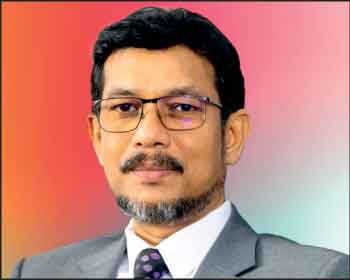 |
| Digital Economy Deputy Minister Eranga Weeraratne |
Digital Economy Deputy Minister Eranga Weeraratne yesterday said that the Ministries of Education, Women and Child Affairs, and Digital Economy are planning to initiate a national assessment and policy review on the impact of social media on children.
The Deputy Minister emphasised that the initiative is expected to be advanced by giving due consideration to the insights of experts across all relevant fields, including child protection, education, health, mental health, cyber security, law and research, as well as by listening to the voices of civil society and youth.
Full statement made by Deputy Minister, Eranga Weeraratne:
Many parents in Sri Lanka today face the challenge of understanding the impact of social media on their children and determining what measures they should take to ensure their safety. The solution is not to restrict children’s access to technology.
Social media offers numerous benefits, including educational opportunities, the development of creative skills and improved communication. However, there is also a reality we must acknowledge.
The online environment can often be unsafe, overwhelming and psychologically stressful for children. The resulting harm can negatively affect a child’s sleep, education, friendships and overall mental well-being. In some cases, excessive engagement with social media becomes difficult to control.
Attempts to prevent such overuse may sometimes lead to conflicts, anger, or harsh disciplinary measures, which further impact learning and mental health. Consequently, children may experience stress, diminished self-confidence and emotional distress.
Online cyber bullying is another major concern. Additionally, children are often exposed to age-inappropriate content, including violent, sexual, or otherwise harmful material. There have been cases where children repeatedly engage with such harmful content, becoming increasingly absorbed in it. Some online games also present situations that encourage children to engage in disruptive or unsafe behaviour.
In extreme cases, such engagement has even led children to put their lives at risk. For this reason, ensuring the online safety of children has become a national priority in many countries. Our approach, likewise, must be guided by three fundamental principles.
First, the safety of children is paramount. This remains a non-negotiable policy of the government. Second, our actions must be based on evidence and research. We never proceed based on assumptions. Third, while safeguarding rights and privacy, our goal is to minimise excessive surveillance. Striking a balance between rights, safety and innovation is our primary objective.
Many countries around the world are already taking measures in this regard. It has become a timely necessity for us to carefully study these experiences, adapt them to our context and develop a comprehensive programme to protect our children. As a first step, we hope to initiate a national assessment and policy review on the impact of social media on children, in consultation with the Ministry of Education and the Ministry of Women and Child Affairs.
Experts in fields such as child protection, education, health, mental health, cyber security, law and research, along with the voices of civil society and youth, must be engaged in this effort. This is not a challenge that the government can address alone. Parents, teachers and children themselves all need to participate collaboratively. Through this approach, we can create an environment where our children can make full use of technology safely and responsibly.




