Monday Oct 12, 2026
Monday Oct 12, 2026
Monday, 12 October 2026 04:05 - - {{hitsCtrl.values.hits}}
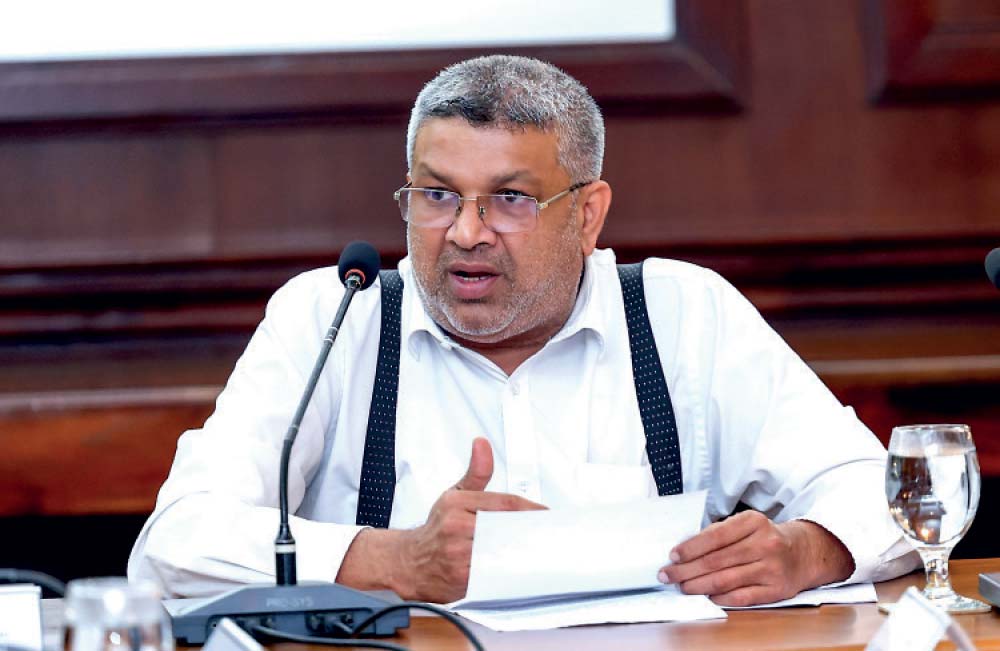
Justice and National Integration Minister Harshana Nanayakkara
 The Government has given a special committee two weeks to revise prison regulations and standing orders governing the treatment of Buddhist monks serving prison sentences, following consultations between President Anura Kumara Dissanayake and representatives of the Maha Sangha.
The move follows concerns raised by the Most Venerable Mahanayaka Theras over existing procedures for taking Buddhist monks outside prison, following the incident involving Venerable Galagoda Aththe Gnanasara Thera.
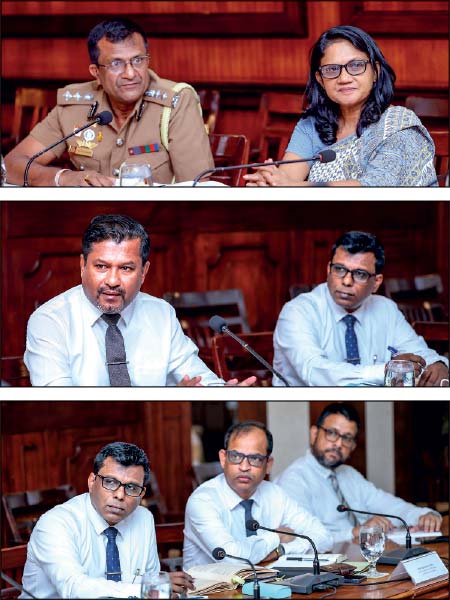
A five-member committee appointed on 8 October has been tasked with reviewing the relevant provisions under the Prisons Ordinance and proposing amendments to address the religious and social sensitivities associated with such cases.
The committee is chaired by Buddhasasana, Religious and Cultural Affairs Ministry Secretary Prince Senadheera. Its other members are Justice Ministry Additional Secretary Piyumanthi Peiris, Public Administration Ministry Additional Secretary Wasantha Ariyaratne, Buddhist Affairs Commissioner-General R.M.G. Senaratne and Prisons Commissioner-General A.C. Gajanayake.
The committee held its first meeting at the Presidential Secretariat on 9 October, with Justice and National Integration Minister Harshana Nanayakkara providing policy guidance.
The review is expected to be completed within two weeks, with proposed changes to be presented to the Maha Sangha for its views and recommendations before the revised regulations are adopted.
During the meeting with the Maha Sangha, President Dissanayake explained that the Prisons Ordinance of 1877 and its regulations contained no separate provisions specifically governing Buddhist monks serving prison sentences.
He maintained that prison officials had acted within the existing legal framework and said he was unwilling to issue individual orders that bypassed the law.
Instead, he argued that the appropriate response was to amend the regulations to reflect contemporary circumstances, rather than allow personal preferences to override established legal provisions.
The President acknowledged the profound distress that could arise among Buddhists and the Maha Sangha when a monk previously held in high esteem was subsequently seen in circumstances associated with imprisonment.
He also stressed that legislation and regulations could be amended as circumstances changed, while insisting that any solution should be established through a formal legal process.
The President instructed the Justice Minister to expedite the preparation of the necessary regulations, with the stated objective of ensuring that Buddhist monks would not again have to face the same situation under the existing procedures.
Representatives of the Maha Sangha, including Anunayaka Theras and Lekhakhadhikari Theras, described the issue as highly sensitive for both the Buddhist clergy and wider society.
They proposed that whenever a Buddhist monk is convicted and sentenced to imprisonment for more than three years, the relevant Nikaya or chapter should be informed.
They also called for regulations allowing such monks to be taken outside prison wearing their robes, based on the views of the relevant Nikaya or chapter.
According to the proposal, involving the relevant ecclesiastical authority would provide a transparent process while helping prevent the concession from being abused.
The President acknowledged that the proposal could support transparency and instructed officials to move swiftly towards a regulatory solution.
The Special Committee is expected to submit its proposals after studying the existing regulations and standing orders under the Prisons Ordinance.
The proposed changes are to be presented to the Maha Sangha for consultation before being finalised, with the Government expecting the revised regulations to be adopted within the two-week period.
Once the new provisions take effect, arrangements are expected to allow Buddhist monks to be taken outside prison wearing their robes on the recommendation of the relevant Nikaya or chapter.
The proposed changes remain subject to the committee’s review, consultation and formal adoption. The process is intended to address the concerns raised by the Maha Sangha while keeping the arrangements within a defined legal and administrative framework.




