Tuesday Oct 06, 2026
Tuesday Oct 06, 2026
Wednesday, 3 June 2026 00:00 - - {{hitsCtrl.values.hits}}
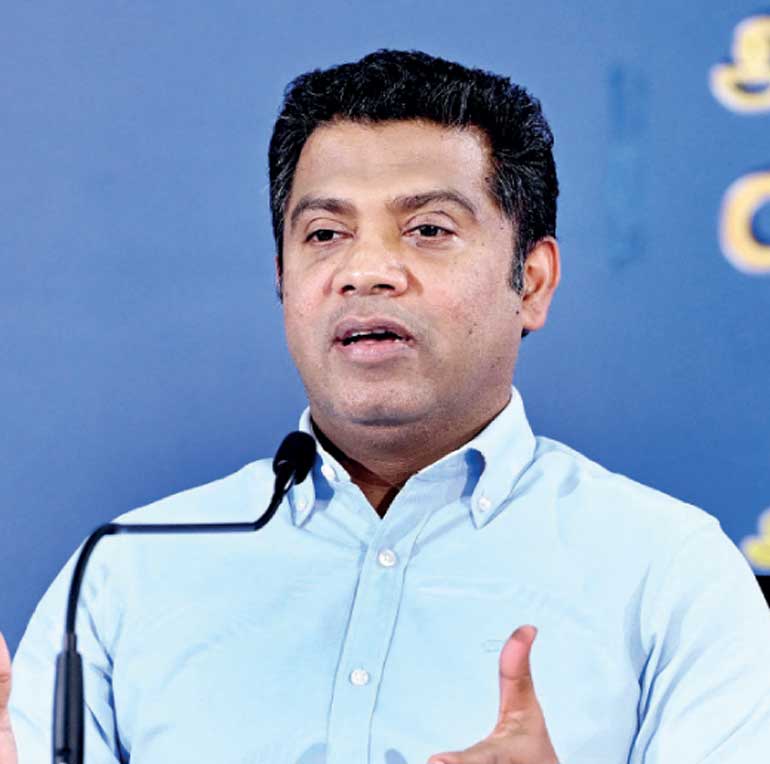
Dr. Nalinda Jayatissa
The Government yesterday admitted it was compelled to increase fuel prices in line with rising global oil prices to ensure uninterrupted supplies and prevent disruptions to economic activity.
Addressing the weekly post-Cabinet media briefing, Spokesperson and Minister Dr. Nalinda Jayatissa said Sri Lanka’s fuel import bill had risen sharply in recent months despite domestic consumption remaining broadly stable at around 80% to 90% of normal levels.
“Although our fuel consumption revolves around 80%-90%, the cost has increased significantly from $ 186 million spent on fuel imports in January to $ 521 million in May,” he said.
He noted that the Treasury’s fuel subsidy allocation of Rs. 57 billion had helped cushion the impact of rising costs, with the government absorbing around Rs. 100 per litre of diesel and Rs. 20 per litre of petrol. Fuel importers had also borne part of the financial burden, he added.
According to Dr. Jayatissa, losses incurred by fuel suppliers on diesel sales currently amount to Rs. 358 per litre for the Ceylon Petroleum Corporation, Rs. 341 per litre for RM Parks, Rs. 186 per litre for Sinopec and Rs. 194 per litre for Lanka IOC.
For petrol, the corresponding losses were Rs. 23 per litre for the CPC, Rs. 157 per litre for RM Parks, Rs. 29 per litre for Sinopec and Rs. 38 per litre for Lanka IOC, he said.
“In this context, revising fuel prices upward was inevitable while maintaining business as usual,” Jayatissa said.
He warned that failing to adjust prices could discourage fuel imports, resulting in shortages and broader economic consequences.
“If we don’t adjust prices, it will lead to a bigger challenge of companies not importing sufficient fuel stocks, which will then result in supply shortages and eventually impact the overall economy,” he said.
Responding to questions on substandard coal shipments, Dr. Jayatissa assured that electricity consumers would not be required to bear any financial burden arising from coal quality issues.
He recalled that both President Anura Kumara Dissanayake and the Public Utilities Commission of Sri Lanka (PUCSL) had previously pledged that consumers would not be made to pay for losses linked to substandard coal imports.
He said established procedures were in place to deal with shipments that fail to meet required standards and that any losses would be recovered from the responsible parties rather than passed on to the public.
He added that authorities could pursue legal action against relevant companies if necessary, while a Presidential Commission appointed to investigate the matter had been given until 22 May to receive submissions before making its independent determinations.



