Thursday Oct 15, 2026
Thursday Oct 15, 2026
Saturday, 22 August 2026 00:28 - - {{hitsCtrl.values.hits}}
By Tania de Silva
The real test of a disaster warning is not whether it is issued. It is whether somebody, somewhere, hears it in time.
In a village threatened by a rising river, somebody may be a young person knocking on a neighbour’s door. It may be the volunteer who knows where an elderly man lives alone, or the youth leader who remembers that a pregnant woman in the community cannot simply be swept into the nearest evacuation centre.
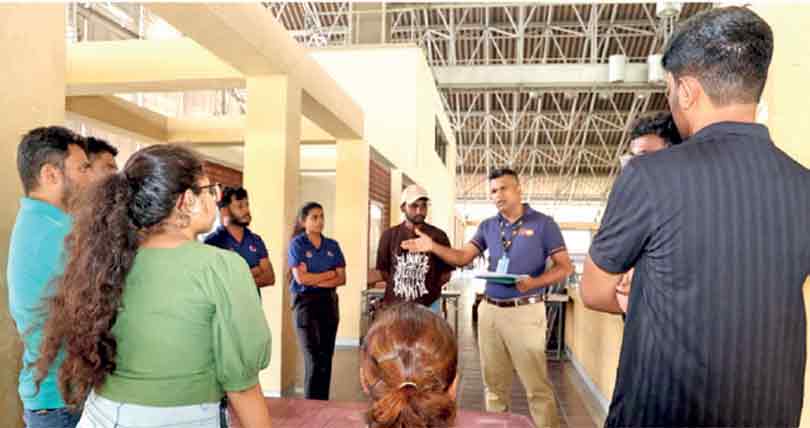
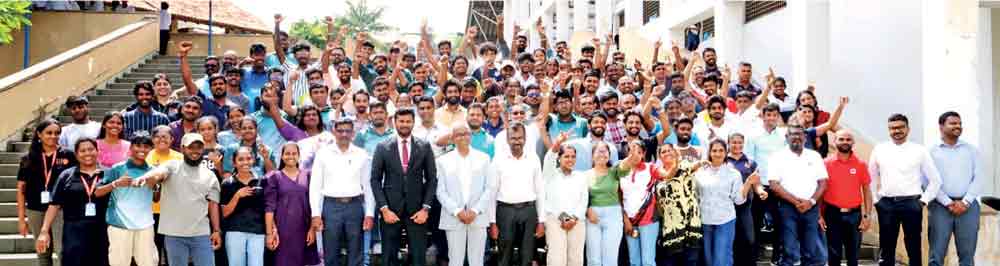
It was with this less glamourous, but considerably more important, business of preparedness that more than 100 young Sri Lankans gathered in Maharagama on Wednesday, 12 August 2026.
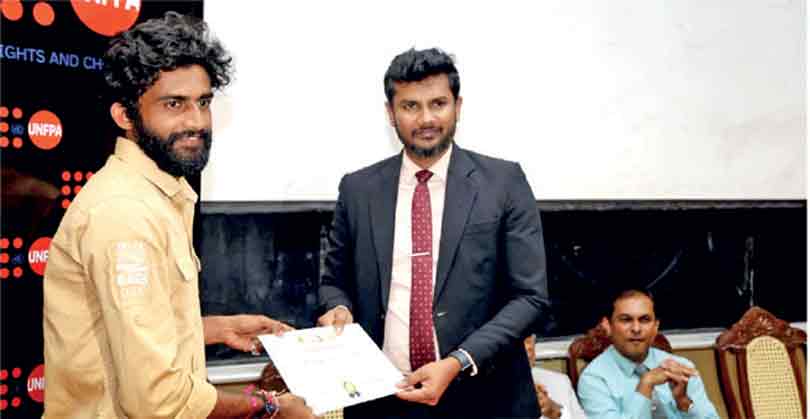
The United Nations Population Fund (UNFPA), in partnership with the National Youth Services Council (NYSC) and under Youth Affairs and Sports Ministry brought youth leaders from across the country together for a national simulation exercise titled The Resilience Lab: Local Youth Action in Crisis Response.
The exercise, held to mark International Youth Day, was built around this year’s theme, “Different Contexts, Shared Aspirations.”
But there was little ceremony about the day.
The young participants were placed in simulated emergencies, floods, landslides and a dengue outbreak, and asked to make decisions that, in a real crisis, could carry consequences far beyond a classroom.
The purpose was straightforward: to move Sri Lanka’s disaster thinking a step backwards, from the ambulance at the scene to the warning before the siren; from relief after the catastrophe to preparation before it.
The need is difficult to dispute.
The devastation caused by Cyclone Ditwah remains a stark reference point. Some 2.2 million people were affected, more than 600 lives were lost and nearly 115,000 homes were damaged.
For disaster agencies, such figures become statistics. For families, they become empty chairs at dinner tables, damaged houses and months spent putting ordinary life back together.
It is precisely here that Sri Lanka’s youth network could become an unlikely national asset.
The 2024 Census places the number of people aged between 15 and 29 at approximately 4.78 million , nearly 22 per cent of the population.
And through the NYSC, the Government has an existing network of around 14,000 Youth Clubs, reaching more than 280,000 young people at community level.
The question, then, is not whether the country has young people.
It is whether it has prepared them.
NYSC Chairman and Youth Affairs Director General, Attorney-at-Law Supun Wijerathna, said the experience of Cyclone Ditwah had demonstrated how quickly the organisation’s network could be called upon when disaster struck.
The young, he said, possessed something emergency systems could not manufacture overnight — time, flexibility, energy and a connection with their communities.
But the ambition is larger than producing volunteers who arrive after the damage is done.
“We need to have a clear vision of what we are trying to build,” Wijerathna said.
The vision, he explained, was of young leaders who could disseminate warnings, organise communities and act before disaster became disaster.
That distinction may prove crucial.
An early warning which does not reach the elderly woman living alone is not much of a warning. A flood evacuation plan which ignores a person with a disability is not much of a plan. And an emergency response which overlooks the healthcare needs of a pregnant woman has, at its heart, already failed.
That was why the simulations placed particular emphasis on reaching what officials described as “the last person”.
The phrase sounds administrative. Its meaning is not.
It is the difference between a warning being broadcast and a warning being understood. Between a government instruction and a neighbour taking responsibility for a neighbour.
UNFPA Sri Lanka Assistant Representative Dr. Dayanath Ranatunga, said young people should not be regarded merely as passive beneficiaries of disaster relief.
“They are active communicators, first responders, and community mobilisers,” he said.
The program also brought sexual and reproductive health and rights, together with gender considerations, into the emergency scenarios, areas that can be pushed to the margins when the immediate concerns are water, shelter and food.
Yet emergencies do not suspend ordinary human needs.
They often make them more urgent.
The Resilience Lab was organised with technical support from the Disaster Management Centre, the Sri Lanka Red Cross Society and the Family Planning Association of Sri Lanka.
Its significance, however, will not be measured by what happened inside the NYSC auditorium.
It will be measured later, perhaps on a wet night when a river begins to rise, when a landslide warning comes through a mobile phone, or when an outbreak begins in a neighbourhood already struggling with inadequate services.
Then there will be no podium, no microphones and no carefully prepared program.
There will simply be a warning, and a short space of time in which somebody must decide what to do with it.
Sri Lanka has spent years learning how to respond to disasters.
The more difficult lesson is learning how to prevent them from becoming tragedies.
And that lesson, increasingly, is being placed in the hands of the young.