Thursday Oct 15, 2026
Thursday Oct 15, 2026
Thursday, 30 July 2026 05:33 - - {{hitsCtrl.values.hits}}
|
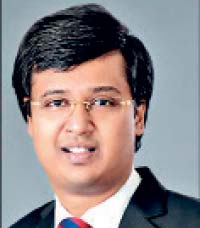
President Rajeev Amarasuriya
|
The Bar Association of Sri Lanka (BASL) yesterday unanimously adopted a special resolution opposing the Government’s proposed constitutional amendment to extend the retirement age of judges.
The BASL called on the President, Government, and Parliament not to proceed with the legislation unless it is demonstrably necessary, transparently developed, widely consulted upon, and consistent with Sri Lanka’s constitutional traditions and international obligations relating to judicial independence.
The resolution was adopted at what the BASL described as its largest-ever Special General Meeting of members.
The resolution states that the Association “unequivocally opposes” the proposed constitutional amendment in its present form and says the proposal should not proceed in the absence of a demonstrated institutional necessity, a transparent and evidence-based justification, meaningful consultation with all relevant stakeholders, and a comprehensive assessment of its constitutional implications.
The BASL also called on the Government to immediately prioritise filling existing vacancies in the Supreme Court and the Court of Appeal through the constitutional appointment process instead of altering the tenure of serving judges.
It further urged the Government to prioritise implementing recommendations contained in the Justice Sector Assessment and Strategic Action Plan, including reforms to reduce delays, strengthen institutional capacity, improve judicial administration, modernise court infrastructure and technology, and enhance access to justice.
In setting out the basis for the resolution, the BASL said no compelling necessity, objective evidence, or institutional justification had been publicly demonstrated to warrant the proposed amendment. It also said the proposal had been advanced without a comprehensive consultative process involving the Judiciary, the Bar, academia, civil society, or other relevant stakeholders.
The Association said the justice system’s more pressing challenges include judicial vacancies, case delays, inadequate judicial resources, insufficient technological modernisation, procedural inefficiencies, and the need for comprehensive institutional reform.
It added that comparative constitutional practice shows that reviews of judicial retirement ages generally follow careful consultation and ordinarily operate prospectively to avoid any perception that constitutional amendments are directed at identifiable serving judges.
The resolution also cites international standards, including the UN Basic Principles on the Independence of the Judiciary, the Bangalore Principles of Judicial Conduct, the Latimer House Principles, the Commonwealth Charter, the Universal Charter of the Judge, and the International Bar Association Minimum Standards of Judicial Independence, as recognising judicial independence and security of tenure as fundamental safeguards of the rule of law.
The BASL further noted that, because the Supreme Court is constitutionally empowered to hear challenges to Bills, the proposed amendment could place sitting Supreme Court judges in an “embarrassing position of Conflict of Interest” if called upon to determine legislation affecting their own tenure.
The resolution reaffirms the BASL’s commitment to defending the independence of the Judiciary, the separation of powers, the rule of law, constitutional governance, and the integrity of Sri Lanka’s justice system. It also authorises the President, Executive Committee, and officers of the Association to take all lawful and appropriate steps, nationally and internationally, to safeguard judicial independence and oppose any constitutional measure that undermines, or appears to undermine, those principles.
President Rajeev Amarasuriya later said the Government had proceeded without consulting the legal profession.
He said the proposed amendment had been brought before the Cabinet without prior engagement with the BASL, despite its implications for the judiciary and the legal profession, and that 3,000 to 4,000 lawyers participated in the Special General Meeting, both in person and virtually.