Monday Sep 14, 2026
Monday Sep 14, 2026
Monday, 14 September 2026 01:42 - - {{hitsCtrl.values.hits}}
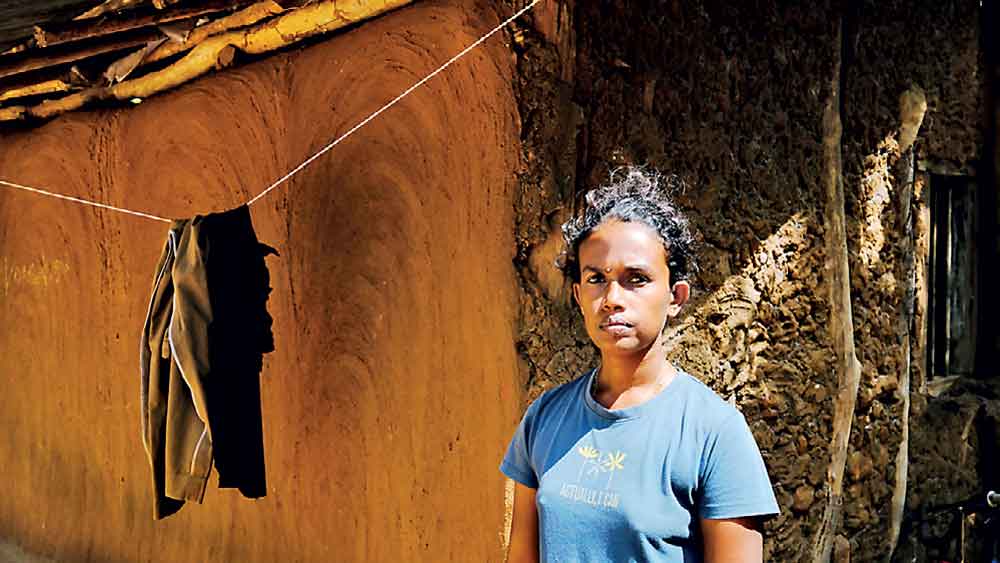 Nishanthi Gunarathna stands in front of her home in Kadurugaswewa. Days after this photo was taken a wild elephant broke into the house looking for food and water
By Aanya Wipulasena
Nishanthi Gunarathna was at her tea stall with her three children when she heard villagers screaming and the loud clatter of metal roofing sheets being ripped apart. She ran towards her mud-thatched house and watched in horror as a wild elephant towered over her one bedroom home and destroyed it. Nishanthi says she has not seen a wild elephant as tall as this one before.
It was around 6.30 in the evening. Her children just returned to the tea stall after lighting the oil lamp to the Lord Buddha at their home, just a few hundred meters away.
“We screamed and made loud noises hoping to scare the elephant away. It didn’t even flinch. It broke into the house and ate the rice bags that were stored inside,” Nishanthi said, adding that wild elephants are increasingly venturing into the village. “We live in constant fear,” she said.
Nishanthi, her husband and children have now moved into the small mud-thatched tea stall. Her children’s uniforms and books were destroyed by the wild elephant.
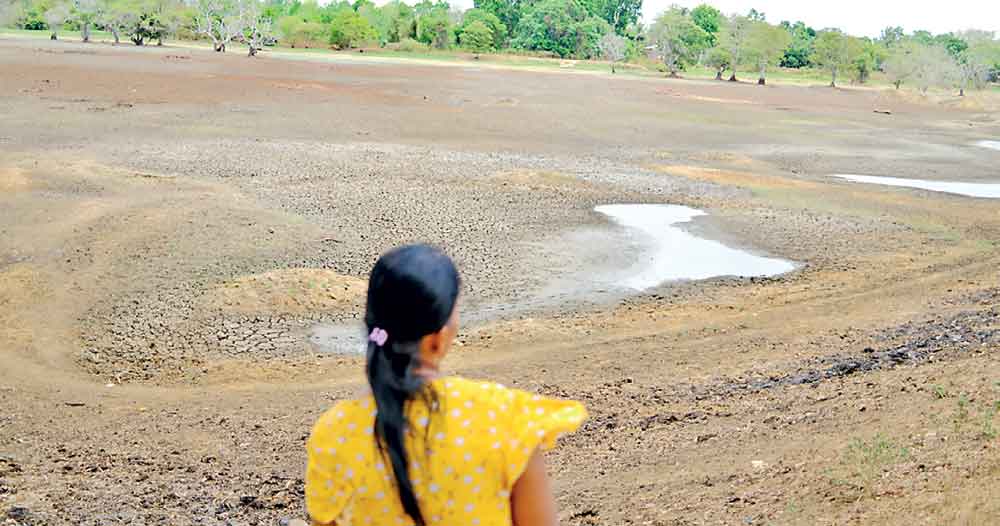
Since the drought-like weather began months ago, life in Kadurugaswewa village in Polonnaruwa district has become exceedingly difficult. The reservoir and wells have dried up, and vegetation has withered away leaving parched land and brittle plants. Now the villagers have to compete with wild animals for what little is left. The dry conditions that are causing this are linked to the ongoing effects of El Niño.
“This is a very natural occurring climate pattern. We call it ENSO, which stands for El Niño-Southern Oscillation. It has two opposite phases- El Niño and La Niña. El Niño is associated with warmer-than-average sea surface temperatures in the central and eastern equatorial Pacific Ocean, while La Niña is associated with cooler-than-average conditions in the same region. Mainly the Central and Eastern Equatorial Pacific Ocean has a fluctuation of temperatures. Then the overlying atmosphere also gets heated causing rainfall, that coupled interaction with the ocean and atmosphere that enhances El Niño or La Niña episodes,” Gayana Hendawitharana, Deputy Director of Research and Climate Studies at the Department of Meteorology, said adding the South Asian region could experience variations in monsoonal rainfall associated with the prevailing climate conditions.
She said 30% of annual rainfall is usually gathered in the South-West monsoon period from May to September, but this time Sri Lanka received suppressed rainfall. When the South-West part receives some rain, the dry and intermediate zones are experiencing very dry conditions due to the ongoing El Niño. El Niño is one of the factors that can influence these rainfall patterns, although rainfall over Sri Lanka is affected by several other atmospheric and oceanic factors as well, She added.
“During October and November, there is potential for increased rainfall over the island, including episodes of heavy rainfall in some areas. Therefore, the possibility of localised flooding cannot be ruled out, particularly when heavy rainfall occurs over a short period,” She added that rainfall and temperature conditions during the subsequent months could also vary from their usual patterns.
However, during the North-East monsoon (December to February) and first inter monsoon period (March and April) that usually has few showers in the North Eastern part, will see a dryer than usual situation and people will feel high temperatures.
Regarding the relationship between ENSO and climate change, she said it was important not to draw definite conclusions about changes in the frequency of El Niño events. “There is ongoing scientific research into how climate change may influence ENSO events, including their characteristics, frequency and intensity. However, we cannot say with certainty that El Niño events are becoming more frequent because of climate change. The relationship is complex, and scientists continue to study how a changing climate may affect El Niño and La Niña events,” she said.
“The Department of Meteorology is having regular stakeholder meetings with all stakeholders including with the Water Management Secretariat and the agriculture sector to share the latest forecasts and climate information and discuss the possible implications for water resources” Hendawitharana said.
“People should be aware that seasonal forecasts indicate probabilities rather than certainty. Therefore, we need to continue monitoring the evolving conditions and regularly update the forecasts as new information becomes available,” she said.
According to the Disaster Management Centre, over 160,000 people in Ampara, Anuradhapura, Badulla, Batticaloa, Matale, Monaragala, Polonnaruwa, and Ratnapura are affected by El Niño.
National Disaster Relief Services Centre Senior Assistant Secretary Prageeth Danansooriya said distribution of drinking water commenced through the district secretariat and divisional secretariats, while local government authorities are also supporting the program. Over 140,000 people are receiving drinking water in eight districts.
“We have increased the amount of water given to affected people from six liters per day per person to 50 liters per day per person. We have also introduced a special phone number 0716807807 for anyone who faces difficulty in receiving drinking water to complain. We will then facilitate those areas,” he said.
In Kadurugaswewa, an extremely rural village, women now depend on what they call a ‘water hole’, a stagnant stretch of a once-flowing waterway that remains after the rest of the water has dried up, to fetch water in for cleaning and cooking. Under the scorching sun, the women collect water in containers and use wheelbarrows to carry the heavy loads back home.
Villagers use this waterhole for bathing, washing clothes, cooking, and toilets, while wild animals also drink from it. To make matters worse, owners release their cattle to bathe in the same water source.
“After the cattle leave, we have to wait until the mud and debris settle to collect the water,” W. A. Nadeesha, a mother of three, said.
“Our children fall sick bathing in the “cattle” water. They get rashes, eye infections and diarrhea. Many families have already left our village because it is very difficult to live. Now there are abandoned houses everywhere,” she said.
With her husband bedridden with cancer, Nadeesha is left to manage the household and collect water on her own. Nadeesha is also the breadwinner of her family, earning a living by caring for cattle for a fee. Nadeesha walks long distances to find food and water for the animals in her charge. She said her work has become even herder as the heat gets unbearable during the afternoon.
Bandara Manike echoed her experience. “Sweet potato wines, lime trees, and other vegetable plants have all died. There’s not even manioc leaves to eat. It has been three months since our well dried up. Now we have to collect water from the water hole. We are farmers but we can’t grow anything now,” she said. She worries that the water hole will dry up too.
Keerthi Rathna, a paddy farmer, said his harvest had failed. “The plants died just when it was time for the grains to grow,” he said.
Bringing some relief to the villagers, local donors started bringing bottled waters to the village. Unfortunately, the water distributed by the government does not reach the village.
“Water in those bowsers finish before reaching our village. Since this drought started, the Grama Niladari did not visit us. He blamed us for voicing our plight to the media. What else can we do?” a villager who wished to remain anonymous said.
Not far from Kadurugaswewa, in Meegaswewa, Afnas and his wife were catching Hungas (Stinging Catfish) to feed their family. The dried-up reservoir is an ideal place to catch these fish that live in mud.
“Our paddy fields were destroyed. We can’t even get enough milk from cows. There’s nothing much left for us now. These Hungas will keep my family fed for a few days,” he said.
Before Afnas was able to take care of his family, but now he says, he digs in mud to find food.
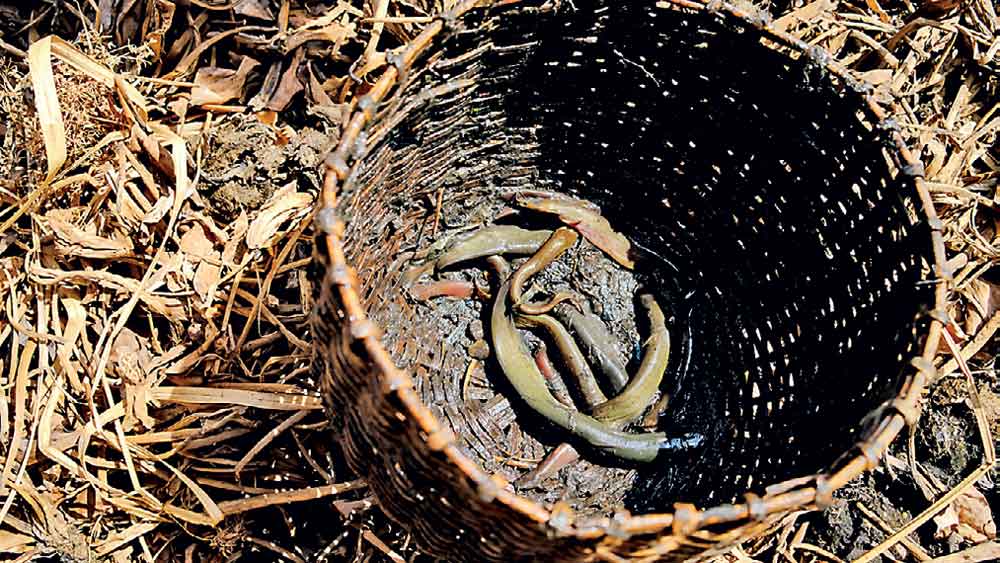
Hungas, fish that live in mud, one of the last remaining sources of food
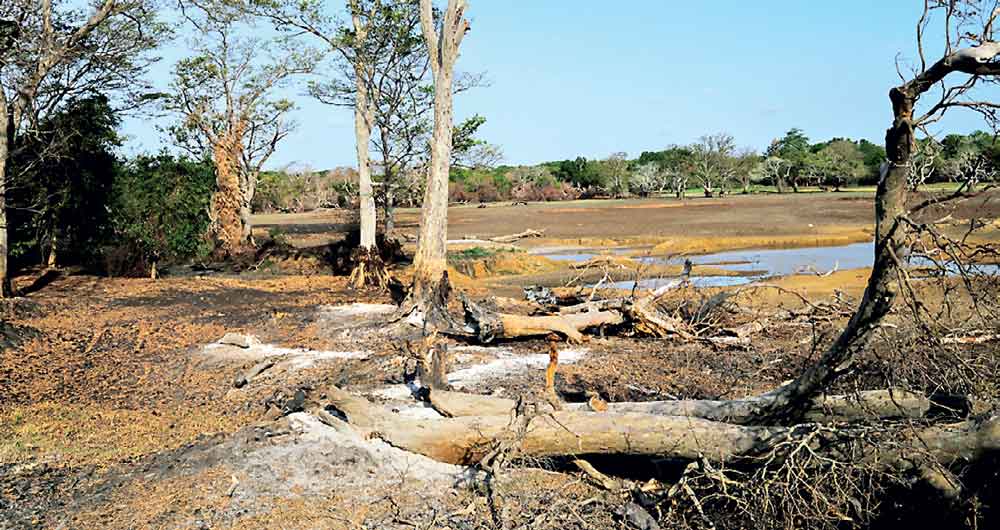
Life has become increasingly difficult with reservoirs drying up
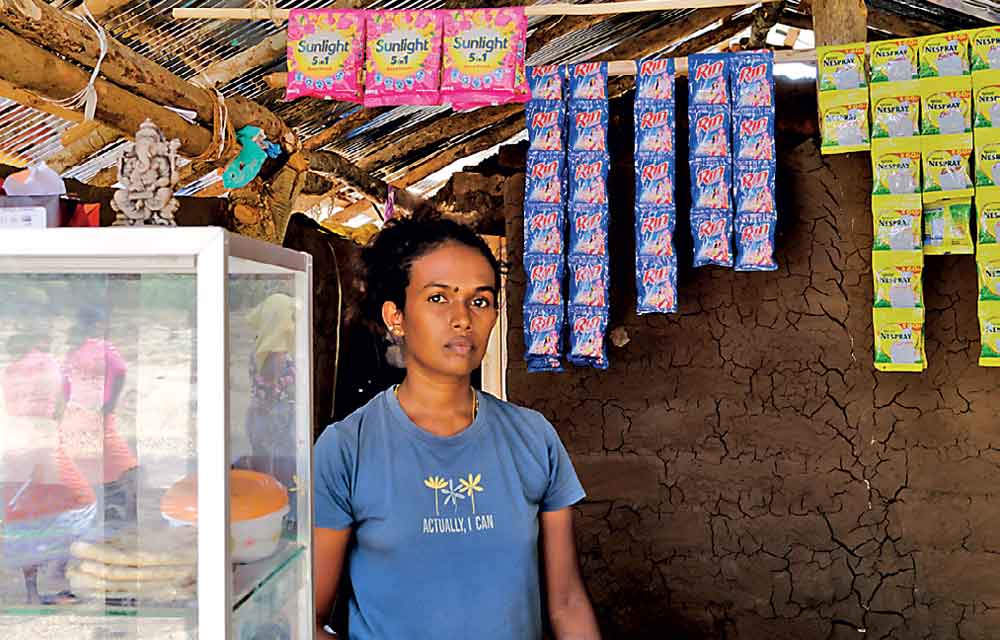
Nishanthi Gunarathna at her tea shop
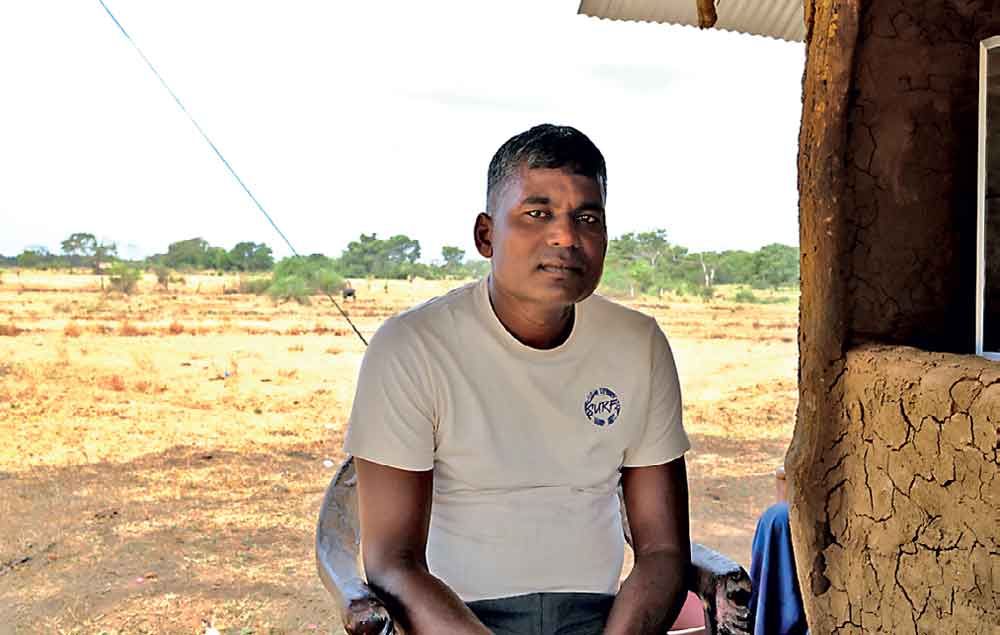
Keerthi Rathna near his paddy field that has withered without water
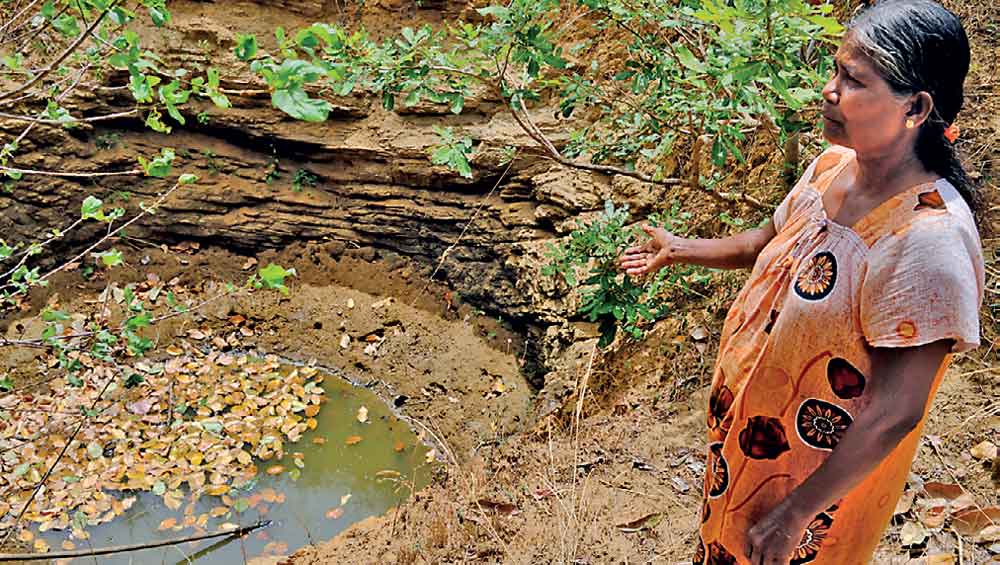
Bandara Manike points at her well that’s now dried up, with just mud and debris left
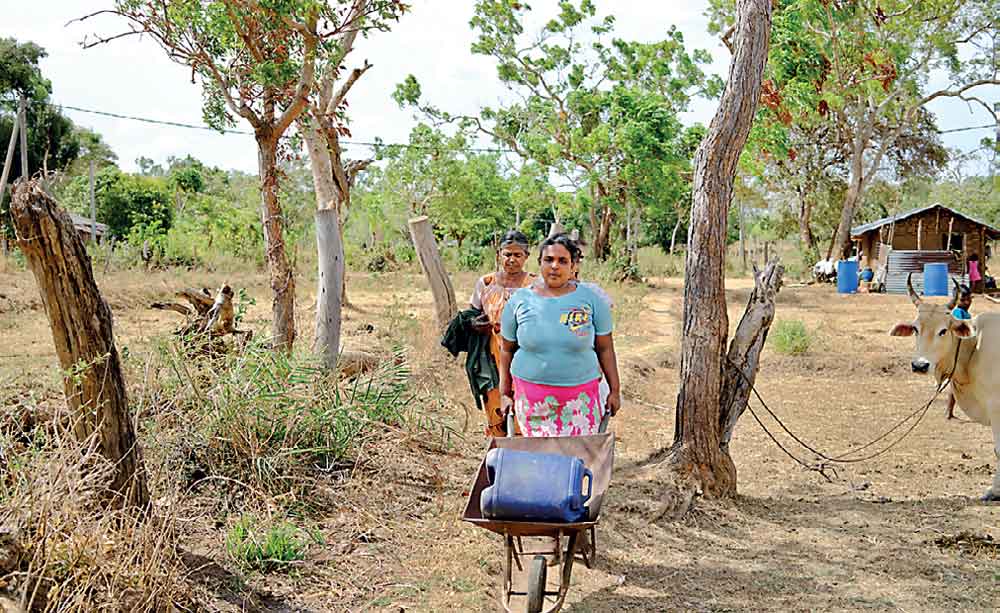
Women carry water in wheelbarrows
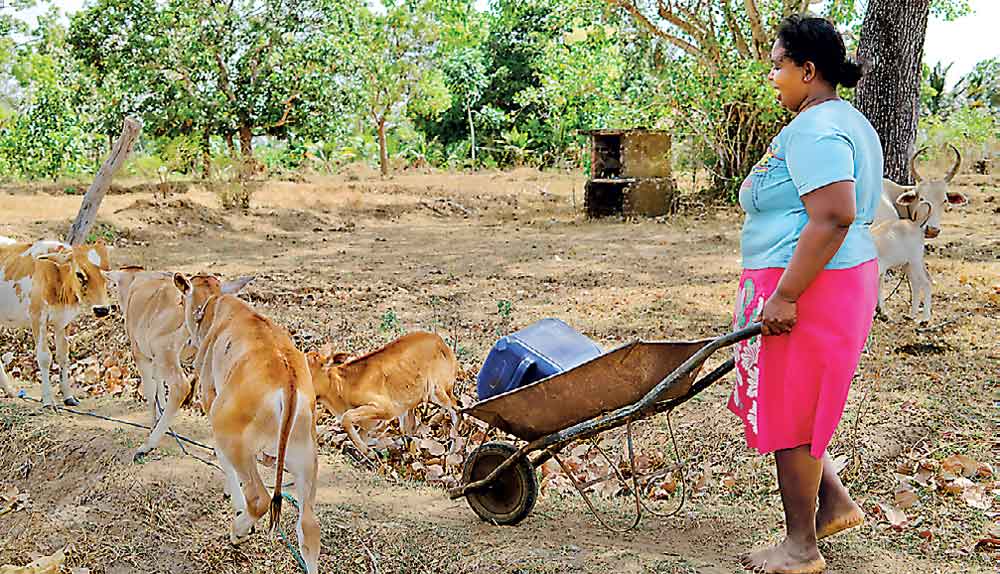
W. A. Nadeesha carries water to her household. Villagers and animals use the same “water hole”
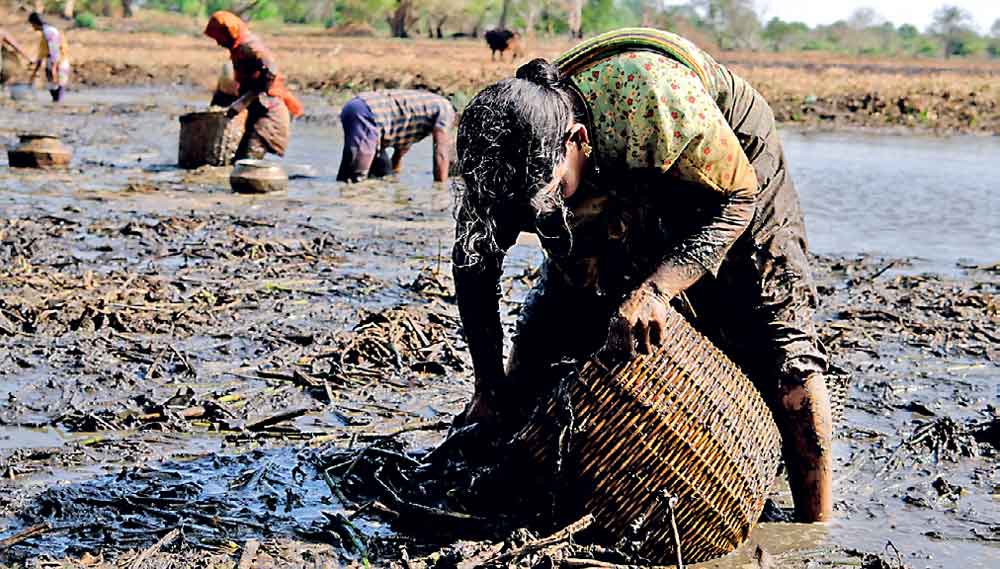
Villagers catching fish that live in mud, one of the only sources of food that remains
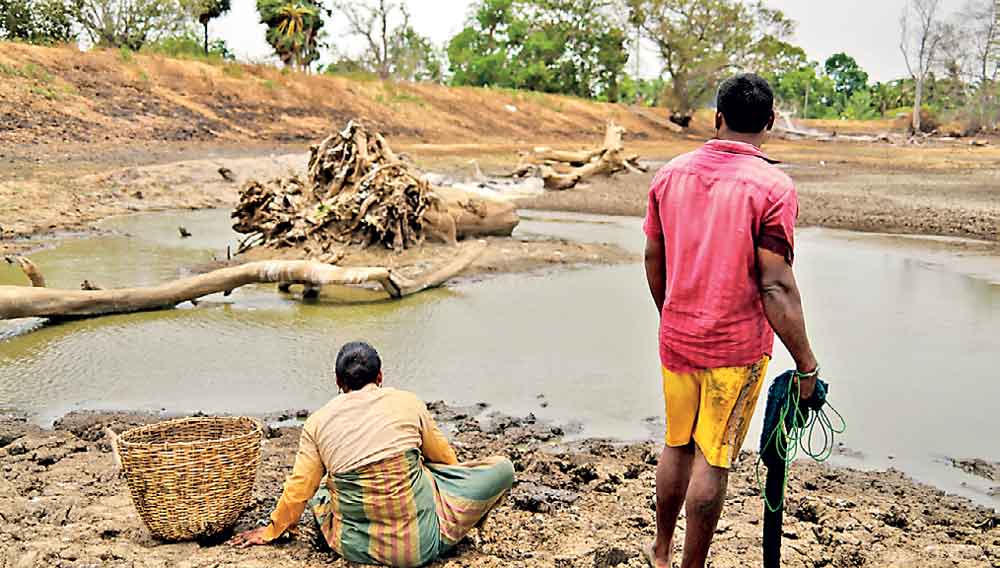
Villagers catching the last remaining fish in a dried-up reservoir in Polonnaruwa




