Saturday Sep 26, 2026
Saturday Sep 26, 2026
Friday, 21 August 2026 15:38 - - {{hitsCtrl.values.hits}}
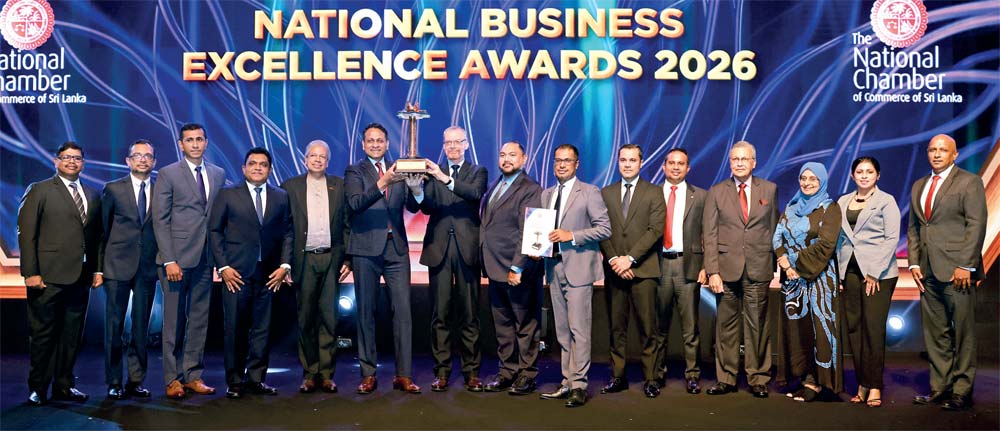
The National Business Excellence Bronze Award for Overall Excellence
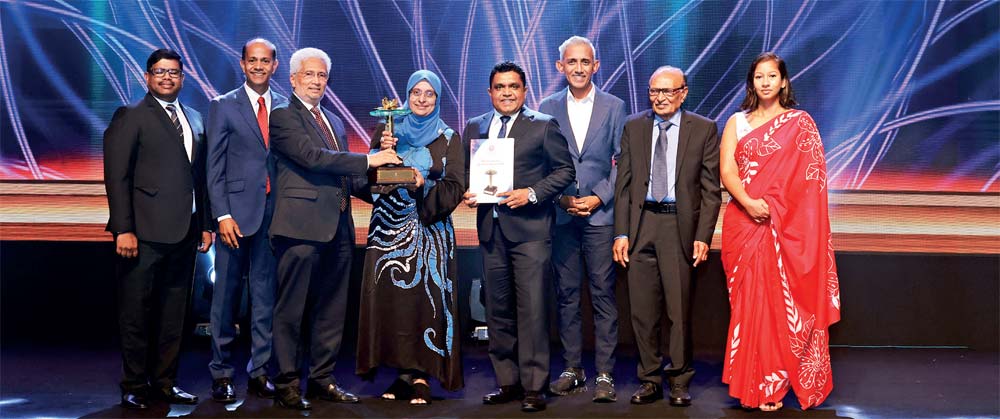
Business Excellence Award – Manufacturing (Chemical) - Winner
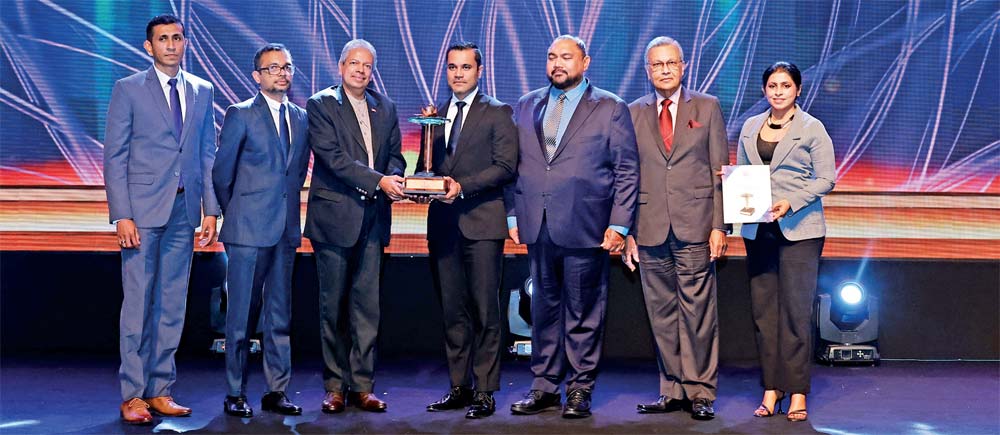
Business Excellence Award – Extra Large Sector - 2nd Runner-up
JAT Holdings PLC secured the National Business Excellence Bronze Award for Overall Excellence, was named Winner of the Business Excellence Award – Manufacturing (Chemical) category and placed 2nd Runner-up in the Business Excellence Award – Extra Large Sector category at NBEA 2026. The recognition reflects the Group’s performance and organisational development through FY2024/25. Since then, JAT has recorded its highest-ever annual revenue, expanded its manufacturing platform and continued to advance its international growth agenda. Nishal Ferdinando, Chief Executive Officer of JAT Holdings PLC, discusses the foundations behind the awards and the priorities shaping the Group’s continued growth.
Q: What does this Overall Excellence recognition say about JAT’s evolution and its position in an increasingly competitive market?
The recognition is significant because it considers the organisation in its entirety, from strategy and governance to people, market performance and operational capability.
We were also recognised for Overall Excellence in 2019, but both JAT and the competitive landscape have evolved considerably since then. We are now a listed company with a broader manufacturing base, a stronger international presence and a more diversified business. At the same time, customer expectations, competitive intensity and the standards required to sustain leadership have all increased.
For me, this recognition reflects our ability to keep strengthening the organisation as those expectations evolve. Growth has to be supported by capability, accountability and consistent execution, and that has remained a key focus for us.
It also reflects the contribution of our teams across the Group, who have continued to perform through changing economic and market conditions while maintaining the standards on which the business has been built.
Q:The NBEA assessment reflects JAT’s performance in FY2024/25. Since then, the Group has gone on to record its highest-ever annual revenue. What does that continuity tell you about the strength of the business?
FY2024/25 demonstrated the resilience and improving quality of the business under challenging operating conditions. Group revenue reached LKR 11.6 billion, gross profit margin improved from 29% to 34%, and profit after tax increased by 74% to LKR 1.78 billion, the highest recorded by the Group at that point.
This was achieved despite disruption in Bangladesh, with growth in Sri Lanka and other international markets helping to balance the pressure. It also showed that investments in manufacturing, backward vertical integration, product development and operational efficiency were beginning to deliver measurable value.
That progress continued in FY2025/26, when JAT recorded its highest-ever annual revenue of LKR 12.6 billion. Gross profit increased by 21%, while gross profit margin strengthened to 38%. Wood coatings achieved its highest-ever sales performance, while decorative paint emulsions and brushes also recorded further growth.
These results were not part of the period principally assessed for the awards, but they show that the strengths recognised through the NBEA evaluation were not temporary. The objective is not simply to deliver one strong year, but to sustain performance across different market conditions.
Q: JAT was previously recognised repeatedly for trading excellence. What does winning the Manufacturing (Chemical) sector say about how the business model has evolved?
Our commercial strength remains central to JAT, but the capabilities supporting that platform have deepened considerably.
Over time, we have invested in manufacturing, research and development and backward vertical integration to gain greater control over product quality, critical raw materials, supply continuity and cost. The Acrylic Binder Plant in Sri Lanka and the Alkyd Resin Plant in Bangladesh are important parts of that model.
During the period assessed, we also focused on improving how efficiently those capabilities operate. Greater automation, digital production monitoring and R&D-led improvements helped strengthen productivity and cost control, with R&D improvements alone generating LKR 273 million in savings.
Since then, we have completed the second-phase expansion of the Acrylic Binder Plant, increasing capacity by 76%. This gives us greater scope to support the existing portfolio, develop new formulations and reduce reliance on selected externally sourced inputs.
Q: JAT already leads several established categories. What will sustain that leadership, and where do you see the next layer of local growth?
For a coatings company, I believe two of the most important competitive advantages are the strength of its brands and the depth of its R&D. A brand creates trust, but R&D is what allows you to continue earning that trust by improving product performance and responding to changing customer needs.
That combination has been important to JAT’s leadership in wood coatings. Over several decades, we have built strong brands supported by deep technical capability, consistent product performance and sustained engagement with painters, applicators and the wider professional community. During the period assessed, JAT held approximately 57% of Sri Lanka’s wood-coatings market and around 31% of the brushes and rollers category.
The opportunity now is to use those strengths more effectively across adjacent categories. Decorative paints remain an important area for growth, but it is a highly competitive market with well-established brands. We therefore need to compete through a clear product proposition and continued innovation rather than simply increasing promotional activity.
We are also looking at the finishing ecosystem more broadly. Coatings, brushes, rollers, technical advice and application capability are closely connected. By strengthening the complete solution, we can create greater value for professional users and improve the overall customer experience.
Our reach across more than 6,900 dealers and a loyalty platform with over 180,000 registered members also give us direct insight into changing market requirements. Together, these networks create a continuous feedback loop that informs our R&D, technical training and the way we develop and take new solutions to market.
Beyond our core finishing categories, EV charging is another area where we see local growth potential. Through Volt Charge, we have built one of the largest EV charging networks in Sri Lanka, giving us a strong platform to participate in the continued development of the country’s EV ecosystem.
Q: Since the period assessed, JAT has continued to strengthen its position in Bangladesh while expanding its international coatings platform through Mirotone. How do these developments fit into the Group’s longer-term growth strategy?
We do not apply one expansion model to every market. The level of investment and operating structure must reflect the maturity of the business and the opportunity available.
Bangladesh is already one of the Group’s key international markets, with an established manufacturing base and a leading position in industrial wood coatings. Despite the volatility experienced in FY24/25, the underlying opportunity remains strong. As market conditions improve, we see further potential to deepen our position across both industrial and retail segments, supported by locally relevant products such as CoatEx and the manufacturing capabilities we have built in-market.
Mirotone represents a different opportunity. The acquisition gave JAT an established industrial wood-coatings platform in New Zealand and the ability to rebuild the brand’s presence in Australia. We have now commenced the Australian re-entry, moving the acquisition from integration into commercial execution.
Across both markets, the principle remains the same. International expansion must be supported by customer demand, local capability and a clear path to sustainable returns. It cannot be pursued simply to add countries to the Group’s footprint.
Q: As JAT grows across different businesses and markets, what becomes most important in maintaining consistent execution?
Systems become more important as the organisation grows, but systems alone are not enough.
JAT works with a rolling three-year strategic plan, which is translated into annual priorities and divisional and individual performance measures. Management dashboards and regular performance reviews give us greater visibility across the Group and allow us to identify deviations early.
However, culture determines how people respond when circumstances change.
A strong culture creates consistency across functions, seniority levels and markets. People understand what the organisation values, how it approaches customers and how decisions should be made, even when there is no detailed instruction available.
The challenge is to introduce the structure required by a larger organisation without losing ownership, speed or the willingness to question established ways of working.
That also requires continued investment in people. During the assessment period, employees completed more than 7,000 hours of training and 70 employees were promoted reflecting continued investment in capability and internal progression.
As the Group expands, our people must understand not only their individual responsibilities, but also how their work contributes to the wider direction of the business.
Q: What will define JAT’s next phase?
The next phase will be defined by how effectively we use the platforms already established.
In Sri Lanka, that means protecting our leadership in wood coatings while building greater scale across decorative paints and related finishing categories. It also means generating stronger returns from the manufacturing and R&D capabilities in which we have invested.
Internationally, our focus is on deepening our operating platform in Bangladesh and converting the Mirotone acquisition into sustainable commercial growth across New Zealand and Australia. Disciplined capital allocation will remain central to that growth. We need to be clear about where we invest, the capability required and how each initiative contributes to the long-term value of the Group.
The NBEA recognition confirms that JAT has built strong foundations. Our responsibility now is to use those foundations to create a more competitive international business while continuing to strengthen the organisation we have built in Sri Lanka.




